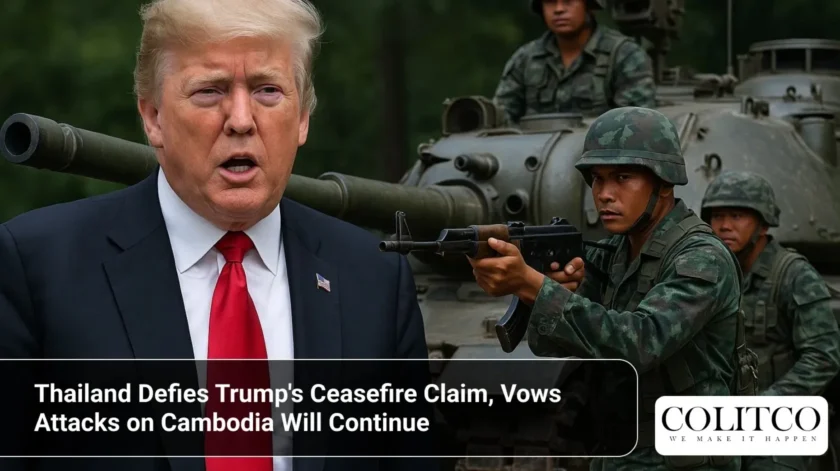
Thai Prime Minister Anutin Charnvirakul has thrown cold water on US President Donald Trump’s announcement of a renewed ceasefire with Cambodia. Hours after Trump declared success in halting the conflict, Thailand confirmed F-16 fighter jets dropped seven bombs across the disputed border on Saturday morning.
“Thailand will continue to perform military actions until we feel no more harm and threats to our land and people,” Anutin posted on Facebook. “Our actions this morning already spoke.”
The blunt rejection marks yet another diplomatic setback for Trump, who has repeatedly claimed credit for resolving eight conflicts since returning to office in January 2025.
Trump’s Ceasefire Announcement Falls Flat
Trump posted on Truth Social Friday evening that both nations had “agreed to CEASE all shooting” following phone calls with Anutin and Cambodian Prime Minister Hun Manet. He credited Malaysian PM Anwar Ibrahim for helping broker the deal.
( @realDonaldTrump – Truth Social Post )
( Donald J. Trump – Dec 12 2025, 12:37 PM ET )I had a very good conversation this morning with the Prime Minister of Thailand, Anutin Charnvirakul, and the Prime Minister of Cambodia, Hun Manet, concerning the very unfortunate… pic.twitter.com/BuEQ2bo9pJ
— Fan Donald J. Trump 🇺🇸 TRUTH POSTS (@TruthTrumpPosts) December 12, 2025
Neither Thai nor Cambodian officials confirmed any agreement in statements released after their respective calls with Trump.
Cambodia’s Defence Ministry reported Thai forces continued bombing operations in Trat province and multiple border locations using F-16 jets on Saturday. The ministry stated more than 165 Cambodian soldiers were killed in the strikes, though this figure remains unverified.
“Thai forces have not stopped the bombing yet and are still continuing the bombing,” the Cambodian Ministry of Defence said on social media.
Six Days of Fighting Leave 20 Dead, 600,000 Displaced
The current round of violence began on 7th December 2025 when both sides accused each other of initiating border skirmishes. Fighting rapidly escalated across multiple provinces along the 800-kilometre frontier.
At least 20 people have been confirmed dead, with nearly 200 wounded. An estimated 600,000 civilians have fled their homes on both sides of the border, seeking refuge in temporary shelters.
Cambodian authorities reported seven civilian deaths, including one infant, with approximately 75 people injured. Thailand confirmed three civilian fatalities and eight soldiers killed, with 80 more wounded.
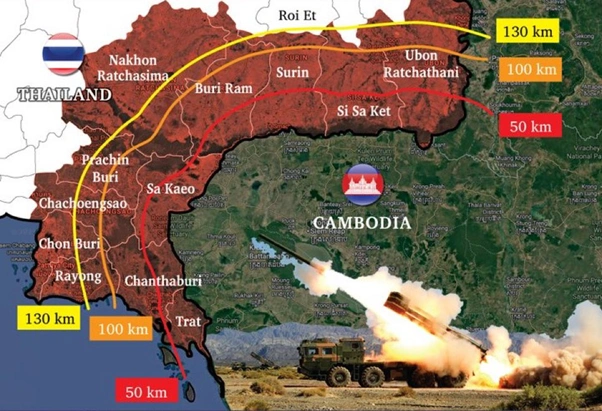
The conflict has spread to five Thai provinces and three Cambodian provinces, with reports of artillery fire, drone attacks, and rocket strikes on residential areas.
Political Calculations Behind Thailand’s Hard Line
Anutin’s tough stance on Cambodia comes as he faces domestic political pressures. The Thai leader dissolved parliament on Thursday following a legislative deadlock with the opposition People’s Party, triggering snap elections within 45 to 60 days.
Political analysts suggest the border conflict has boosted Anutin’s popularity after his approval ratings dropped due to perceived mishandling of flooding in southern Thailand and economic stagnation.
“This conflict has seen his popularity rising after flagging polls,” Al Jazeera’s Bangkok correspondent Jack Barton reported. “It’s unlikely he will want to return to a ceasefire until the results of those elections within two months are known.”
Thailand’s economy has struggled this year, expanding just 1.2% in the third quarter. The benchmark SET Index has lost approximately 10% in 2025, ranking among the world’s worst-performing equity markets.
The History Behind the Thailand Cambodia Conflict
The territorial dispute stems from a 1907 map created while Cambodia was under French colonial rule. Thailand has never accepted this demarcation, particularly regarding ownership of ancient temples including the 11th-century Preah Vihear temple.
The International Court of Justice awarded Cambodia sovereignty over the contested temple area in 1962, but Thailand continues to challenge the ruling.
Both nations have fought periodic border skirmishes over the decades, with a five-day conflict in July 2025 leaving approximately 48 people dead and displacing over 200,000 civilians before Trump brokered a ceasefire on 28th July.
That agreement was formalised in October at a ceremony in Kuala Lumpur attended by Trump, who portrayed it as a major diplomatic victory.
Ceasefire Unravels After Landmine Incidents
Thailand suspended implementation of the October peace accord in November after two soldiers were injured by landmines near the border. Bangkok accused Phnom Penh of laying fresh mines in violation of the agreement.
Cambodia has denied the accusations, leading to a propaganda war between the neighbours that eventually erupted into renewed combat this month.
Thailand has also refused to release 18 Cambodian prisoners of war captured during the July fighting, further straining relations.
Trump’s “Performative Peacemaking” Under Scrutiny
Trump’s repeated claims of resolving multiple conflicts have drawn criticism from international relations experts, who note several Trump-brokered deals have quickly unravelled.
“Trump conflates temporary restraint with conflict resolution,” Aurélien Colson, academic co-director of the ESSEC Institute for Geopolitics & Business, told Newsweek. “Preventing war is not about momentary deterrence or symbolic mediation—it is about addressing root causes, guarantees, and enforcement.”
The Thailand-Cambodia ceasefire is not the only Trump peace deal facing collapse. A recently signed agreement between the Democratic Republic of Congo and Rwanda is also under strain, with new violence erupting in Congo’s South Kivu region just days after the Washington signing ceremony.
Economic Fallout Deepens
The conflict has devastated bilateral trade between Thailand and Cambodia. Before hostilities resumed, Cambodia ranked as Thailand’s 11th-largest export market, accounting for approximately 3% of total goods exports.
With border crossings shut, Thailand’s exports to Cambodia plummeted 67% in October compared to the previous year, according to Ministry of Commerce data.
Between 500,000 and 1.5 million Cambodian migrant workers could be removed from Thailand’s domestic labour force of approximately 40 million if the conflict persists, according to Oxford Economics estimates.
Economists have warned that prolonged fighting increases downside risks to Thailand’s already anaemic 1.6% GDP growth forecast for 2026.
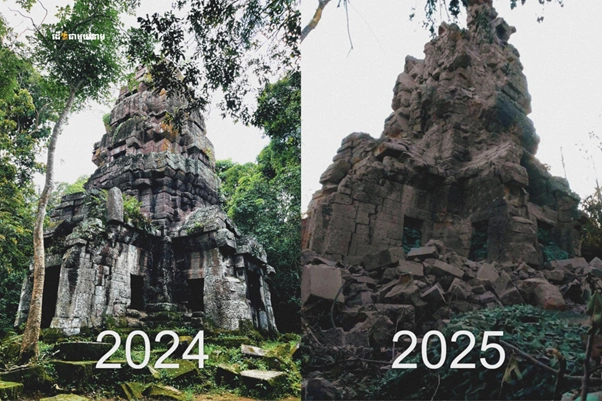
Cambodia’s Ta Krabey Temple damaged by Thai shelling.
International Community Calls for Restraint
The United Nations, European Union, and Association of Southeast Asian Nations (ASEAN) have all urged both parties to honour the ceasefire agreement and resolve disputes through diplomatic channels.
Malaysia’s Prime Minister Anwar Ibrahim expressed “deep concern” over the renewed clashes, warning that “the renewed fighting risks unravelling the careful work that has gone into stabilising relations between the two neighbours.”
The US State Department reiterated that Trump “expects the governments of Cambodia and Thailand to fully honour their commitments to end this conflict.”
However, with Thai elections looming and nationalist sentiment running high, prospects for an immediate return to the negotiating table appear slim.
What Happens Next?
Anutin also disputed Trump’s claim that a roadside bomb incident killing Thai soldiers was accidental. “It was definitely not a roadside accident,” the Thai PM wrote on Facebook.
Cambodian PM Hun Manet has called on the US and Malaysia to use intelligence capabilities to “verify which side fired first” in the latest round of fighting.
With Thailand’s snap elections scheduled for early 2026 and both sides entrenched in their positions, the conflict shows no signs of ending soon despite Trump’s proclamations.
The fighting continues to test the limits of Trump’s dealmaking approach to foreign policy, exposing the gulf between announcing ceasefires and building the institutional frameworks needed to sustain peace.
Also Read: AFP Calls on Australians to Help Crack Child Exploitation Cold Cases with Nine Everyday Images
Frequently Asked Questions
Q: Why are Thailand and Cambodia fighting?
A: The conflict stems from a border dispute dating back to a 1907 map created during French colonial rule of Cambodia. Thailand disputes the border demarcation, particularly regarding ownership of ancient temples like Preah Vihear, which the International Court of Justice awarded to Cambodia in 1962.
Q: How many people have died in the current Thailand-Cambodia conflict?
A: At least 20 people have been confirmed dead since fighting resumed on 7th December 2025, with nearly 200 wounded. Approximately 600,000 civilians have been displaced from border areas.
Q: Did Trump successfully broker a ceasefire between Thailand and Cambodia?
A: Despite Trump’s claim on 12th December that both nations agreed to a ceasefire, neither Thailand nor Cambodia confirmed the agreement. Thai PM Anutin explicitly stated military operations would continue, and F-16 strikes were reported hours after Trump’s announcement.
Q: When did the original ceasefire collapse?
A: The initial ceasefire was brokered in July 2025 and formalised in October. Thailand suspended the agreement in November after soldiers were injured by landmines, which Bangkok accused Cambodia of laying in violation of the peace accord.
Q: How is the conflict affecting Thailand’s economy?
A: Thailand’s exports to Cambodia dropped 67% in October. The conflict risks removing up to 1.5 million Cambodian migrant workers from Thailand’s labour force and threatens trade relations with the US, which could reimpose tariffs if the ceasefire remains broken.