
Stablecoins are a huge part of the crypto world because their value is tied to real-world assets like the dollar or gold, keeping their prices steady. With an estimated market cap of $300 billion, these cryptocurrencies bridge decentralized finance and traditional financial systems. Increasing institutional participation is reshaping how crypto markets operate and evolve.
Fiat-Backed Stablecoins: The Pillars of Reliability
Fiat-backed stablecoins, led by USDT (Tether), USDC (USD Coin), and USDe (Ethena), are the most used assets in crypto. These tokens are supported 1:1 by real-world reserves like cash, bank deposits, and U.S. Treasury bills. They provide price stability, making them the top choice for daily payments and a safe place to store digital wealth.
The primary benefit of fiat-backed stablecoins is their predictable stability, which makes them useful in both retail and institutional finance. These stablecoins can be used for cross-border payments, remittances, and lending, providing a more efficient way to transfer value. However, their centralized nature has raised concerns about transparency and trust in the issuing entities, despite regular audits and attestations.
Despite the need for trust in the issuer, fiat-backed stablecoins are widely accepted across exchanges and businesses. USDC, for example, regularly publishes third-party audits to confirm its full backing. This transparency has helped build trust among users, establishing these coins as a foundational element of the cryptocurrency ecosystem.
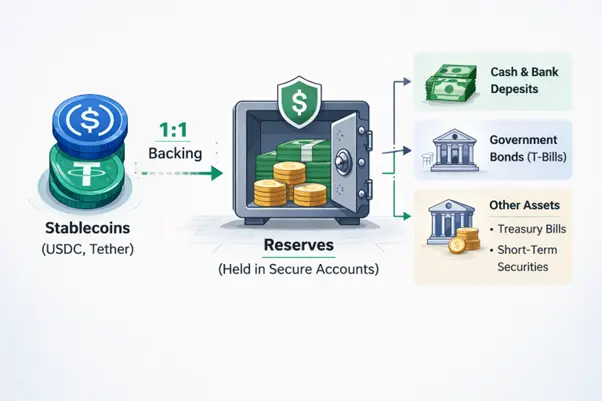
Fiat-collateralized stablecoins like USDC and Tether ensure stability with 1:1 backing from traditional assets like cash and government bonds.
Crypto-Collateralized Stablecoins: A Step Towards Decentralized Finance
Crypto-collateralized stablecoins, like DAI, operate in a decentralized manner and offer an alternative to fiat-backed models. These stablecoins are over-collateralized by cryptocurrencies such as Ethereum or Bitcoin, stored in smart contracts called collateralized debt positions (CDPs). This system ensures that the collateral exceeds the value of the issued stablecoin, helping to maintain its peg.
The main advantage of crypto-backed stablecoins is decentralization, which eliminates reliance on central authorities. Users of these coins have more control over their assets, and the system’s transparency allows them to monitor collateral levels in real time. However, the need for high over-collateralization ties up capital, which can make the system inefficient for some users.
Despite this capital inefficiency, crypto-collateralized stablecoins like DAI are heavily used within the decentralized finance (DeFi) ecosystem. These stablecoins provide essential liquidity and are often used as collateral in DeFi lending protocols. While not as liquid as fiat-backed stablecoins, they remain vital for decentralized applications due to their transparency and security.
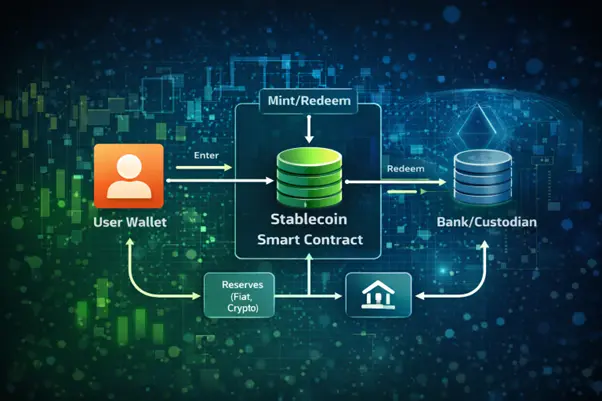
Stablecoins rely on a secure system of smart contracts and reserve management to maintain their value across platforms
Algorithmic Stablecoins: High Potential with Risks
Algorithmic stablecoins, such as TerraUSD (UST), operate without any collateral, relying instead on algorithms to control supply and demand. These systems increase or decrease the coin’s supply to maintain a 1:1 peg to a fiat currency. TerraUSD, for example, allowed users to exchange 1 UST for $1 worth of LUNA (its sister token), depending on market conditions.
While algorithmic stablecoins offer the potential for scalability and decentralization, they have proven fragile in times of market volatility. The collapse of TerraUSD in 2022, triggered by a loss of confidence, led to significant financial losses. This highlighted the risks of algorithmic systems, especially when they lack real-world collateral.
Despite the failure of Terra, some developers are still experimenting with algorithmic stablecoins. However, they face challenges in gaining widespread adoption, as the market remains cautious following the Terra crash. The future of algorithmic stablecoins depends on improving their stability and creating more robust systems.
Hybrid Stablecoins: The Best of Both Worlds in Digital Currency
Hybrid stablecoins, such as Frax, combine both collateral and algorithmic mechanisms to stabilize their value. These stablecoins attempt to balance the strengths of fiat-backed and algorithmic models while minimizing their weaknesses. By using a combination of both approaches, hybrid stablecoins offer greater scalability without sacrificing too much stability.
Hybrid stablecoins provide flexibility, allowing them to adjust to changing market conditions while maintaining a degree of security. However, this complexity can deter some users, and the long-term stability of hybrid models is still unproven. These stablecoins are still in their early stages, and their success depends on their ability to manage risk and maintain stability at a larger scale.
As the market for stablecoins continues to mature, hybrid models could provide a compelling alternative to fully centralized or fully decentralized coins. If hybrid stablecoins can overcome the challenges of scalability and stability, they may become more widely adopted in both traditional finance and the crypto ecosystem.
Global Regulation of Stablecoins: How Countries Are Adapting
The regulation of stablecoins is rapidly evolving across various jurisdictions. In the United States, the proposed GENIUS Act seeks to establish federal guidelines for stablecoin issuers, requiring 100% reserves and regular audits. The European Union’s MiCA (Markets in Crypto-Assets) Regulation also requires licensing for stablecoin issuers and mandates compliance with capital and governance rules.
In the UK, the Bank of England and the Financial Conduct Authority (FCA) have outlined a regulatory framework for systemic stablecoins, while China has banned private stablecoins altogether. Japan has also implemented strict regulations, allowing only licensed entities to issue stablecoins. Each jurisdiction is responding differently based on its economic priorities and regulatory environment.
As stablecoins continue to grow, the need for clear and coordinated global regulations becomes increasingly important. Regulatory clarity will help build trust and foster adoption while ensuring financial stability. The ongoing development of stablecoin regulations will play a crucial role in shaping their future use in both traditional and digital finance systems.
Also Read: Should You Buy the Dip in Gold Mining Stocks? Tips for 2026 – Colitco
The Growing Influence of Stablecoins in Modern Finance
Stablecoins are proving to be a key innovation in modern finance. Their ability to facilitate fast, low-cost payments, especially in cross-border transactions, has revolutionized remittance markets. Moreover, their role in decentralized finance (DeFi) has helped create a new financial ecosystem, providing liquidity and lending options previously unavailable in traditional systems.

Stablecoins are revolutionizing cross-border payments and remittances, providing fast, low-cost transactions for global users
Despite their benefits, stablecoins also present challenges, particularly in terms of regulation and financial stability. The risks associated with algorithmic stablecoins, such as those seen with TerraUSD, highlight the potential for market volatility. However, with improved regulatory frameworks and better system designs, stablecoins could strengthen the financial system by providing a more secure and efficient alternative to traditional financial services.
Looking ahead, stablecoins will likely play an even more significant role in digital finance, particularly as traditional financial systems adopt blockchain technology. With proper regulation, they could help bridge the gap between the digital and traditional economies, driving greater financial inclusion and innovation.