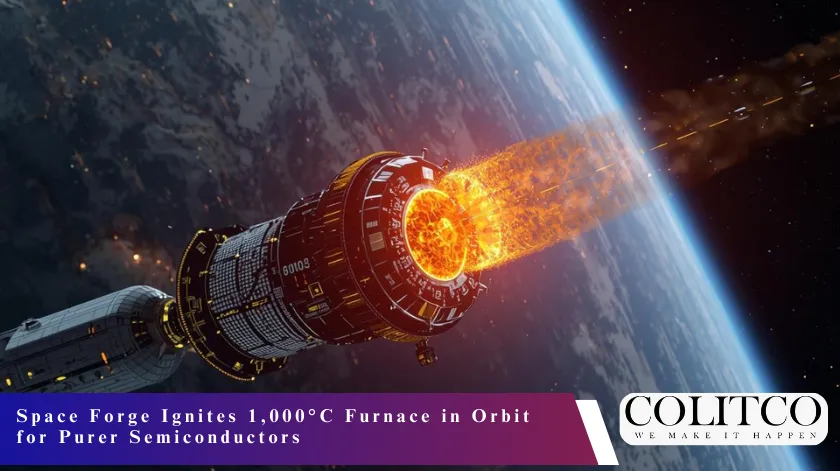
UK firm Space Forge has successfully activated a microwave-sized factory in orbit, demonstrating that its furnace can reach temperatures of approximately 1,000°C. This milestone brings space-based semiconductor production closer to reality.
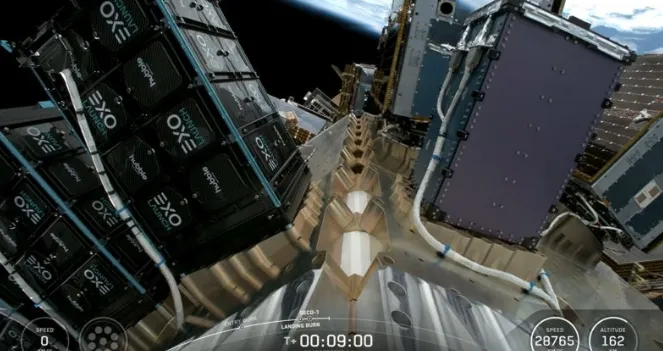
Images from inside ForgeStar-1 show glowing plasma at 1,000°C, a critical step for semiconductor production (Source: Space Forge)
Space Conditions Enable Superior Semiconductors
Space Forge aims to manufacture materials for semiconductors used in electronics, communications, and transport systems. The weightless environment allows atoms to form perfectly ordered three-dimensional structures.
The natural vacuum of space also prevents contaminants from entering the manufacturing process. CEO Josh Western said semiconductors produced in orbit can be up to 4,000 times purer than those made on Earth.
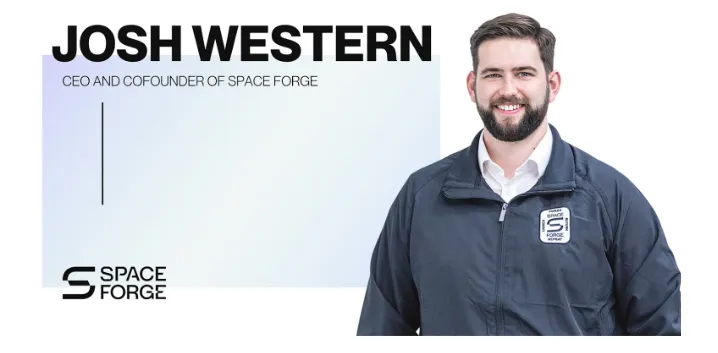
CEO and Co-founder of Space Forge, Josh Western (Source: Space Forge)
“These components will be used in 5G towers, EV chargers, and modern aircraft,” Western added. The company emphasised that these conditions are impossible to replicate in terrestrial factories.
Plasma Ignition Confirms Furnace Capability
Since launching its ForgeStar-1 satellite aboard a SpaceX rocket, Space Forge has tested its systems from mission control in Cardiff. Payload operations lead Veronica Viera shared images of plasma glowing inside the furnace.
She described the moment as “one of the most exciting of my life,” noting that generating 1,000°C plasma is essential for the manufacturing process. The plasma strike proves the satellite can achieve the extreme temperatures needed for advanced semiconductor production.
The demonstration represents the first time a commercial satellite has generated plasma in low Earth orbit for material growth purposes.
Scaling Production for the Future
Following the successful test, Space Forge plans to develop a larger space factory capable of producing material for 10,000 chips. The company aims to integrate orbital crystal growth with terrestrial processing.
A critical next step is returning the manufactured material safely to Earth. Space Forge is developing a heat shield named Pridwen, inspired by King Arthur’s legendary shield, to protect the payload during atmospheric re-entry.
The hybrid model will allow space-grown seeds to be scaled at the Centre for Integrative Semiconductor Materials (CISM), complementing existing supply chains.
Advanced Materials and Technology
ForgeStar-1 will focus on wide- and ultrawide-bandgap materials including gallium nitride, silicon carbide, aluminium nitride, and diamond. These materials underpin power electronics, advanced communications, quantum systems, and high-performance computing.
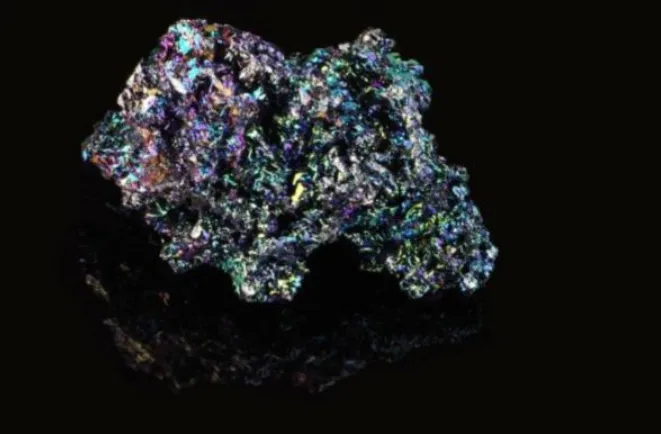
Space-grown materials promise cleaner, higher-performing semiconductors for electronics and advanced technologies. (Source: timestech)
On Earth, the growth of these crystals is limited by defect formation and thermal instability. Space conditions, however, provide stable thermal environments and eliminate convection, allowing cleaner, higher-quality crystal growth.
The satellite will perform parameter sweeps to map plasma behaviour and collect data for designing future space factories. This will guide the scaling of commercial semiconductor production in orbit.
Industry and Expert Perspectives
Libby Jackson, head of space at the Science Museum, said in-space manufacturing is now possible and has economic potential. “By proving the technology, it opens the door for products that benefit everyone on Earth,” she said.
The development represents an early example of commercial orbital manufacturing. Other companies are exploring similar approaches for pharmaceuticals, artificial tissues, and advanced materials.
Space Forge’s demonstration sets a precedent for private-sector space manufacturing, showing that industrial processes can now occur beyond Earth’s surface.
Mission and Safety Considerations
The spacecraft is set for controlled orbital decay. Its trajectory will be monitored alongside support from the Science and Technology Facilities Council, ensuring a safe end-of-life scenario.
Future missions will continue testing re-entry heat shields and scaling production, aiming for reusable and returnable satellite operations. These steps are essential for turning orbital manufacturing into a sustainable commercial model.
Also Read: New Year 2026 Fireworks Australia: Cities Celebrate With Spectacle
Final Thoughts
Space Forge has taken a decisive step toward creating space-grown semiconductors that are cleaner, purer, and higher-performing than terrestrial alternatives. By combining orbital crystal growth with Earth-based scaling, the company is pioneering a new industrial frontier for global technology sectors.
FAQs
- What is Space Forge, and what does it do?
Space Forge is a UK aerospace company based in Cardiff that develops reusable on‑orbit manufacturing satellites. It aims to produce advanced materials, including semiconductors, in low Earth orbit by harnessing unique space conditions such as microgravity and vacuum.
- Why manufacture semiconductors in space?
Space offers environments that are hard to replicate on Earth. Microgravity and ultra‑high vacuum reduce contamination and allow atoms to form highly ordered crystal structures. This can lead to semiconductors with far greater purity than those made on Earth.
- What is ForgeStar and what role does it play?
ForgeStar is Space Forge’s reusable satellite platform designed to carry out in‑orbit manufacturing. It performs autonomous production of advanced materials and, in future missions, will return these materials safely back to Earth.
- What milestone has Space Forge achieved recently?
Space Forge confirmed that its microwave‑sized orbital factory reached about 1,000°C inside its furnace, generating plasma, a key step toward producing semiconductor materials in space.
- How does Space Forge plan to return materials to Earth?
The company is developing a heat shield called Pridwen and other return technologies to protect materials during atmospheric re‑entry. These systems aim to bring products back safely with minimal shock or contamination.
- Can space‑manufactured materials be used on Earth?
Yes. Space Forge intends to produce semiconductor materials that can be integrated into devices used in communications, computing, transport, and other advanced technologies once returned to Earth.
- What kinds of materials can be made in space?
Space Forge is targeting high‑performance materials, including wide and ultra‑wide bandgap semiconductors such as gallium nitride and silicon carbide, which are crucial for next‑generation electronics.