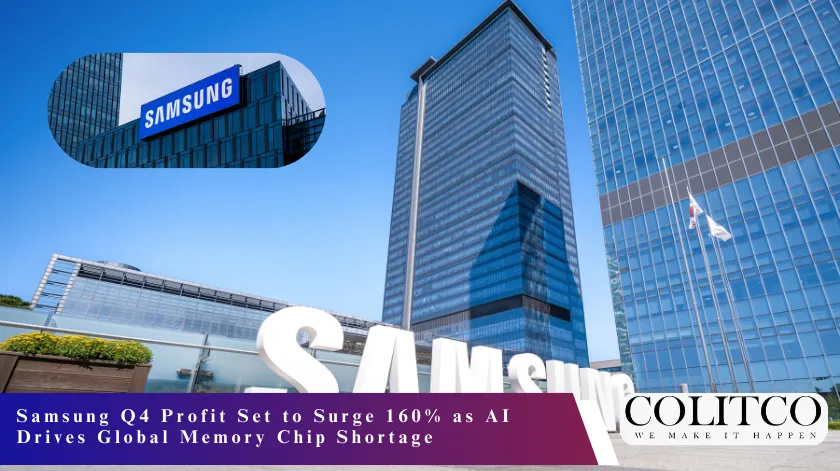
Samsung Electronics is expected to report a dramatic rise in fourth-quarter operating profit as the global boom in artificial intelligence continues to reshape the semiconductor market. Analysts forecast that the South Korean technology group will post an operating profit of around 16.9 trillion won for the October-December period, representing a 160% increase from the same period a year earlier.

Artificial intelligence workloads are driving unprecedented demand for high-performance memory chips used in data centres and cloud computing systems. (Source: IBM)
This would mark Samsung’s highest quarterly profit since the third quarter of 2018, when earnings reached 17.6 trillion won. The sharp recovery follows a prolonged downturn in the memory chip market that began in 2022 but has now reversed due to surging demand from data centres, cloud providers, and AI developers.
The earnings surge reflects both rising prices and tight supply across key memory products, placing Samsung in a strong position ahead of its preliminary earnings release scheduled this week.
Global Chip Shortage Reshapes the Market
The semiconductor industry is experiencing one of its tightest supply cycles in years as manufacturers prioritise production of AI-related chips. This shift has reduced output of traditional memory chips at a time when demand for both conventional and advanced memory is accelerating.
AI models require vast amounts of memory to store and process data, driving intense competition among customers to secure supply. As a result, chipmakers have been unable to keep pace with demand, pushing prices sharply higher across the sector.
This imbalance between supply and demand has become the main driver behind Samsung’s earnings rebound. The company, as the world’s largest producer of memory chips, is directly exposed to these market movements.
Memory Chip Prices Reach Record Levels
Prices for DDR5 DRAM, one of the most widely used memory products, surged by more than 300% in the fourth quarter compared with a year earlier. Industry data also indicates that contract prices for conventional DRAM are expected to rise by a further 55% to 60% in the current quarter.

DDR5 DRAM prices have surged as global supply tightens and demand from AI and computing customers accelerates. (Source: Micron Technology)
DRAM chips are essential components in servers, personal computers, and smartphones, enabling systems to run applications and manage data efficiently. DDR5, the latest generation, delivers faster speeds and better power efficiency, making it particularly attractive for AI workloads and high-performance computing.
Samsung’s manufacturing footprint is heavily weighted toward conventional DRAM, allowing it to benefit more than many rivals from the current pricing cycle. The company’s exposure to this segment has amplified the impact of rising prices on its financial results.
HBM4 and Nvidia Strengthen Samsung’s Position
Beyond conventional memory, Samsung is also making progress in high-bandwidth memory, or HBM, a specialised product designed for advanced AI processors. Its latest generation, known as HBM4, has received strong feedback from customers and is expected to be used in upcoming AI platforms.

High-bandwidth memory such as Samsung’s HBM4 is critical for next-generation AI processors used in large-scale computing platforms. (Source: Reuters)
NVIDIA, the leading supplier of AI processors, is preparing to launch its next-generation Vera Rubin platform later this year. That system is designed to incorporate HBM4, positioning Samsung to supply one of the most important segments of the AI hardware market.
Analysts believe Samsung is closing the gap with competitors such as SK Hynix and Micron in supplying memory to Nvidia. This progress could allow the company to gain market share at a time when demand for AI-related components remains exceptionally strong.
Share Price Reflects Investor Optimism
Samsung’s share price has mirrored its improving outlook. The stock rose 125% last year, its strongest annual gain in more than two decades, as investors priced in the recovery of the memory chip sector. Although the shares dipped slightly in early January, they remain near record highs following a powerful rally.
The renewed confidence marks a major turnaround from late 2024, when management acknowledged falling behind competitors in high-end chip supply. The latest developments in HBM and the broader AI-driven recovery have helped restore investor confidence in the company’s technology leadership.
Mobile Division Faces Margin Pressure
While the semiconductor division is benefiting from rising prices, Samsung’s mobile and consumer electronics businesses are facing cost pressures. Higher chip prices are increasing input costs for smartphones and other devices, squeezing margins in the company’s second-largest revenue segment.
Despite this challenge, Samsung plans to expand its range of devices equipped with artificial intelligence features. The company aims to double the number of products offering Galaxy AI capabilities to around 800 million units in 2026. These features, powered largely by Google’s Gemini platform, are intended to strengthen Samsung’s position against competitors in the global smartphone market.
The strategy is designed to drive long-term growth even as near-term costs rise.
Also Read: BlueScope Steel Receives $30 Takeover Bid
Final Thoughts
Samsung’s expected 160% jump in fourth-quarter profit highlights how deeply the artificial intelligence boom has reshaped the global semiconductor industry. Soaring memory prices, tight supply, and rising demand from data centres and AI developers have transformed market conditions in just a year.
With strong exposure to DRAM and growing traction in high-bandwidth memory, Samsung is well placed to benefit from this cycle, even as risks remain around demand, debt-funded data centre investment, and pressure on its consumer electronics margins. The upcoming earnings release will provide a clearer view of how sustainable this momentum is as the AI-driven chip rally continues into 2026.
FAQs
- Why is Samsung’s Q4 profit expected to jump 160%?
Samsung’s fourth-quarter profit is forecast to rise by about 160% mainly because global memory chip prices have surged. The boom in artificial intelligence has driven intense demand for memory used in data centres, servers, and AI processors. At the same time, supply has been limited as chipmakers prioritise AI-specific products. This combination of strong demand and tight supply has pushed prices sharply higher, lifting Samsung’s earnings.
- How is artificial intelligence affecting chip prices?
Artificial intelligence systems require vast amounts of memory to process and store data. As companies race to build and expand AI data centres, they are buying large volumes of DRAM and high-bandwidth memory. Manufacturers cannot increase supply quickly enough, creating shortages that push prices higher. AI has therefore become the biggest force behind the global surge in memory chip prices.
- Will Samsung beat 20 trillion won in quarterly profit?
Some analysts believe Samsung’s fourth-quarter operating profit could exceed 20 trillion won if memory prices were stronger than expected late in the quarter. While the consensus estimate is about 16.9 trillion won, the rapid rise in DRAM prices has created the possibility of an upside surprise when Samsung releases its official figures.
- What is driving the memory chip shortage?
The shortage is being caused by two major factors. First, chipmakers have shifted production capacity toward advanced AI-focused chips, reducing output of conventional memory. Second, demand from cloud providers, data centres, and AI developers has surged. With supply unable to keep up, inventories have tightened across the global market.
- How important is HBM4 to Samsung’s future?
HBM4, Samsung’s next-generation high-bandwidth memory, is a key product for AI processors. These chips are designed to work alongside powerful AI accelerators, making them essential for training and running large models. Strong demand for HBM4 gives Samsung an opportunity to gain market share in one of the fastest-growing and most profitable parts of the semiconductor industry.
- Is Samsung supplying chips to Nvidia now?
Samsung is making progress in supplying advanced memory chips to Nvidia, the world’s dominant AI chipmaker. Its latest HBM products are being evaluated for use in Nvidia’s upcoming platforms. Success in this area would allow Samsung to compete more effectively with rivals that currently hold strong positions in Nvidia’s supply chain.
- Why are DRAM prices rising so fast?
DRAM prices are rising because demand from AI data centres and high-performance computing has surged while supply remains limited. DDR5, the most advanced form of conventional DRAM, has seen particularly strong demand as it offers faster speeds and better efficiency for modern workloads.
- How will high chip prices affect smartphones and PCs?
Higher memory prices increase the cost of building smartphones, computers, and other electronic devices. This can squeeze profit margins for manufacturers or lead to higher retail prices. As a result, demand for consumer electronics could slow if prices rise too much.
- Is the semiconductor boom sustainable?
The current boom is being driven by heavy investment in artificial intelligence. While demand remains strong, some analysts warn that rising costs and increasing debt in the data centre sector could eventually slow spending. However, in the near term, AI demand continues to support high chip prices.
- What does Samsung’s profit surge mean for investors?
Samsung’s profit rebound shows that the company has benefited significantly from the global memory chip shortage and the AI boom. While the share price has already risen sharply, investors are watching whether strong chip demand and progress in advanced memory will support continued earnings growth in 2026 and beyond.