
Australia’s inflation expectations just hit their highest point in more than three years, and the Reserve Bank of Australia is watching closely.
The ANZ-Roy Morgan Consumer Confidence survey (released on 10 March 2026) showed weekly inflation expectations surging 0.8 percentage points in a single week to reach 6.1 per cent. The reading marks the highest level since November 2022. Adding to that, it also was the sharpest weekly jump since the series began in 2010.
As if that were not enough, overall consumer confidence fell 3.7 points to 73.4 points, its weakest level since July 2023. The data paints a troubling picture: Australians are feeling less secure about their finances while simultaneously expecting prices to climb faster.
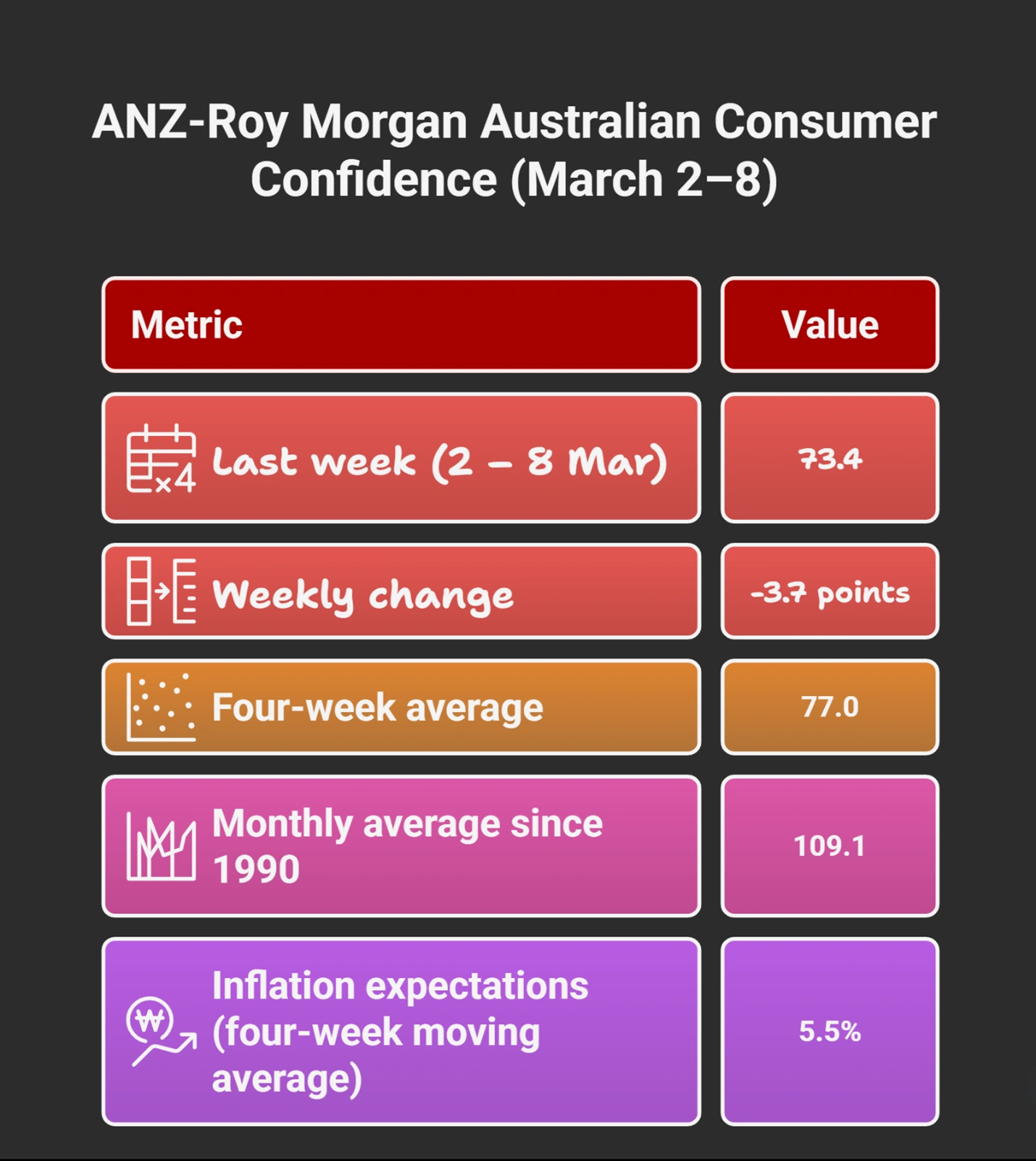
Figure 1: ANZ-Roy Morgan Australian Consumer Confidence (March 2-8)
The dual hit of falling confidence and surging price expectations has put the RBA on high alert at a pivotal moment in the inflation fight.
Bullock Issues a Warning on Anchoring Expectations
The RBA’s Message to Markets
RBA Governor Michele Bullock put markets and households on notice the previous week, flagging that the Board would keep a close eye on inflation expectations to ensure they remain anchored.
Economists Flag Growing Risks
ANZ Economist Madeline Dunk framed the concern plainly. “Rising geopolitical uncertainty is likely to have played a role,” she said. “And inflation expectations recorded their largest weekly rise since we began measuring the series in 2010. This takes inflation expectations to its highest level since November 2022.”
Rate Decisions Reflect Inflation Concerns
The statement aligns with what the Board already communicated in February when it raised the cash rate by 25 basis points, lifting it to 3.85 per cent the first increase since November 2023. In its post-meeting statement, the Board said inflationary pressures had “picked up materially in the second half of 2025” and that capacity pressures exceeded earlier assessments.
Governor Bullock was blunt following the February decision: “The Board is uncomfortable with inflation at the level it is.”
A Fragile Moment for the Australian Economy
Banks Expect Further Rate Increases
The spike in inflation expectations arrives at a delicate juncture. The February rate hike reversed two of the three cuts the RBA delivered through 2025, and now three of Australia’s four major banks, CBA, Westpac, and NAB, expect the RBA to hike again in May, taking the cash rate to 4.10 per cent.
Inflation Outlook Remains Stubborn
The RBA’s own updated forecasts offer little comfort. It now expects trimmed mean inflation at 3.7 per cent in the year to June 2026, up from an earlier forecast of 3.2 per cent. The Board does not expect inflation to return to the middle of the 2–3 per cent target band until 2028.
What It Means for Savers
For those trying to understand the RBA rate impact on savings, the outlook is mixed. Higher rates do lift returns on term deposits and savings accounts, and some Australians are seeing better yields than at any point since 2012. But sustained inflation above 6 per cent in consumer expectations erodes real purchasing power faster than those returns can compensate.
Associate Professor Evgenia Dechter from UNSW Business School put it succinctly: “Inflation has come down, but it is not yet back within the target range and has proved more persistent than expected. The implication is that the cash rate is likely to stay relatively high for longer.”
Geopolitics Pulls the Trigger
Oil Prices Spark Inflation Fears
The catalyst behind the latest expectation surge is not purely domestic. The escalation of conflict in the Middle East — specifically following US and Israeli attacks on Iran — sent WTI oil futures up roughly 30 per cent in a single week.
Energy price shocks transmit rapidly through consumer expectations. Australians filling up at the bowser see the impact before the CPI data does. And when pump prices jump, households recalibrate what they think everything else will cost.
Global Risks Enter the Equation
The RBA’s exposure to Iran-related economic risks has become a more pressing concern, with energy market volatility threatening to embed inflationary pressures that the Board had hoped were fading.
Confidence Indicators Slide Further
The ‘future financial conditions’ subindex, which tracks how households expect their finances to look over the next 12 months, fell 6.6 points in the latest survey. That subindex now sits at its lowest level on record. The ‘short-term economic confidence’ subindex dropped a further 6.4 points.
These are not the numbers of a population that feels protected from rising prices.
Which Australians Feel the Squeeze Most
Savers Versus Borrowers
The RBA rate impact on savings diverges sharply depending on a household’s financial position. Savers and retirees holding term deposits or high-interest savings accounts stand to gain from elevated rates.
Mortgage Holders Under Pressure
But for the nearly half of Australians who say their families are “worse off” financially than a year ago, 47 per cent in the latest Roy Morgan survey, higher borrowing costs compound the pain of already-stretched budgets.
Renters Face a Double Hit
Renters carry a double burden. Rising mortgage rates push landlords to increase rents, and landlord costs do not drop just because a tenant cannot afford more.
The UNSW analysis noted that if rates stay elevated, “the effects will be felt differently across households, depending on whether Australians are paying off a mortgage, renting, or relying on savings.”
Australian’s Financial Condition
Fewer than one in five Australians, just 18 per cent, say their families are “better off” financially compared to a year ago. Meanwhile, only 20 per cent expect to be better off this time next year.
These sentiment numbers matter to the RBA because consumer confidence shapes spending behaviour. If households pull back sharply, that creates its own economic headwind. But if confidence holds up and spending remains strong, inflation becomes harder to contain.
How the RBA Plans to Navigate What Comes Next
The RBA meets on 16–17 March 2026, with all four major banks expecting a hold at 3.85 per cent. The real test arrives in May, when Q1 2026 inflation data, due in late April, lands just days before the Board’s next scheduled decision.
If trimmed mean inflation stays above 3 per cent for the March quarter, CBA, Westpac, and NAB all expect the RBA to hike again to 4.10 per cent. For variable rate mortgage holders, that would represent 50 basis points of rate increases within three months.
The RBA’s dual mandate, price stability and full employment, is under strain from both sides. The labour market remains tighter than expected, with unemployment staying low and unit labour costs continuing to rise. Meanwhile, Australia’s recent GDP growth surge has complicated the Board’s efforts to rein in demand without triggering a hard landing.
Vanguard’s senior economist Grant Feng acknowledged the bind, noting the RBA’s stance is “heavily data-dependent” and that any adjustment will hinge on whether inflation credibly moves back toward target.
The RBA’s own February Statement revised inflation peak expectations to mid-2026, with a return to the middle of the target band not expected until 2028.
Conclusion
That is a long runway; and it strongly suggests the Board intends to keep rates elevated for an extended period regardless of what happens in March.
For Australians weighing the RBA rate impact on savings, the message from policymakers is consistent: do not expect relief soon. The Board will prioritise price stability, and inflation expectations at a three-year high give it every reason to stay the course.
How quickly those expectations come back down, and whether global energy markets cooperate, will shape Australian economic life for the rest of 2026.
FAQs
Why are inflation expectations rising in Australia?
Ans: Inflation expectations in Australia are rising due to higher energy prices, global geopolitical tensions, and ongoing cost-of-living pressures. When households see rising petrol, food, and housing costs, they begin to expect prices to keep increasing.
What does the latest ANZ–Roy Morgan survey reveal?
Ans: The latest ANZ–Roy Morgan Consumer Confidence survey shows inflation expectations jumped to 6.1 per cent, the highest level since November 2022. The increase also represents the largest weekly rise since the survey began in 2010.
What does higher inflation mean for Australian households?
Ans: Higher inflation reduces purchasing power. Everyday expenses such as groceries, rent, and electricity become more expensive. As a result, households may cut discretionary spending or adjust their savings plans.
How does inflation affect savings accounts in Australia?
Ans: Inflation can reduce the real value of savings. Even if banks offer higher interest rates, inflation may still outpace those returns. This is why the RBA rate impact on savings becomes important, as higher rates can partially offset inflation’s impact.
Will the RBA increase interest rates again in 2026?
Ans: Economists expect the RBA to closely monitor inflation data before making further decisions. If inflation and inflation expectations remain elevated, the central bank may consider additional rate hikes to bring inflation back toward its 2–3 per cent target range.
What is the ANZ–Roy Morgan Consumer Confidence Index?
Ans: The ANZ–Roy Morgan Consumer Confidence Index measures how optimistic Australians feel about their personal finances and the economy. The survey also tracks inflation expectations, which economists use to understand how consumers perceive future price trends.
Why does the RBA care about consumer confidence?
Ans: Consumer confidence influences spending behaviour. If confidence falls sharply, households may reduce spending, which can slow economic growth. However, strong spending during high inflation can make it harder for the RBA to control price pressures.
Sources
- ANZ Newsroom: https://www.anz.com.au/newsroom/media/2026/march/Consumer-confidence-Three-year-high-inflation-expectations/
- Roy Morgan Research: https://www.roymorgan.com/findings/9930-anz-roy-morgan-consumer-confidence-march-10
- RBA: https://www.rba.gov.au/media-releases/2026/mr-26-03.html
- RBA: https://www.rba.gov.au/speeches/2026/sp-gov-2026-03-03.html
- UNSW Newsroom: https://www.unsw.edu.au/newsroom/news/2026/02/what-the-rba-s-2026-outlook-could-mean-for-your-mortgage-rent-savings
- Finance Directory: https://www.financedirectory.net.au/blog/rba-march-2026-meeting-preview-will-rates-rise-again
- CBA Newsroom: https://www.commbank.com.au/articles/newsroom/2026/02/commbank-economists-on-the-rba-interest-rate-decision.html
- RBA: https://www.rba.gov.au/speeches/2026/sp-so-2026-02-24.html