
The Reserve Bank of Australia delivered no Christmas relief for mortgage holders today. The central bank kept the official cash rate at 3.6% in its final monetary policy meeting of 2025.
The decision came as inflation climbs above the RBA’s target range. Markets are now shifting expectations from further cuts to potential rate increases next year.
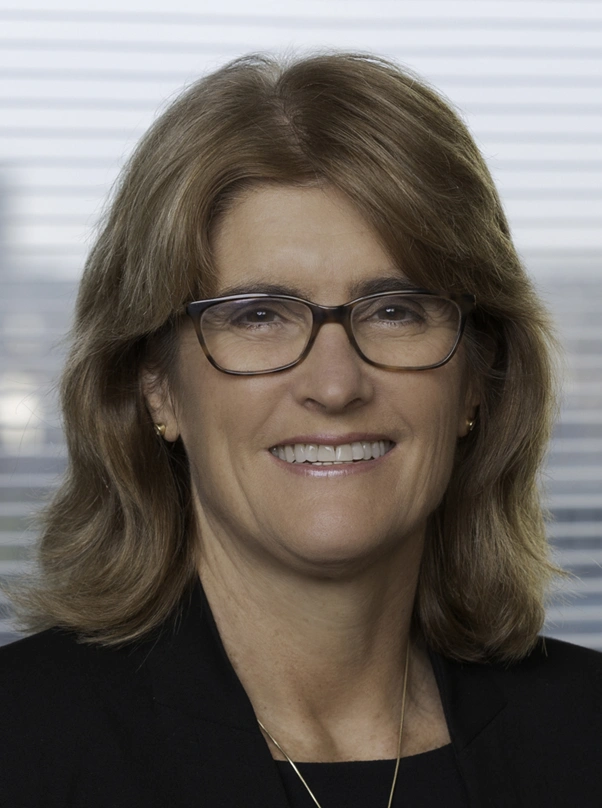
Governor Michele Bullock’s board voted unanimously to hold rates steady. The move was widely anticipated by all 38 economists surveyed ahead of the announcement at 2:30 pm AEDT on 9 December.
At its meeting today, the Board decided to leave the cash rate unchanged at 3.60 per cent.
Read the full statement here: https://t.co/frnpn5zwHu pic.twitter.com/gdq22KDhtn
— Reserve Bank of Australia (@RBAInfo) December 9, 2025
Inflation Concerns Drive Cautious Stance
October’s consumer price index surged to 3.8% annually, well above the RBA’s 2-3% target band. This represents the highest inflation reading in 10 months and exceeds the central bank’s earlier forecasts.
The trimmed mean inflation rate, which the RBA watches closely, sits at 3.3%. This core measure has been creeping higher despite three interest rate cuts earlier in 2025.
“While inflation has fallen substantially since its peak in 2022, it has picked up more recently,” Governor Bullock said in the board’s statement.
The central bank expressed concerns about the “persistence of inflationary pressures” that may not be as temporary as initially thought.
Key inflation drivers include:
- Rising housing and rental costs
- Persistent services sector price pressures
- Strong consumer demand
- Wage growth holding at 3.4% annually
Economic Growth Rebounds Amid Tight Labour Market
Australia’s economy showed unexpected strength in the September quarter. GDP grew 2.1% annually, marking the fastest pace in two years.
Private demand has recovered, driven by both consumption and investment. The housing market continues its upward trajectory despite elevated borrowing costs.
The labour market remains surprisingly resilient. Unemployment dropped to 4.3% in October from 4.5% the previous month. Full-time employment added 55,300 positions, signalling ongoing strength in job creation.
“Various indicators suggest that labour market conditions remain a little tight,” the RBA board noted.
This combination of firm growth and stubborn inflation creates a challenging environment for monetary policy. The RBA must balance its dual mandate of price stability and full employment.
Markets Pivot from Rate Cuts to Hike Expectations
Financial markets have dramatically shifted their outlook over recent weeks. Money markets now price in a 100% probability of at least one rate hike by the end of 2026.
This marks a complete reversal from expectations just a month ago. Many economists had previously forecast additional rate cuts in early 2026.
The ASX 200 opened modestly lower ahead of the announcement, down approximately 0.3% in cautious trading. The Australian dollar strengthened to around US$0.66, supported by the hawkish shift in rate expectations.
Major bank economists remain divided on the 2026 path:
Expecting holds or potential hikes:
- Westpac forecasts rates staying at 3.6% through most of 2026
- NAB sees upside inflation risks warranting caution
- Bank of America points to underlying inflation remaining elevated
Still forecasting cuts:
- AMP predicts rates could fall to 2.85% by mid-2026
- CBA maintains a cautious easing outlook
- Capital Economics expects gradual reductions
What This Means for Mortgage Holders
Variable rate mortgage holders won’t see immediate relief from today’s decision. The RBA delivered three rate cuts in 2025, in February, May and August.
Those reductions saved the average homeowner with a $500,000 loan approximately $228 per month compared to the peak rate of 4.35%.
Any return to rate hikes in 2026 would partially unwind that relief. Fixed mortgage rates have already begun creeping higher as banks price in a more hawkish RBA.
Financial stress remains elevated among Australian households. Compare the Market research found 48.7% of Australians report mental health struggles due to financial pressures.
David Koch, economic director at Compare the Market, acknowledged the squeeze continues. “Nearly half of Aussies are now reporting mental health struggles due to financial stress,” he said.
Property Market Implications
Housing affordability pressures persist across major capitals. Sydney, Melbourne and Brisbane have seen property prices rise 2-6% since the earlier rate cuts this year.
Westpac now forecasts national property prices to rise around 8% in 2025, with even faster gains in Brisbane and Perth.
The combination of limited supply and gradually falling interest rates has fuelled buyer confidence. Many first-home buyers rushed to secure properties during the brief window of lower rates.
Any shift to rate hikes could cool this momentum. However, Australia’s chronic housing shortage means prices are unlikely to fall substantially without a broader economic shock.
RBA’s Forward Guidance Remains Data-Dependent
Governor Bullock’s board maintained its cautious, wait-and-see approach. The statement emphasised the central bank will remain “attentive to the data and the evolving assessment of the outlook.”
“The Board is focused on its mandate to deliver price stability and full employment and will do what it considers necessary to achieve that outcome,” the statement read.
Key data points the RBA will monitor include:
- Monthly CPI releases (next on 7 January 2026)
- Labour force reports
- Household spending patterns
- Global economic developments
- Wage growth trends
The central bank’s next meeting is scheduled for March 2026. Minutes from today’s meeting will be released in late December, providing additional insight into the board’s thinking.
Expert Analysis: Walking a Tightrope
Warren Hogan, chief economist at Judo Bank, has consistently warned against premature rate cuts. He argues the economy doesn’t need aggressive easing given the moderate rate peak compared to international peers.
“The Australian economy doesn’t need such a fast pace of easing, particularly when the hiking cycle was protracted and the cash rate peak below that of central bank peers,” Hogan said.
AMP’s Diana Mousina takes a different view. She expects the RBA to continue cutting if growth and employment weaken further. “We do think that the Reserve Bank is going to keep cutting interest rates,” Mousina said.
Bank of America’s Nick Stenner highlighted the inflation challenge. “Underlying inflation is at the top of the band and not expected to hit the target midpoint before mid-2027,” he noted.
The divergence in expert opinions reflects genuine uncertainty about Australia’s economic trajectory. Global trade tensions, domestic consumption patterns and labour market dynamics all add complexity to the outlook.
RBA doesn’t get more hawkish in this release suggesting the recent increase in underlying inflation was due to “temporary factors” and there’s “uncertainty” around the monthly print. It noted inflation “will bear close monitoring” and will take a “little longer to assess”
Also… pic.twitter.com/OpLWrdsqg2
— Alex Joiner 🇦🇺 (@IFM_Economist) December 9, 2025
Comparison with Global Central Banks
Australia’s monetary policy stance contrasts sharply with other major economies. The U.S. Federal Reserve is widely expected to deliver another rate cut this week, bringing its benchmark rate lower.
The European Central Bank paused in December after eight consecutive cuts since June 2024. It faces similar challenges balancing weak growth against persistent inflation.
Bank of Canada and Swiss National Bank are both expected to hold rates steady, similar to the RBA’s approach.
Australia benefits from not raising rates as aggressively during the tightening cycle. The peak of 4.35% was well below the Fed’s 5.5% and other international comparisons.
This gives the RBA less room to cut. But it also means Australian borrowers experienced less severe payment shock than counterparts in the U.S. or U.K.
Looking Ahead to 2026
The year ahead presents significant uncertainty for Australian monetary policy. Much depends on whether inflation continues rising or moderates back toward the target range.
Several scenarios could unfold:
Optimistic case: Inflation eases naturally as supply chains normalise and consumer spending moderates. The RBA resumes cutting by mid-2026, bringing rates to 3.0-3.1%.
Base case: Inflation remains sticky around 3-3.5%. The RBA holds rates at 3.6% throughout 2026, maintaining current settings while assessing incoming data.
Hawkish case: Inflation accelerates above 4%, driven by strong demand and wage pressures. The RBA delivers one or two hikes in H2 2026, taking the cash rate to 3.85-4.10%.
Financial markets currently price the hawkish scenario as most likely. However, the RBA’s track record suggests it will move cautiously and signal any policy shift well in advance.
Also Read: ASIC Takes Diversa to Court Over $300 Million Superannuation Disaster
FAQ: Understanding Today’s RBA Decision
Q: Why did the RBA keep interest rates on hold?
A: The RBA held rates at 3.6% due to inflation rising to 3.8%, well above the 2-3% target band. Strong economic growth of 2.1% and tight labour market conditions support the cautious stance.
Q: When might the RBA cut rates again?
A: Most economists don’t expect rate cuts in early 2026. Markets now price in potential rate hikes instead, with the next move possibly being upward rather than downward if inflation stays elevated.
Q: How does this affect my mortgage?
A: Variable rate mortgages remain unchanged for now. However, banks may increase fixed mortgage rates based on market expectations of future hikes. Variable rate holders benefit from the 75 basis points of cuts delivered in 2025.
Q: What inflation rate is the RBA targeting?
A: The RBA targets inflation between 2-3%, with a midpoint of 2.5%. Current inflation at 3.8% significantly exceeds this range, driving the central bank’s cautious approach.
Q: Could the RBA actually raise rates in 2026?
A: Yes, it’s possible. Financial markets now price a high probability of at least one rate hike by end-2026 if inflation remains persistent. The RBA has signalled it will do “what it considers necessary” to achieve price stability.