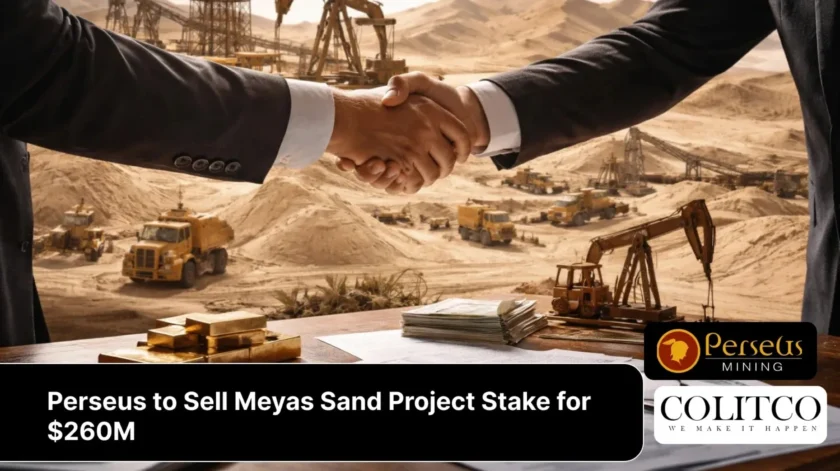
Perth-based gold producer Perseus Mining Limited (ASX/TSX: PRU) dropped a major announcement on 16 March 2026; the company signed a Share Purchase Agreement (SPA) to offload its 70% group interest in the Meyas Sand Gold Project (MSGP) in Sudan. The buyer is Hong Kong Matrix Golden Fortune Mining Limited, a wholly owned subsidiary of Matrix Resources (Zhejiang) Co., Ltd., for a total cash consideration of US$260 million (approximately A$372 million).
The Perseus Mining $260M deal marks one of the most significant portfolio moves the company has made since it first entered Sudan in 2022.
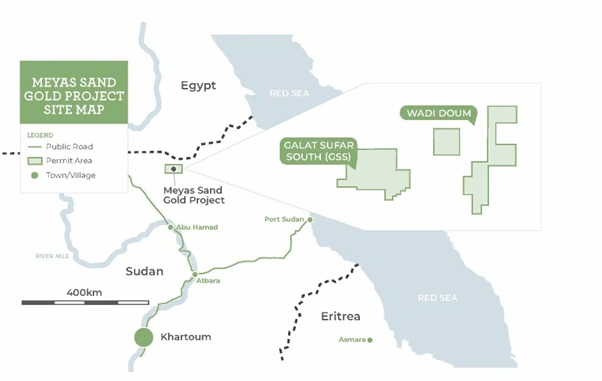
Figure 1: Meyas Sand Gold Project (MSGP) site map in Sudan [Perseus Mining Limited]
The Details of the $260 Million Perseus Mining Deal
Breaking Down the Transaction
Perseus structured the sale through its wholly owned subsidiary, Perseus Sudan Holdings Pty Ltd, which sells Shark (BVI) Inc, the entity that indirectly holds the 70% group interest in the MSGP.
The purchase price breaks down as follows:
- US$10 million — deposit received on signing of the SPA
- US$250 million — payable on completion of the transaction
- Completion date — agreed as Wednesday, 22 April 2026
- Basis of sale — “as is, where is,” subject to customary representations and warranties
- Conditions to completion — none
Perseus Mining acts as the Seller’s Guarantor in the transaction, and the Matrix Group’s obligations carry a guarantee from its ultimate parent, Zhejiang Lygend Investment Co Ltd.
Who Sits on Each Side of the Table
Perseus Mining: The Seller
Perseus Mining operates three producing gold mines across Africa — Edikan in Ghana, and Sissingué and Yaouré in Côte d’Ivoire. The company also holds a development asset in the Nyanzaga Gold Project in Tanzania, targeting first gold in Q1 2027.
Managing Director and CEO Craig Jones leads the company. The board includes Non-Executive Chairman Rick Menell and five other independent non-executive directors.
For investors tracking ASX 200 income and growth picks in 2026, Perseus has consistently attracted attention for its multi-mine African portfolio and its capacity to generate free cash flow across commodity cycles.
The Buyer: Matrix Group and Lygend Investment
The buyer, Hong Kong Matrix Golden Fortune Mining Limited, operates as a wholly owned subsidiary of Matrix Resources (Zhejiang) Co., Ltd. The ultimate parent entity guaranteeing the deal is Zhejiang Lygend Investment Co Ltd — a diversified mid-tier mining operator with deep experience in Indonesia.
Lygend Investment holds leading cost positions in both HPAL (High-Pressure Acid Leach) and RKEF (Rotary Kiln Electric Furnace) nickel production. The group is also rapidly expanding its footprint across Central Asia, Africa, and the Pacific Islands.
Why Perseus Decided to Sell
A Protracted Conflict Changed Everything
Perseus originally acquired the MSGP in May 2022 through its 100% purchase of Orca Gold Inc. (TSXV: ORG) for approximately A$230 million. At the time, the project carried serious long-term potential — scoped to produce around 228,000 ounces of gold per year in its first seven years across a 13.5-year mine life.
But then Sudan’s security situation deteriorated sharply. In April 2023, armed conflict broke out between Sudan’s armed forces and the Rapid Support Force militia. Perseus shut its Khartoum office and evacuated staff from the exploration site. While the company later returned workers to the field, it deferred any investment decision indefinitely.
The prolonged instability made meaningful development progress near impossible.
CEO Craig Jones addressed this directly in the announcement: “A strategic review of MSGP was undertaken as a result of the protracted armed conflict in Sudan and its impact on Perseus’s ability to progress the development at suitable scale.”
Portfolio Optimisation Drove the Final Call
After weighing both development and divestment options in a lengthy review, Perseus concluded that selling the asset made more strategic sense. The company wants to redeploy internal resources toward its existing growth opportunities — most notably Nyanzaga in Tanzania.
The deal also delivers a financial win. The US$260M purchase price allows Perseus to recover its original acquisition cost and all subsequent project expenditure while booking a gain.
Key reasons behind the decision:
- Ongoing armed conflict in Sudan blocking development progress
- Desire to refocus capital and personnel on core African assets
- Nyanzaga development in Tanzania requiring management bandwidth
- Opportunity to strengthen the balance sheet with a clean cash injection
Upon Completion of the Deal
Timeline and Key Dates
Perseus signed the SPA on 16 March 2026, receiving the US$10M deposit at signing. The remaining US$250M falls due on completion, currently agreed for Wednesday, 22 April 2026.
There are no conditions precedent to completion. That removes a significant layer of execution risk and gives shareholders clarity on the expected timing of the cash inflow.
Which Assets Perseus Retains, and What Comes Next
The Core Portfolio Stays Intact
The sale does not affect Perseus’s reported group JORC resource and reserve estimates. The MSGP was classified as a foreign estimate under ASX Listing Rules, not reported under the JORC Code — so its removal from the portfolio carries no impact on Perseus’s official resource base.
Perseus continues to operate:
- Edikan Gold Mine: Ghana
- Sissingué Gold Mine: Côte d’Ivoire
- Yaouré Gold Mine: Côte d’Ivoire
- Nyanzaga Gold Project: Tanzania (development stage, targeting Q1 2027 first gold)
The Nyanzaga project now sits front and centre as Perseus’s primary development focus.
Investors paying attention to the broader critical minerals and mining sector may also want to follow closely how other explorers are positioning themselves. Recent activity from St George Mining and its Araxa Principal Geologist offers useful context on how exploration companies approach project development at scale. Similarly, St George Mining’s high-grade rare earths results highlight the strong pipeline of mineral discovery activity running parallel to major divestment stories like the Perseus Mining $260M deal.
How the Proceeds Benefit Shareholders
Balance Sheet Strength and Capital Returns
Perseus flagged two clear uses for the incoming US$260M:
- Strengthening the balance sheet — The company already carries a strong financial position. Adding this cash further cements its ability to fund organic growth without dilution.
- Additional capital returns to shareholders — Perseus explicitly stated it will consider returning capital to shareholders, though it stopped short of committing to a specific mechanism or quantum.
The market reaction on announcement day told a more complicated story. Perseus shares fell, dragged lower by a broader pullback in gold prices that pushed the S&P/ASX All Ordinaries Gold index more than 4% lower on the day. The deal itself wasn’t the culprit — macro commodity movements overshadowed the announcement in the short term.
Over the medium term, however, the Perseus Mining $260M deal positions the company well. A cleaner portfolio, a stronger balance sheet, and a development pipeline anchored in more stable jurisdictions gives Perseus a clearer growth narrative heading into the second half of 2026.
The Advisers Behind the Transaction
Perseus appointed Cutfield Freeman & Co as financial adviser and Corrs Chambers Westgarth as legal adviser.
Matrix Group worked with Admiralty Harbour Capital as financial adviser and Zhong Lun Law Firm as legal adviser.
Final Takeaway
The Perseus Mining $260M deal represents a disciplined exit from a high-quality but currently inaccessible asset. Sudan’s ongoing armed conflict made near-term development unviable, and Perseus moved sensibly to monetise the project at a price that covers its full investment and returns a book gain.
With completion set for 22 April 2026, shareholders can expect significant cash to hit the balance sheet before the end of next month, and a management team with its attention fully redirected toward Nyanzaga and its producing mines across West Africa.
Frequently Asked Questions (FAQs)
Q1: What is the Perseus Mining $260M deal about?
Ans: Perseus Mining signed a Share Purchase Agreement to sell its 70% group interest in the Meyas Sand Gold Project in Sudan to Hong Kong Matrix Golden Fortune Mining Limited for a total cash consideration of US$260 million, with completion scheduled for 22 April 2026.
Q2: Why did Perseus Mining sell the Meyas Sand Project?
Ans: Perseus sold the Meyas Sand Project primarily due to the protracted armed conflict in Sudan, which blocked any meaningful development progress. After reviewing both development and divestment options, Perseus concluded that selling the asset and reallocating resources to its core African mines and the Nyanzaga Gold Project in Tanzania was the better strategic move.
Q3: How will Perseus Mining use the $260M proceeds from the Meyas Sand sale?
Ans: Perseus plans to use the US$260M in proceeds to further strengthen its balance sheet and consider additional capital returns to shareholders. The company also intends to redirect internal resources toward its existing development opportunities, particularly the Nyanzaga Gold Project in Tanzania, targeting first gold in Q1 2027.