Paris Hilton made a powerful plea in Washington DC urging lawmakers to end the scourge of AI-generated explicit content and protect victims worldwide, saying no amount of money or lawyers can stop it.
Hilton reported to Congress that deepfake porn has developed into an epidemic which leaves permanent damage on victims across all regions of the globe who encounter altered visual and audio content.
She shared her own history of abuse after a 2004 private video was leaked without her consent, saying people called it a scandal, but it was abuse. Hilton explained that current technology enables people to make false explicit content about women by using computer coding.
She explained that deepfake technology enables users to create false explicit content, which violates the personal rights of both girls and women throughout the world.
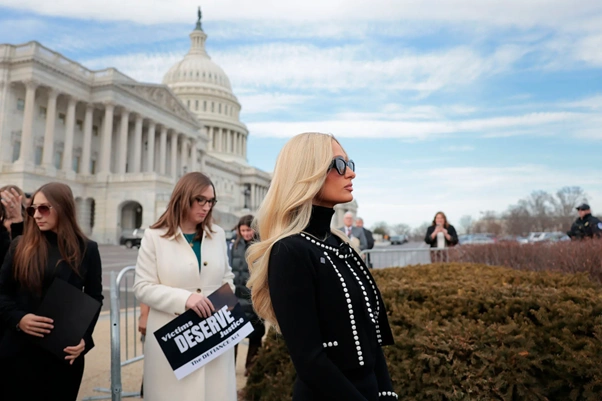
Paris Hilton addresses lawmakers in Washington DC urging action against AI-generated explicit content. [The 19th News]
What Is Driving Paris Hilton’s Deepfake Porn Outcry?
Hilton explained that deepfake creation now extends beyond stolen content because computer technology enables people to produce explicit scenes which violate others’ rights.
She explained that victims experience continuous emotional distress because they need to view altered online content, which results in their psychological suffering being revived whenever new content appears.
Hilton identified over 100000 explicit deepfake images of her, which she did not allow to share online, and she described this situation as a new way of targeting victims which operates on a larger scale.
She warned that technology, once seen as neutral, now fuels harm when used without ethical checks and legal consequences. Hilton explained that many women need to avoid public spaces because they fear dangers which come from this situation.
Will The DEFIANCE Act Change Laws On AI-Generated Explicit Content?
The US House of Representatives currently considers the DEFIANCE Act,t which Hilton requested people to support as a bipartisan bill that aims to disrupt explicit forged images and non-consensual video editing.
The bill would enable victims of Paris Hilton AI deepfake porn and other altered media to file lawsuits against those who created and distributed the content.
Supporters of this legal method assert that it serves as a crucial mechanism to address damages because existing methods fail to protect victims and enforce accountability against offenders.
Supporters from both parties say laws must catch up with advances in artificial intelligence misuse to protect future generations.
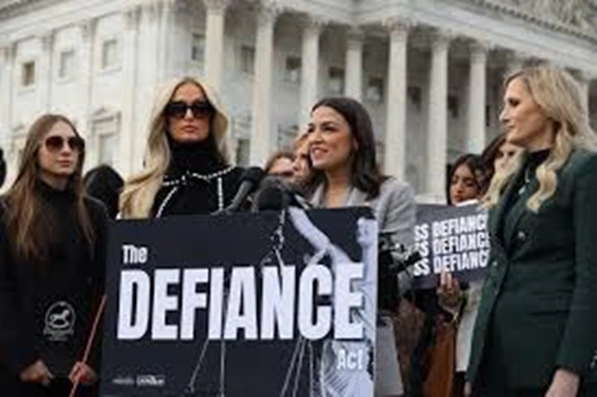
Hilton backs the bipartisan DEFIANCE Act before the US House. [Facebook]
What Are Hilton’s Personal Stakes In AI Misuse Reform?
Hilton spoke about her 2004 private tape leak experience, which made her feel she lost control over her body, her public image and her personal security because there were no existing laws to protect her at that time.
She explained that the internet had just emerged as a new platform which allowed people to spread hurtful content without restriction, thus she had to endure public humiliation and mockery while receiving no assistance.
The history of her life has become the basis for her activism against deepfake technology which threatens to harm both her daughter who is two and her daughter who is two and her daughter who is two and all other girls and women.
Hilton has taken back control of her personal narrative, but she understands that many people lack this same ability.
What Do Lawmakers Say About Artificial Intelligence Misuse And Accountability?
The DEFIANCE Act supporters consider deepfake pornography enforcement to be a justice matter instead of a situation that requires technology rules.
The representatives state that providing victims with civil rights will prevent offenders from acting while establishing their obligations in the current period of generative artificial intelligence technologies.
Global partnerships need to exist because laws cannot tackle the international dissemination of modified media, according to some people. Developers of artificial intelligence systems need to build their tools with ethical safeguards that stop misuse from happening, instead of waiting to fix issues after they develop.
How Could AI-Generated Explicit Content Laws Impact The Future?
The DEFIANCE Act enables deepfake pornography victims to pursue financial compensation from both content creators and hosting platforms. According to advocates, this development will create an international standard for establishing accountability while protecting at-risk populations.
The enforcement process will face difficulties because dangerous content disperses quickly through international borders and different online platforms.
The experts explain that lawmakers need to develop enhanced platform responsibility requirements together with complete reporting regulations, which will help eliminate artificial intelligence misuse from its foundation.
DEFIANCE Act enables compensation, boosts global accountability standards. [Youtube]
What’s Next In The Fight Against Deepfake Porn Abuse?
Paris Hilton stated that her mission extends beyond technological boundaries to establish power, dignity and justice for all digital violence survivors in all global locations.
Her speech’s conclusion explained how she used truth to achieve healing while dedicating herself to defending all women and girls who experienced deepfake exploitation.
The battle against AI-generated explicit content has emerged as a central issue in technology ethics and legal reform during current worldwide legislative and digital policy discussions.
Also Read: Royal Family Legal News: Prince Harry Court Case Sparks Global Attention
FAQs
Q1: What qualifies as AI-generated explicit content?
A1: AI-generated explicit content includes sexually explicit images or videos created digitally without a person’s consent.
Q2: What legislation is Paris Hilton backing?
A2: Paris Hilton supports the DEFIANCE Act, which would allow victims of deepfakes to sue creators and distributors.
Q3: How many deepfakes of Hilton exist online?
A3: Hilton said there are more than 100,000 explicit deepfake images of her on the internet, generated without consent.
Q4: Why is this issue a global concern?
A4: Deepfake abuse crosses borders, harms victims’ privacy and dignity, and legal systems worldwide are still catching up with technology.