
Meta Australia youth accounts are accounts associated with minors who are below 16 years of age, according to the Australian social media law. The law came into effect on December 10 and imposes strict liability on the platforms. They are to take measures that are not in any way less than reasonable to stop the access of the young users.
If the companies fail in these, fines can be imposed up to a whopping $50 million. The social networking giant Meta has announced that it has already closed nearly 540,000 accounts, which it thinks belonged to teenagers. This move covers the apps of Facebook, Instagram, and Threads.
Instagram still holds the top position in the usage rating of the youngest users. Earlier, Snapchat shared its data that indicated around 440,000 under-16-year-old users existed before the restriction was placed. Both numbers illustrate the extent of children’s participation across different platforms.
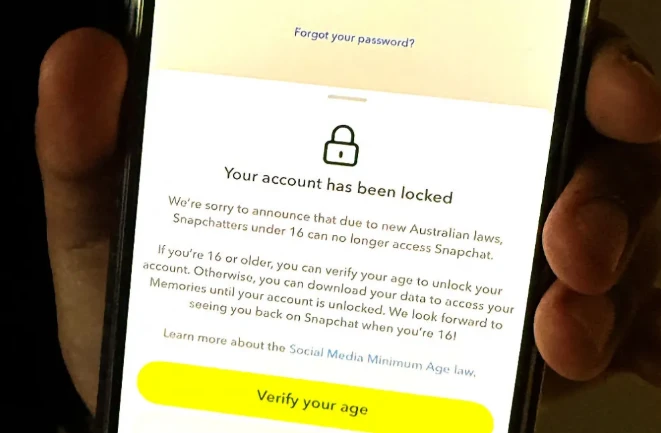
Meta Australia youth accounts involve under-16 users under strict platform liability. [Time Magazine]
Platforms Now Carry Full Responsibility For Teen Access
The new law doesn’t necessitate the government to perform age checks. On the contrary, the companies have to come up with their own age verification systems. Thus, the compliance costs are transferred to private enterprises.
Only the reasonableness of the measures taken is judged by the regulators. Legal professionals believe that this kind of phrasing is a source of ambiguity. Courts might have difficulty deciding what level of enforcement is proper. The companies will have to find a middle ground between privacy and identity verification.
Many of them, however, assert that such strict controls could lead to the misuse of personal data. Nonetheless, the businesses have no other option but to comply or incur significant fines. This method is, in fact, a reflection of the Australian government’s bigger online safety regulation plan.
Are Teens Still Accessing Apps Despite Account Removals?
A lot of young people are still getting access to the content without having an account. The use of VPNs also facilitates the bypass of location and age restrictions. Browsing while logged out will still allow access to Reels.
The algorithmic features will be fewer, but they will still work. The parents have reported that the children’s online behaviour has not changed much since December. This lessens the law’s effect, which was intended to be the opposite.
Some critics suggest that the bans only push the teenagers to the risky sites. Such places are very likely to be poorly moderated. This could lead to an increase in minors’ exposure to harmful content. The experts label this as an unintended safety trade-off.

Many teens still access content using VPNs and logged-out browsing. [ACS Information Age]
Meta Plans New Age Verification Tools In 2026
Meta intends to adopt the AgeKey system that is developed by OpenAge. The users will be able to prove their age by using safe methods. Among the alternatives are ID, facial estimation, and digital wallets.
The validation will remain on the personal devices. The platforms will only know that the user is of the required age. Meta has announced that this will be available in Australia and some other countries in 2026. It will be the wider use that will measure the success of this technology.
The option to bypass is still open if the technology is not used industry-wide. The privacy organisations that are concerned with the issue are still watching and checking the biometric measures.
Why Does Meta Want App Stores To Control Teen Downloads?
Meta claims that app stores should function as age verification tools before downloads. This would mean that parental approval would be required for the minors to use the apps. This way, the access gets blocked right from the entry points.
It does not mean that the company would be chasing the users in the new apps. The identity of devices is already being handled by Apple and Google. The legislatures have not yet backed this model.
The political pressure continues to be on the social networks instead. According to the analysts, the app-store checks could bring about the standardisation of compliance across the industry. Also, it would minimise the repeated verification requests.
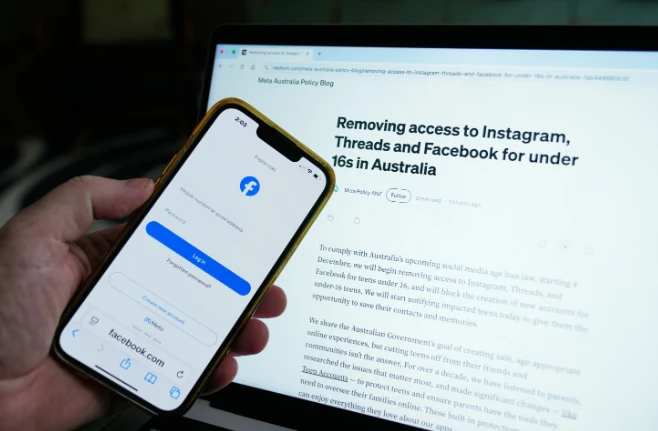
Download controls could simplify national enforcement. [AP news]
Australia Sets A Global Test For Youth Safety Laws
Australia stands as the first Western country to put into action age limits that are very strictly controlled. Other countries are observing the situation carefully. The lawmakers demand to see that the restrictions lead to the generation of more mature online environments.
A preliminary report indicates that the limitation has not been fully effective. The platforms are still exposed to legal risks that are constantly changing. Investors keep an eye on the costs of compliance and the expenses related to upgrading the systems.
The tech companies may decide to upgrade the global onboarding process. This might then lead to a reduction in the projected growth of the youth segment. The issue at hand now is the balancing act of safety against digital rights.
Also Read: Meta’s Massive Nuclear Bet Sends Oklo Stock Rocketing as Tech Giant Chases AI Power
FAQs
Q1: What are Meta Australia teen accounts?
A1: They are accounts linked to users under 16 removed under Australia’s social media law enforcement.
Q2: When did the teen social media ban start in Australia?
A2: The law took effect on December 10, placing responsibility on platforms.
Q3: How many accounts did Meta remove?
A3: Meta reported removing nearly 540,000 teen-linked accounts across its apps.
Q4: Will AgeKey fully stop underage access?
A4: It may help, but success depends on industry-wide adoption and enforcement.