
The global market is witnessing another bloodbath in the precious metals sector. Precious metals like silver and gold have already witnessed a steep selloff on February 12, extending losses amid a broader rout across global financial markets. Gold and silver, which had recently surged to historic highs, reversed sharply as risk sentiment deteriorated and heavy selling pressure gripped commodity markets.
Gold prices dropped significantly during the session, at one point falling 2.77% to slip below the $4,900 per ounce mark earlier in the day. The metal had only weeks ago crossed $5,500 per ounce to record a fresh all-time high (ATH), marking one of the strongest rallies in recent history. However, the sharp reversal highlights how quickly sentiment has shifted.
As of the latest trading data, gold stands at $4,982.23 per ounce, down $91.26 or 1.80% on the day (February 13). Intraday charts show a sudden plunge followed by partial recovery, indicating aggressive selling that was later met with some dip buying. Despite the modest rebound from session lows, the metal remains firmly in negative territory.
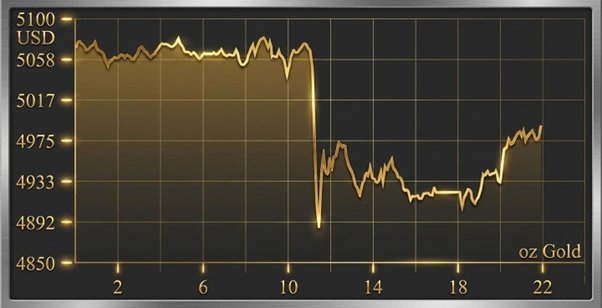
Figure 1: Gold price chart for the day [Inspired from Goldprice]
Silver suffered even heavier losses. The metal crashed more than 9% earlier in the session, sliding toward the $75 per ounce level. It had recently surpassed $100 per ounce to register a new ATH, fuelled by strong investor demand and industrial optimism. The reversal has been swift and severe.
Currently, silver trades at $76.77 per ounce, down $7.36 or 8.75% for the day. The price action reflects sharp liquidation, with the metal briefly dipping near $75 before attempting a slight recovery. The magnitude of the decline underscores silver’s higher volatility compared to gold.
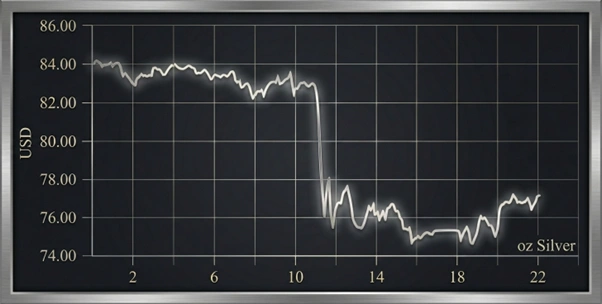
Figure 2: Silver price chart for the day [Inspired from Goldprice]
Earlier Highs Add to Shock Value
The intensity of today’s fall becomes more striking when viewed against recent highs. Gold’s surge past $5,500 per ounce just weeks ago had reinforced bullish momentum across precious metals. Similarly, silver’s break above $100 per ounce had triggered optimism about a sustained structural rally.
Investors had been piling into precious metals amid inflation concerns, central bank buying, geopolitical tensions, and expectations of monetary easing. However, the latest market turmoil, driven by concerns over artificial intelligence reshaping corporate earnings and broader risk appetite, has triggered widespread liquidation.
The selloff was not limited to metals. U.S. equities, cryptocurrencies, and other commodities also came under pressure, creating a synchronised downturn across asset classes.
How Much Have Prices Fallen?
- Gold: Earlier in the day, the metal fell 2.77% to drop below $4,900 per ounce. It now stands at $4,982.23, down 1.80% or $91.26.
- Silver: Crashed more than 9% intraday and is currently at $76.77 per ounce, reflecting an 8.75% decline or $7.36 lower.
The intraday charts show a sharp vertical drop in both metals before stabilising slightly in late trading. Such price action often suggests algorithmic and momentum-driven selling, amplifying the decline once key technical levels are breached.
Long-Term Growth Trend Still Intact?
Despite today’s heavy losses, the broader growth trajectory of both metals is fairly strong over longer timeframes.
Gold continues to hold substantial gains over the past year, supported by central bank accumulation and safe-haven demand. Even after today’s correction, the metal is significantly above levels seen six months ago (over 50%). Long-term structural factors like reserve diversification, inflation hedging, and geopolitical unpredictability are still in place.
Silver’s longer-term performance has been even more dramatic. Over a one-year horizon, the metal has posted exceptional gains (over 160%), supported by both investment flows and industrial demand, particularly from renewable energy and technology sectors. However, silver’s dual role as both a precious and an industrial metal makes it more vulnerable during periods of economic uncertainty.
Read our article below to understand whether it is a good time to buy gold and silver:
Also Read: Is Now a Good Time to Buy Gold & Silver? Forecasts vs Reality for 2026
For now, February 12 marks one of the sharpest pullbacks since the metals hit their record highs, a reminder that even in strong bull markets, corrections can be swift and unforgiving.
FAQs
- Why did gold and silver prices fall sharply today?
Ans: Gold and silver declined amid a broader market selloff triggered by concerns over artificial intelligence impacting corporate earnings and overall risk sentiment. Heavy algorithmic and momentum-driven trading amplified the decline once key technical levels were breached, accelerating the drop in both metals.
- How much have gold and silver fallen from their recent all-time highs?
Ans: Gold recently touched an all-time high above $5,500 per ounce but dropped below $4,900 earlier today before recovering slightly to around $4,982. Silver, which had surged past $100 per ounce to hit a new ATH, crashed more than 9% and is now trading near $76–$77 per ounce. This marks a significant correction from their recent peaks.
- Is this the end of the precious metals bull run?
Ans: Not necessarily. While today’s sharp decline signals heightened volatility, the longer-term uptrend remains intact. Both metals still hold strong gains over six months and one year. Structural drivers such as central bank buying, inflation concerns, and industrial demand for silver continue to support the broader bullish outlook.
- What levels should investors watch next for gold and silver?
Ans: For gold, the $4,900 level is emerging as a key support zone. Holding above this level may stabilise prices, while a breakdown could trigger further selling. For silver, the $75 mark is critical support. A sustained move above current levels could indicate consolidation, but continued weakness may lead to further downside pressure.