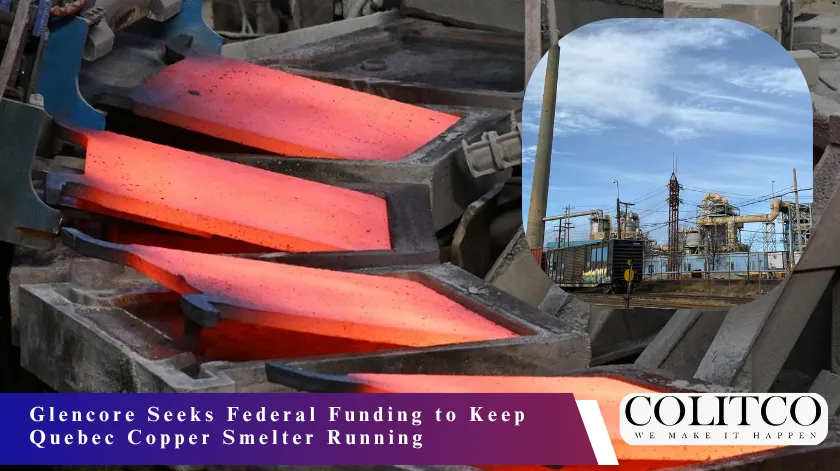
Glencore is seeking Canadian government support to modernise its Horne Smelter in Rouyn-Noranda, Quebec, amid shutdown threats and tightening arsenic emission rules that have stalled nearly C$1 billion in planned investments.
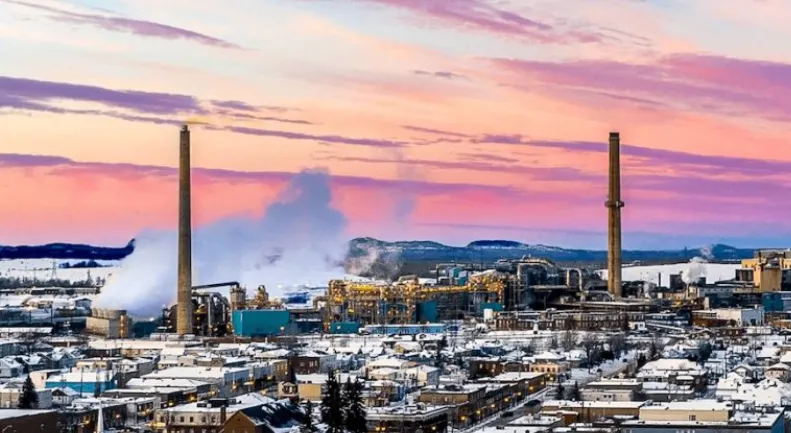
The Horne Smelter in Rouyn-Noranda, Quebec, processes approximately 215,000 metric tons of copper annually. [northernminer]
Canada Weighs C$150 Million Aid Package for Horne Smelter
The Canadian federal government is considering a support package worth roughly C$150 million for the Horne Smelter. The funding would help cover the cost of pollution-control systems at the facility. Officials at both the federal and Quebec provincial levels have been in active discussions to prevent a potential closure.
Glencore suspended its planned C$1 billion investment in Quebec copper operations after talks broke down over stricter arsenic emission requirements. The company has warned that without regulatory concessions and financial support, shutting the facility remains a real possibility.
Horne Smelter’s Role in North American Copper Supply
The Horne facility handles approximately 215,000 metric tons of copper concentrate and scrap each year. That volume accounts for about 16% of North America’s total annual copper processing capacity.
The smelter also processes electronic waste, making it one of the few North American sites with that capability.
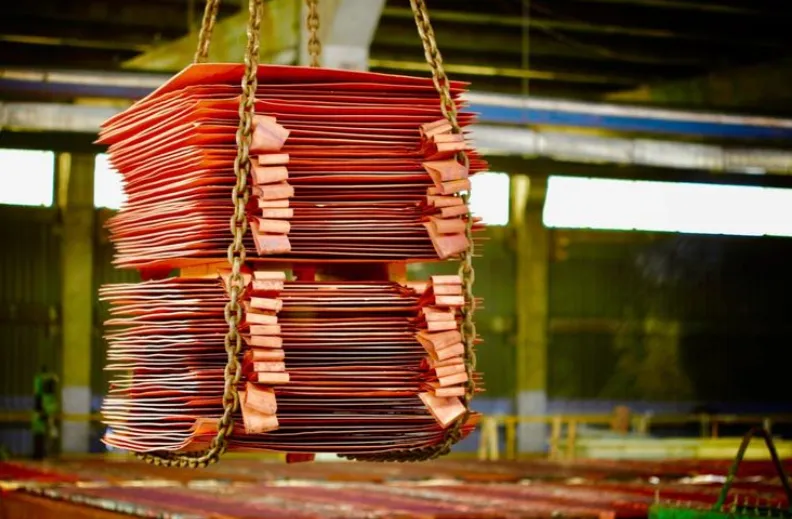
The Horne Smelter handles both copper concentrate and electronic waste, making it one of the few such facilities in North America. [Montraim]
Beyond copper, the Rouyn-Noranda site produces gold, silver, platinum, palladium, and sulfuric acid used in fertiliser manufacturing. These byproducts reinforce how difficult it would be to replace this facility’s output across the region’s metals supply chain.
Downstream Operations at Risk if Smelter Closes
Glencore’s Montreal-based CCR refinery depends on the Horne Smelter as its primary source of copper feedstock. A shutdown would likely force the refinery to halt operations as well, eliminating Canada’s only fully integrated copper smelting and refining chain.
Nexans, a major wire and cable manufacturer, has historically sourced a substantial portion of its copper cathode supply from the Montreal refinery. A disruption at Horne would therefore ripple well beyond Quebec, affecting downstream manufacturers across the continent.
Arsenic Emissions at the Heart of Regulatory Dispute
The core of the dispute centres on arsenic emission standards that Quebec has been tightening. The province has proposed delaying a new limit of 15 nanograms per cubic meter until 2029, maintaining it through at least 2033. The current emissions level at the smelter stands at 45 nanograms per cubic meter, which is three times the proposed limit.
Quebec’s proposed amendment gives Glencore more time to install the necessary upgrades. However, community residents have raised concerns, as the delayed target still exceeds the province’s own defined safe threshold.
A certified class-action lawsuit tied to local health concerns is also pending against Glencore and the provincial government.
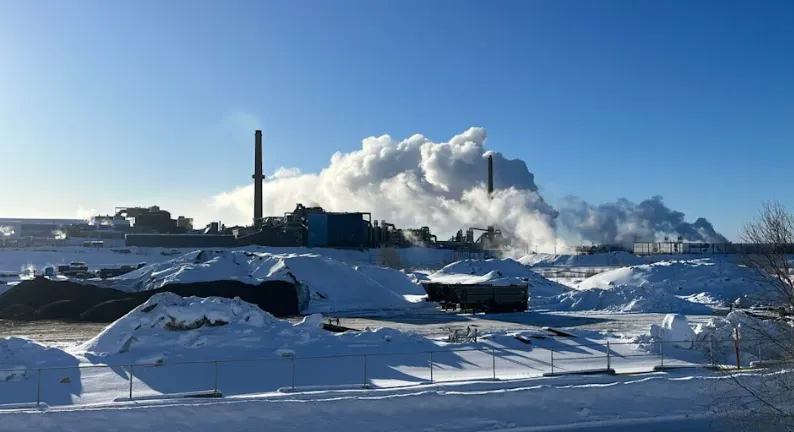
Arsenic emissions from the Horne Smelter have prompted a certified class-action lawsuit from Rouyn-Noranda residents. (Photo: Yahoo Finance)
Jobs and Prior Investments Raise the Stakes
Around 3,200 direct and indirect jobs are connected to the Horne Smelter’s continued operation. The potential loss of those positions has placed added political pressure on both Quebec City and Ottawa to find a workable solution. Employment protection is a key qualifying criterion under Canada’s Strategic Response Fund.
Glencore has already spent approximately C$180 million on emission reductions and resident relocation efforts at the site. That prior investment demonstrates some level of commitment, though the company maintains that further upgrades require co-funding from the government to remain financially viable.
Canada’s Strategic Response Fund as a Potential Vehicle
Canada’s Strategic Response Fund, established in September 2025 under Prime Minister Mark Carney, provides up to C$5 billion for strengthening domestic supply chains and manufacturing.
The fund targets several sectors, including advanced technology, automotive, and aluminium, while remaining open to critical infrastructure projects.
Glencore’s modernisation plan totals approximately C$1 billion over five years, with C$300 million set aside for emissions reduction technology.
The company is seeking government co-investment to reduce the private capital burden and make the project financially workable under current market conditions.

Canada’s Strategic Response Fund, established in September 2025, provides up to C$5 billion for critical domestic supply chain infrastructure. (Photo: Adobe Stock)
Federal-Provincial Coordination Shapes the Outcome
Resource processing in Canada falls primarily under provincial jurisdiction, but national security and trade considerations involve federal oversight. The two levels of government must coordinate closely on any funding arrangement tied to the Horne Smelter, given its cross-border supply chain role.
Quebec’s regulatory flexibility and Ottawa’s financial consideration reflect a shared understanding of the facility’s strategic value. The outcome of these negotiations may also set a precedent for how Canada handles future requests from critical mineral processing facilities facing similar environmental and economic pressures.
Also Read: St George Mining Partners Boston Metal for Green Niobium – Colitco
What Happens Next for Glencore in Canada
Glencore has not set a firm deadline for its decision on the Horne Smelter’s future. However, the company’s suspension of planned investments signals that a resolution must come soon to prevent further operational uncertainty. Active talks between the company and government officials are ongoing.
The final structure of any government support, whether through direct grants, loan guarantees, or other mechanisms, remains under discussion. How both sides navigate the tension between environmental accountability and industrial continuity will determine whether the Horne Smelter remains a functioning part of North America’s copper supply chain.
FAQS
Q1: Why is Glencore seeking Canadian government funding?
Ans. Glencore suspended its C$1 billion investment plan after talks over stricter arsenic emission requirements broke down. The company needs government co-funding to make smelter modernisation financially viable.
Q2: How much funding is Canada considering for the Horne Smelter?
Ans. The Canadian federal government is considering a support package of roughly C$150 million to cover pollution-control systems and emissions reduction technology.
Q3: What share of North America’s copper processing does the Horne Smelter handle?
Ans. The Horne Smelter accounts for approximately 16% of North America’s total annual copper processing capacity, handling around 215,000 metric tons of copper concentrate and scrap each year.
Q4: What happens if the Horne Smelter shuts down?
Ans. A closure would likely halt Glencore’s Montreal CCR refinery, put around 3,200 jobs at risk, and disrupt copper supply to downstream manufacturers across North America.
Q5: What is the arsenic emissions dispute about?
Ans. The smelter currently emits arsenic at 45 nanograms per cubic meter, three times Quebec’s proposed new limit. Quebec has proposed delaying the stricter standard until 2029 to allow time for upgrades.
Disclaimer
The content published on this website is produced by Colitco for informational purposes only, based on publicly available sources at the time of writing. Nothing here constitutes financial, investment, or legal advice, and readers should not rely on it for business or investment decisions. Colitco is an independent publisher with no affiliation with Glencore, the Canadian federal government, the Quebec provincial government, or any other entity referenced in this article. Colitco accepts no liability for any loss or damage arising from reliance on this content. For the most current information, readers are encouraged to consult official announcements and verified news sources directly.
Sources
https://investingnews.com/glencore-canada-copper-smelter-open/
https://discoveryalert.com.au/glencore-canada-copper-smelter-funding-strategic-2026/
Last modified: April 2, 2026