The full moons in 2026 will not only be rare but also provide incredible views of the night sky for the world’s sky lovers, as rare cosmic alignments will take place together with wonderful visual moments.
Each full moon from the Wolf Moon of January to the Cold Moon of December 24 carries a different name, story, energy and magnetic attraction to both amateurs and professional astronomers. Some of these moons will be at their brightest and largest, thus photographers and stargazers could easily get stunning views.
The year will have supermoons, a Blood Moon, and a Blue Moon, which altogether make 2026 probably the most impressive lunar year in the recent past.
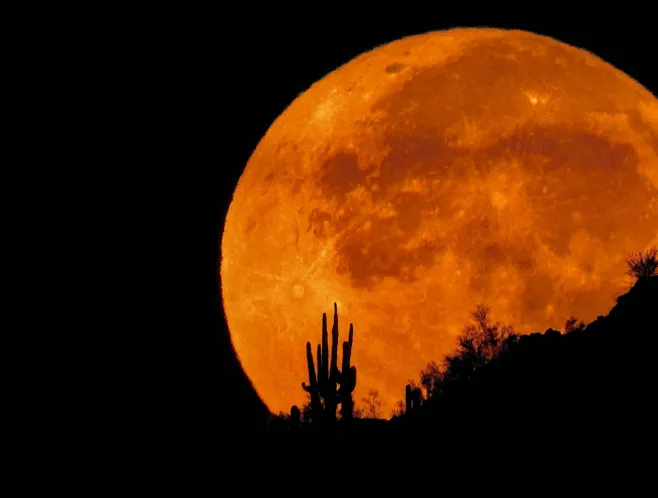
2026 full moons offer rare, stunning night sky views. [Source: Yahoo]
From Wolf To Cold: A Moon By Month Guide
Each month in 2026 features a uniquely named full Moon:
- Wolf Moon – January 3
- Snow Moon – February 1
- Blood Moon – March 3
- Pink Moon – April 2
- Flower Moon – May 1
- Blue Moon – May 31
- Strawberry Moon – June 30
- Buck Moon – July 29
- Sturgeon Moon – August 28
- Harvest Moon – September 26
- Hunter’s Moon – October 26
- Beaver Moon – November 24
- Cold Moon – December 24
These moons vary in brightness, size, and atmospheric impact, often linked to folklore, agriculture, and cultural traditions, providing both scientific insight and a connection to history.
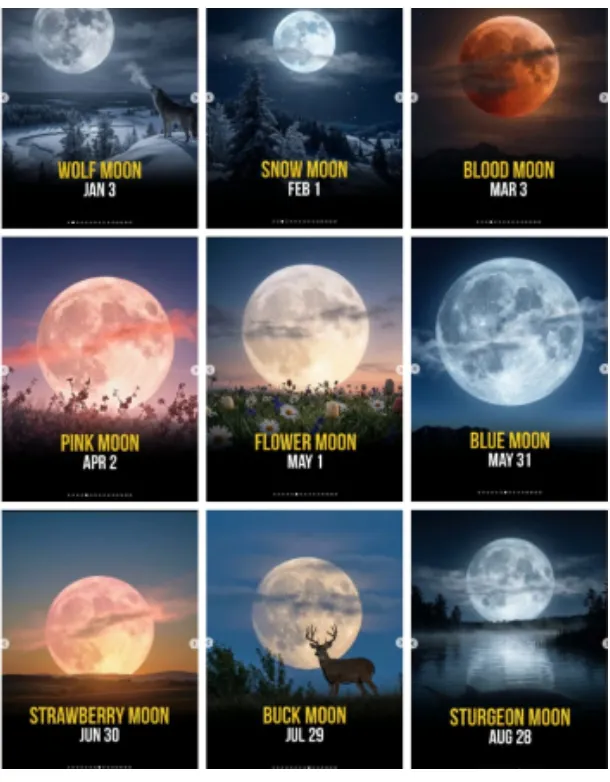
2026 brings named full moons tied to tradition. [Source: Instagram]
March 3 Blood Moon Steals The Spotlight
A total lunar eclipse will be the highlight of March 3, 2026, the most amazing event of the year. The moon, during the eclipse, will slowly move into the Earth’s shadow and become dark red, thus giving rise to the so-called Blood Moon.
This uncommon astronomical phenomenon will be seen over continents and India in the first place, thus the view will be amazing even without using any filters or camera tricks.
Astronomers are sure that the Blood Moons come from the perfect setup of the Sun, Earth, and Moon, and therefore, it is a lifetime star viewing chance for many enthusiasts. The observers are advised to set this date aside for themselves and enjoy the Moon’s spectacular metamorphosis in the sky during the night.
May’s Rare Blue Moon Phenomenon
May 2026 will be marked by a Blue Moon, which will occur on the 31st of that month, thus indicating the presence of two full moons within a single month. This rare phenomenon comes up only every few years.
Hence, the stargazers tracing Moon phases in 2026 have a very special event to watch. The Blue Moon will be very bright, as if it were a good time to compare the size and brightness of the current full Moon with that of the last one.
The scientists say that the Blue Moon isn’t actually blue, but its scarcity makes the night sky more attractive; thus, it will be an event not to be missed by either enthusiasts or casual observers.
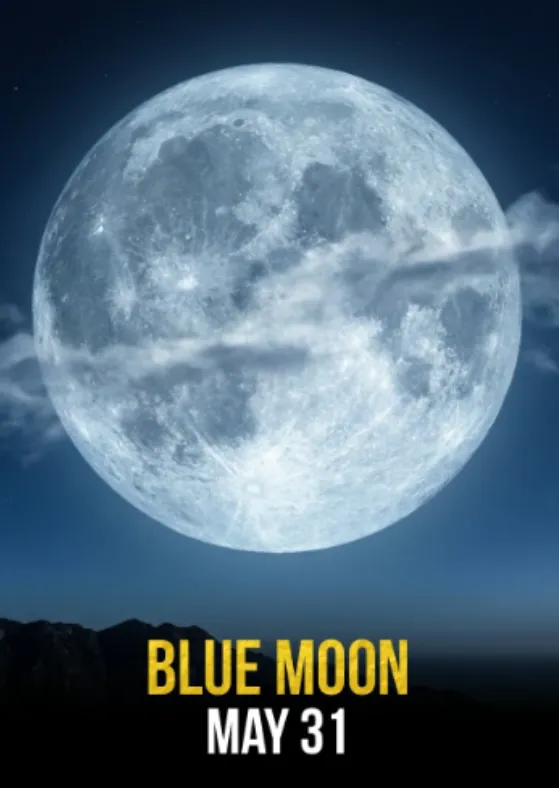
May 31, 2026, features a rare Blue Moon. [Source: Instagram]
Why Full Moons Captivate Astronomers Worldwide
Full Moons 2026 are still a mystery to researchers, and they try to find out how they affect tides, animal behaviour, and humans’ ever-topical curiosity. The astronomers studying these events would use the full moon to reflect light, make shadows, and see the details on the lunar surface.
The cultural and historical importance has been another reason for full moons being celebrated in different parts of the world. Moon festivals, rituals, and stories have been usually linked to full moons by various societies.
The events range from amazing Blood Moons to visually stunning supermoons, and each event draws the public’s interest, which also leads to the creation of photography, art, and educational outreach globally.
How To Enjoy These Celestial Events Safely
No telescope or costly instruments are required for the Moon events of 2026 to get the most dramatic views. Nighttime stepping outside and looking up will give you the wonderful experience of viewing the Moon’s surface from afar.
For the best observation, select very dark places far from the urban light and have a look at weather reports, and if you happen to travel at night, take proper safety precautions. Camera and smartphone users can also add value to their pictures using tripod stabilisation for their devices.
Sharing these moments with your dear ones not only increases the fun but also turns the experience into a beautiful and everlasting memory.
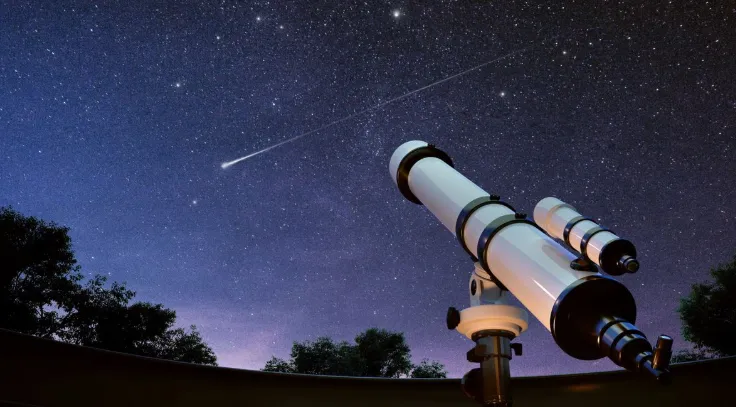
No telescope needed, just step outside and watch. [source: Livescience]
Also read: New Year’s Eve 2025: Weather and Fireworks Guide for Every Australian Capital
FAQs
Q1. When is the Blood Moon in 2026?
The Blood Moon will be on March 3, 2026, during the total lunar eclipse, which will be seen from everywhere on Earth.
Q2. What is the Blue Moon, and when does it occur?
The Blue Moon is the second full Moon of the month, which will be on May 31, 2026.
Q3. Do I need special equipment to see these full Moons?
No instrument is needed; the sky conditions and place will take care of it.
Q4. What are the names of all full Moons in 2026?
The names are Wolf, Snow, Blood, Pink, Flower, Blue, Strawberry, Buck, Sturgeon, Harvest, Hunter’s, Beaver, and Cold Moons.