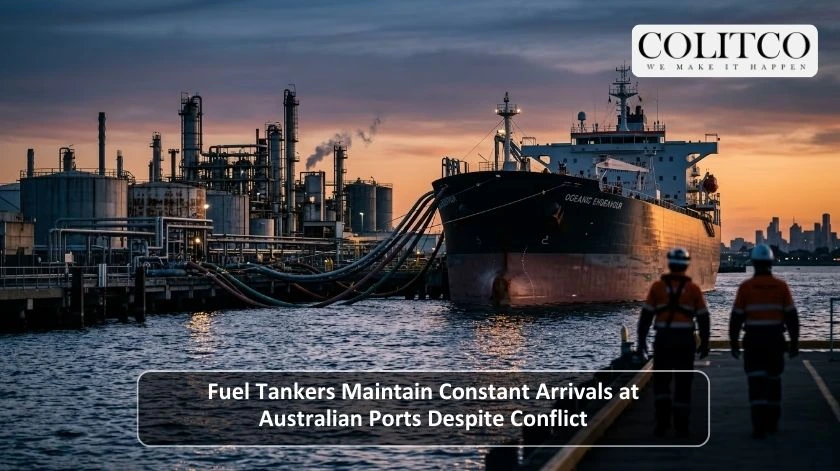
Fuel tankers continue to dock at ports across Australia. Ships arrive according to schedules despite the outbreak of war in the Middle East. Industry leaders urge that the picture lacks certainty beyond that timeframe.
“The tankers have never stopped coming,” spokespeople say. Fuel companies and industry groups met on Tuesday to discuss the situation. They agreed that demand drives the fuel crisis.
Supply does not face issues at the source currently. Crude and refined oil arrive according to the schedule. This trend continues despite the war in the Middle East.
NRMA spokesman Peter Khoury reports on the movement of vessels. 18 tankers arrived in Australia during the previous week. Another 33 tankers travel toward the coast at this moment.
Energy Minister Chris Bowen guarantees the shipments for the next month. Deliveries will arrive through March and April. The government conducts planning for the future due to uncertainty in the world.
Planning occurs because of the period of complexity. Mr Bowen monitors the situation and the market. Industry leaders urge calm among the public of Australia.
Supply has continued throughout the history of the nation. It did not stop during the days of the Second World War. Planes bombed Darwin during that conflict in the past.
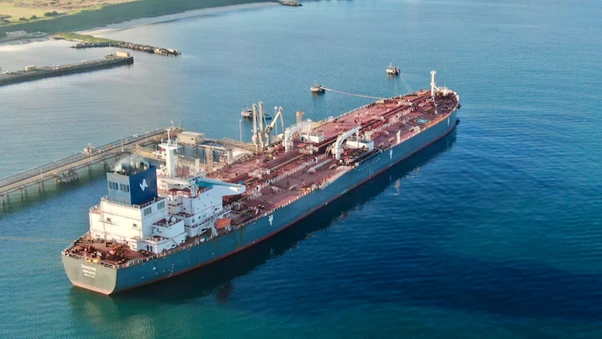
Figure 1: Ships carrying oil reach the ports of Australia according to the plan [Glyn Jones]
Nazi Germany controlled most of Europe at that time. The war did not favour the Allies during those years. Australia still received oil throughout that period.
“The tankers have never stopped coming,” Mr Khoury says. He emphasises that panic is not a requirement for citizens. Supply remains steady for the population.
Reader Consequences and Market Pressures
Prices of fuel cause pain at the bowser for motorists. Demand from consumers doubled recently and created a strain for retailers. People worry about the war in Iran and its effects.
Shortages of a local nature occur due to spikes in demand. Bottlenecks in supply contribute to these events in some areas. Most fuel left the shores of Asia before the war began.
Threats to the economy from the war remain a concern. These threats will grow if the war continues in the region. The world catches a cold if the Middle East sneezes.
Relief depends on the end of the conflict in the Middle East. Opening the Strait of Hormuz would provide consistency for the market. Australia needs this resolution for the stability of prices.
The government manages shortfalls of gas and electricity. It requests that users in the industry reduce their consumption. This option exists for the management of fuel supply.
Tony Wood from the Grattan Institute compares this to insurance. Insurance does not mean a house will burn down. It provides protection against the risks of the future.
Pressure on the economy affects the United States and Iran. Rising prices for oil push these nations toward a return to trade. These forces might accelerate a resolution to the conflict.
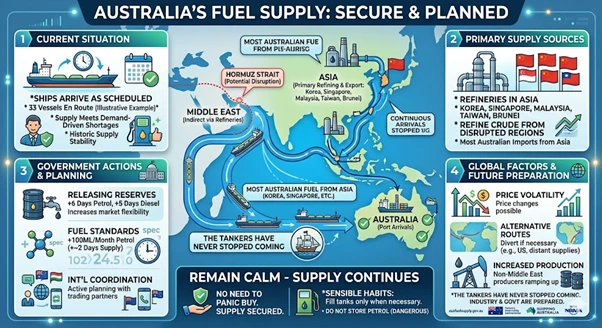
Figure 2: Australia’s Fuel Supply
Key Figures and Organisational Roles
Energy Minister Chris Bowen leads the response from the government. Foreign Minister Penny Wong maintains contact with partners in Asia. Prime Minister Anthony Albanese joins these discussions on behalf of the nation.
NRMA spokesman Peter Khoury communicates with the media and the public. He provides data on the arrivals of tankers. Melwyn Noronha serves as the Chief Executive of Shipping Australia.
Shadow Industry Minister Andrew Hastie demands a plan from the government. He asks the ministers to guarantee the supply of fuel. He suggests contact with refineries across Asia.
Andrew Hastie highlights the lack of guarantees past the middle of April. He points to refineries in South Korea and Singapore. These facilities supply the economy.
Ian Macfarlane served as the resources minister in a previous government. He holds a position as a director at Woodside. He notes that the government responds with the necessary actions.
Emmanuel Macron prepares escorts for ships in the region. These escorts aim to reopen the Strait of Hormuz. Insurers across the globe assess the risk for tankers.
- Energy Minister Chris Bowen: Manages the reserves of fuel and the standards for petrol.
- Peter Khoury: Represents the NRMA and monitors the schedules of tankers.
- Andrew Hastie: Criticises the lack of a plan for the long term.
- Melwyn Noronha: Leads Shipping Australia and tracks the flow of oil.
- Ian Macfarlane: Offers context from history and expertise from the industry.
Logistics and Import Origins
Australia receives little fuel from the Middle East directly. Most oil comes from refineries located in Asia. Korea and Singapore provide volumes of significance to the nation.
Malaysia and Taiwan also export fuel to the ports of Australia. Brunei contributes to the supply chain of the region. These nations refine crude oil from various sources.
Shortfalls in the Middle East complicate the refining process in Asia. Refineries in Singapore and Malaysia import crude from Iran. The closure of the Strait affects these nations and their exports.
An inventory of crude oil exists in the refineries of Asia. Ships carrying crude travelled toward Asia before the closure of the route. Some crude arrived over the weekend at those facilities.
The United Arab Emirates provided 118.2 million litres of oil in January. Asian nations provided more than 5,600 million litres. This comparison shows the reliance of Australia on Asia.
Saudi Arabia uses the East-West pipeline to the Red Sea. This route adds 3 million barrels of oil per day to the market. It bypasses the Strait of Hormuz and the blockade.
Ships from the United States could cover the shortfalls in supply. These vessels would travel from the Gulf of Mexico. They would use the Panama Canal or the route around South Africa.
The Panama Canal remains full of vessels currently. Travelling around South Africa takes more time for the ships. These routes increase the cost for the consumers at the bowser.
Also Read: Resolution Minerals Accelerates Golden Gate Expansion with Major 45-Hole Drilling Campaign
Timeline of Maritime Events
18 tankers arrived in the ports of Australia during the last week. Another 33 tankers remain en route to the country. Deliveries remain on the schedule through March and April.
Shipments arrive as planned since the outbreak of the war. The crisis in the Middle East erupted a fortnight ago. Tankers left Asia before the conflict started.
Australia holds 37 days of petrol in its reserves. It holds 30 days of diesel in its reserves. These stocks provide an ongoing supply for the nation.
Energy Minister Chris Bowen released reserves on Tuesday. These reserves cover six days of petrol for the market. They cover five days of diesel for the users.
A change in the standards for fuel lasts for two months. This adds 100 million litres of petrol each month. It equals about two days of supply for motorists.
The market of the globe will receive 400 million barrels of oil. This release occurs over several months. It aims to calm the traders and the market.
Future Strategies and Market Projections
A fifth of the world’s oil flows through the Strait of Hormuz. This equals 20 million barrels of oil each day. Another 6 million barrels remain offline in the Middle East.
Countries that produce oil outside the region ramp up their output. These nations aim to close the gap in the supply. Four-fifths of the world’s oil flows through other routes.
Shortages will eventuate if the situation continues without a change. The outlook for the future remains a matter of uncertainty. Price remains the problem for consumers in Australia.
The government maintains contact with trading partners in Asia. These partners include South Korea and Malaysia. These relationships assist the nation during times of crisis.
Rationing of fuel is not an option for the government yet. Measures to limit panic buying remain under consideration. Users with priority might receive a guarantee of supply.
Ian Macfarlane warns against the storage of petrol in sheds. This practice creates danger for the households. Petrol loses its quality over a period of time.
- Short-term: Ships arrive according to the schedule through April.
- Mid-term: The government releases reserves and adjusts the standards.
- Long-term: Production increases across the globe to offset the losses.
Competition for oil from European nations will increase. Australia relies on its alliances with the United States. These relationships have stood for decades.
The taps for oil are not close to shutting off. The industry manages the situation through the process of planning. Tankers continue their journey to the shores of Australia.