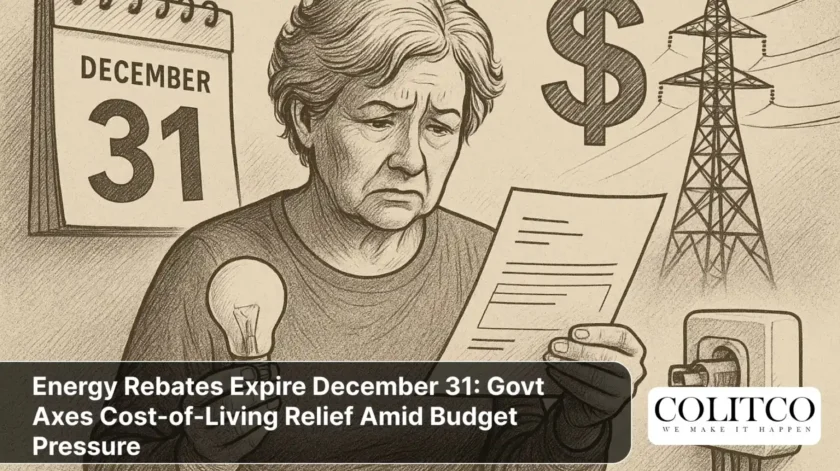
Treasurer Jim Chalmers delivered unwelcome news to millions of Australian households on Monday, 8 December 2025. The energy bill rebates currently cushioning power costs will not continue into 2026.
The decision ends a support measure that has been automatically applied to electricity bills since mid-2023. From January 2026, households and small businesses will face the full impact of power costs without government assistance.
“This wasn’t an easy decision, but it’s the right decision,” Chalmers told reporters in Canberra. “This was a difficult call that we made as a Cabinet, but it’s the right call.”
Treasurer Jim Chalmers has stormed out of a press conference after announcing the end of energy bill relief and then facing questions about Anika Wells and her lavish use of taxpayer funds. pic.twitter.com/MMoYkgmFC3
— Australians vs. The Agenda (@ausvstheagenda) December 8, 2025
Current Rebate Program Concludes This Month
Under the existing Energy Bill Relief Fund, every Australian household receives $150 in electricity rebates during the second half of 2025. The support comes in two quarterly instalments of $75 each, automatically deducted from power bills.
Small businesses meeting state consumption thresholds also receive $150 in relief. The program has cost taxpayers more than $5 billion since its introduction.
The December deadline means:
- Final $75 payment applied to October-December bills
- No rebates from January 2026 onwards
- Around 10 million households affected nationwide
- One million small businesses lose support
Budget Deficit Forces Hard Choices
The Albanese Government is grappling with persistent structural deficits and weakening commodity revenues. Chalmers signalled the rebates could not continue indefinitely during recent budget discussions.
Speaking to ABC Radio National on 4 December, he warned that rebates were “never going to be a permanent feature of the budget.” The Treasurer emphasised the need for fiscal responsibility after delivering two surplus budgets.
The Mid-Year Economic and Fiscal Outlook (MYEFO), due for release mid-December, will detail the full extent of budget pressures. Declining iron ore and coal export revenues have squeezed government coffers significantly.
Shadow Finance Minister James Paterson acknowledged the rebates cannot continue perpetually. However, the Coalition argues Labor’s energy policies have masked deeper system problems.
“It’s a matter for government to decide whether they should continue for a little while,” Senator Paterson said. “Our priority would be fixing the energy system so that these kind of subsidies weren’t necessary.”
What Households Will Pay Without Rebates
Treasury estimates suggest the rebates reduced household electricity bills by 7.5 per cent on average nationally in 2025. Without this support, families could see quarterly bills rise by $75 to $150 depending on usage patterns.
The Australian Bureau of Statistics reported electricity prices fell 25.2 per cent in 2024. However, this included the rebate effect. Without government support, prices would have fallen just 1.6 per cent.
Recent inflation data shows electricity costs already climbing as earlier rebate impacts fade. October 2025 inflation jumped to 3.8 per cent, driven partly by energy price increases.
For context, households have received:
- $300 in rebates during 2024-25 financial year
- Additional $150 from July to December 2025
- Total support of $450 per household since mid-2024
Small businesses received $325 in the 2024-25 period, plus $150 in the second half of 2025.
Inflation Concerns Cloud Decision
The rebate program directly suppressed inflation readings throughout 2024 and 2025. Treasury calculated the measures reduced headline inflation by around half a percentage point.
Reserve Bank of Australia (RBA) officials have expressed concern about artificial price suppression. When rebates end, inflation figures could spike temporarily as electricity costs return to market levels.
The RBA cut the cash rate to 4.1 per cent last week after 12 months of gradually declining inflation. Further rate reductions may be delayed if electricity price increases push inflation higher.
National Australia Bank Chief Economist Sally Auld suggested the money could be better spent on accelerating the energy transition rather than ongoing subsidies.
Consumer groups warn vulnerable households will struggle most. Pensioners and low-income families have limited capacity to absorb higher electricity costs during winter 2026.
Prime Minister Defends Temporary Measure
Prime Minister Anthony Albanese defended the government’s approach during weekend interviews. He stressed the rebates were always intended as interim support during the global energy crisis.
“What we’ve said is this wouldn’t be in place forever,” Albanese told the ABC. “This was an interim measure.”
The government points to other cost-of-living initiatives continuing beyond December 2025:
- Income tax cuts delivered in July 2024
- Further tax rate reductions scheduled for July 2026 and 2027
- Extended ACCC inquiry into National Electricity Market
- Consumer protection measures for energy retailers
Labor’s broader energy reform agenda includes the $2.3 billion Cheaper Home Batteries Program. This offers 30 per cent rebates on residential battery storage installations, aiming to deploy over one million units.
The scheme helps households store solar power generated during the day for evening use, reducing reliance on grid electricity during peak pricing periods.
Opposition Criticism Intensifies
Opposition Leader Peter Dutton seized on the announcement to attack Labor’s energy management. He argued the rebates merely disguised failed renewable energy policies driving up baseline power costs.
“Peter Dutton opposed the $300 energy bill relief to households,” Albanese countered. “His only plan for energy is a $600 billion nuclear scheme that he will cut Medicare to pay for.”
The Coalition promises its gas reservation policy would reduce household gas bills by 7 per cent and electricity bills by 3 per cent. Industrial customers could see 15 per cent gas bill reductions under the plan.
Dutton’s nuclear energy proposal remains controversial. Independent analysis suggests the plan would delay emissions reductions and potentially increase long-term power costs despite Coalition claims of 44 per cent savings.
Shadow Treasurer Angus Taylor confirmed the Opposition would not block the current $150 rebate extension through Parliament. “We’re not going to get in the way of it,” he said.
Regional Variations and State Programs
While federal rebates end, some state-based concession programs continue for eligible households. Availability varies significantly by location:
New South Wales
- Low Income Household Rebate continues
- Seniors Energy Rebate of $200 annually available
- Energy Accounts Payment Assistance for hardship cases
Queensland
- Electricity Rebate of $386.34 yearly for pensioners
- Reticulated Natural Gas Rebate of $92.12 annually
- Asset Ownership Dividend of $550 (conditions apply)
Victoria
- Power Saving Bonus of $100 available until 31 December 2025
- Various concessions for Health Care Card holders
- Victorian Energy Compare offers additional support
South Australia
- Cost of Living Concession for eligible households
- Medical Cooling and Heating Concession
- Energy bill concessions for concession card holders
Households should check state government websites for specific eligibility requirements and application processes.
Business Impact and Economic Ripple Effects
Small businesses face particular challenges from the rebate removal. Many operate on tight margins where a $150 quarterly increase represents material cost pressure.
Hospitality, retail, and manufacturing sectors with high energy consumption will feel the pinch most acutely. Some may pass increased costs through to consumers, potentially feeding broader inflationary pressures.
The Australian Council of Trade Unions has urged the government to consider targeted support for struggling businesses and households. However, Treasury officials indicate fiscal constraints limit options for substantial new spending.
Energy-intensive industries continue lobbying for structural reforms to domestic gas supply. They argue that without addressing underlying market failures, temporary subsidies merely delay inevitable adjustments.
Looking Ahead: Energy Market Outlook
The Australian Energy Market Commission’s Residential Electricity Price Trends 2025 report paints a mixed picture for future costs. Faster electrification and renewable deployment should reduce household energy expenses through 2030.
However, the report warns residential electricity prices could rise 13 per cent between 2030 and 2035 without sufficient investment in new generation, batteries and transmission infrastructure.
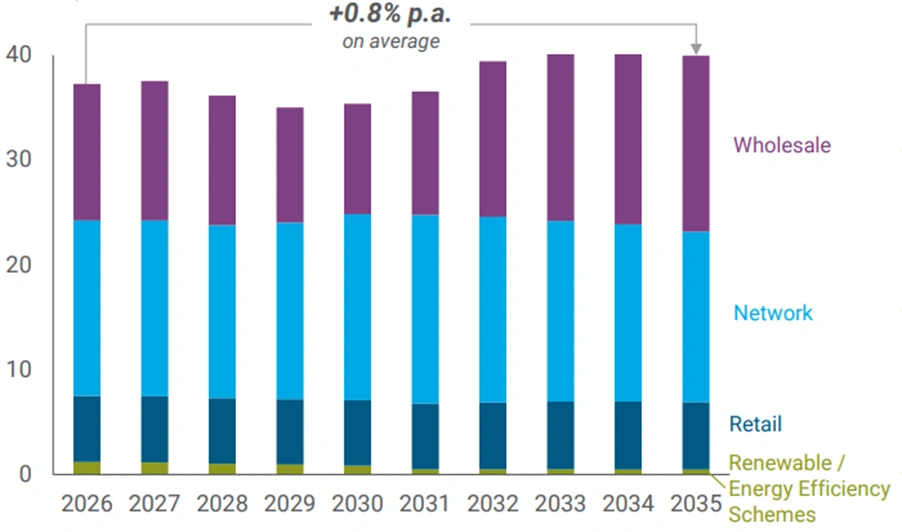
Average residential electricity price outlook
AEMC Chair Anna Collyer emphasised the critical five-year window ahead. “Our price outlook highlights a critical five-year window,” she said. “Residential electricity prices are projected to fall through 2030 as renewable generation and batteries ramp up.”
Wholesale electricity prices remain vulnerable to global fossil fuel market volatility. Australia’s continued reliance on coal and gas exports creates ongoing exposure to international price shocks.
The federal government maintains its 82 per cent renewable electricity target by 2030. Achieving this goal requires substantial private and public investment in generation, storage and transmission capacity.
Also Read: Popular Snack Pulled from Supermarket Shelves After Dangerous Discovery
FAQ: Energy Rebates Ending
Q: When do energy rebates stop?
A: Energy bill rebates expire on 31 December 2025. No further federal rebates will be applied to electricity bills from January 2026 onwards.
Q: How much will my power bill increase?
A: Most households will see quarterly bills rise by $75 to $150 without rebates. The exact increase depends on your electricity consumption and state of residence.
Q: Will state rebates continue?
A: Some state-based concession programs remain available for eligible households. Check your state government’s energy website for specific programs and eligibility criteria.
Q: Why are rebates ending?
A: The federal government cites budget constraints and structural deficits as primary reasons. Treasurer Jim Chalmers stated the rebates were always intended as temporary measures.
Q: Can I still get help with energy bills?
A: Yes. Contact your electricity retailer about hardship programs and payment plans. State concessions continue for eligible cardholders, and many providers offer payment extensions.
Q: What about small businesses?
A: Small businesses lose the $150 federal rebate after December 2025. Business-specific state programs may still be available depending on location and energy consumption levels.