Delta Lithium Limited (ASX: DLI) is sitting on one of the most extraordinary critical mineral discoveries in Australia. It’s Mount Ida rubidium deposit, located 220 kilometres north of Kalgoorlie in Western Australia’s Goldfields region, holds an estimated 62,000 tonnes of rubidium, worth a theoretical A$93 billion at current prices of roughly US$1.5 million per tonne.

Figure 1: Delta Lithium Limited logo representing the ASX-listed critical minerals company [Courtesy: InvestorHub]
The Company’s managing director, James Croser, has already been summoned to the Pentagon for discussions about the deposit. The United States defence establishment is actively seeking a secure supply of rubidium, a niche element used in night-vision goggles, atomic clocks, and quantum computing.
Inside the Mount Ida Rubidium Discovery
Mount Ida is not a new name on the Delta Lithium map. But the scale of what lies beneath it has given the Project a dimension few anticipated when the Company was founded.
A Grade That Stands Among the Highest Ever Found
Delta Lithium holds more than 60,000 tonnes of rubidium at Mount Ida, making the Australian rubidium deposit value one of the most discussed in global critical minerals circles. Croser describes rubidium as a “cutting-edge exotic metal” and has made no secret of his enthusiasm for it.
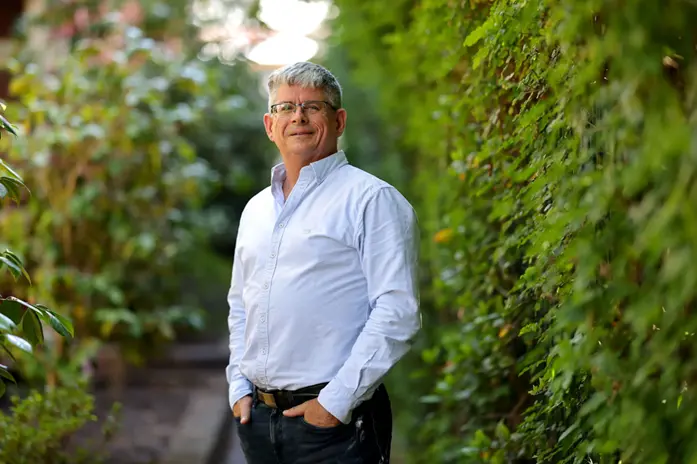
Figure 2: Delta Lithium Managing Director James Croser [Courtesy: Australian Financial Review]
“I love rubidium — it is my favourite element on the periodic table. There is a fair chance we will be able to solve Western allies’ rubidium anxieties for decades to come if they say the right things, do the right things and give us heaps of money,”Croser said.
The Demand Challenge That Shapes the Entire Conversation
The Mount Ida rubidium discovery faces one significant structural constraint. Key facts about the current rubidium market include:
- Total global demand for rubidium is less than five tonnes annually, worth approximately US$7.5 million
- At that rate of consumption, it would take an estimated 12,000 years to sell all of Delta’s rubidium
- Wall Street advisory firm Hallgarten and Company noted the element was so little used that the world would not stop turning if no rubidium were ever produced again
- The same firm identified a viable path for rubidium to become more relevant as a substitute for caesium, another highly reactive metal
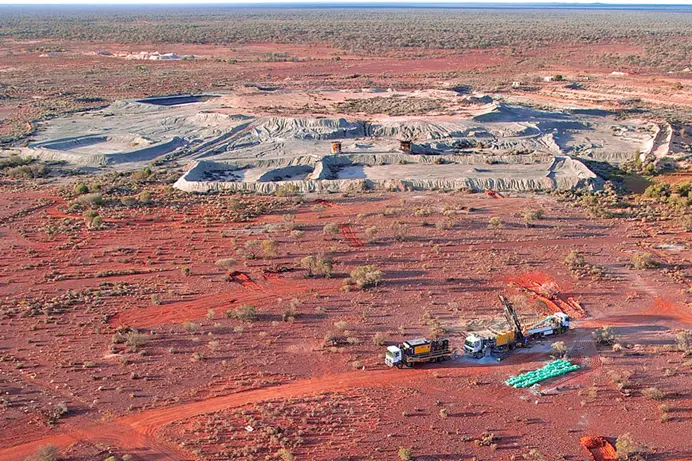
Figure 3: Mount Ida project site in Western Australia’s Goldfields region [Courtesy: Australian Mining]
The Pentagon’s Interest and the Western Allies’ Strategy
The fact that the United States Department of Defence has engaged directly with Delta Lithium says something meaningful about how seriously Washington is treating critical mineral supply chains.
Croser Takes Bags of Rubidium to Allied Governments
Delta Lithium has already begun the process of converting its resource into something governments can physically evaluate. The Company has produced bags of white powder from compositing work, which Croser plans to present directly to critical mineral departments across Western allied nations.
“We now have to figure out how good the rubidium asset is and what the hell we are going to do with it. We will take these bags of white powder to various critical mineral departments, to our Western allies,”Croser said.
A Processing Hurdle That Still Needs Solving
Hayden Bairstow, head of research at brokerage Argonaut, identified a material challenge in Delta’s rubidium ambitions. Rubidium is found in mica, which currently requires processing in China. There is no facility in the United States today capable of processing rubidium from this source. Bairstow noted, however, that the Trump administration’s push to fund critical minerals supply chains may eventually overcome this barrier.
What Else Sits Inside the Delta Lithium Portfolio
The Mount Ida rubidium discovery is the headline, but it is not the whole story. Delta Lithium holds a portfolio of assets that extends well beyond a single element.
The Ballard Mining Spin-Out and Its Gold Upside
Delta had initially put its Mount Ida gold assets up for sale before opting to retain a stake through a public offering as bullion prices spiked to record levels. Key details of the Ballard Mining transaction include:
- The A$30 million float in August last year left Delta with a 34.4 per cent stake in Ballard Mining
- Ballard’s market capitalisation peaked at A$300 million in January, double Delta’s own value at the time
- Ballard’s value has since settled back to A$200 million as the Iran conflict weighed on gold stocks
- Delta retained ownership of all minerals at Mount Ida apart from gold, including 2,500 tonnes of tantalum
Yinnietharra Adds Lithium and Tantalum Scale
Delta’s Yinnietharra operations in WA’s Gascoyne region are estimated to hold almost 22 million tonnes of one per cent grade lithium. The lithium price has rebounded more than fourfold since hitting lows of US$575 per tonne for six per cent grade. Yinnietharra also holds a large tantalum resource, a corrosion-resistant critical mineral used in electronics for capacitors that manage power in phones and laptops.
The Shareholders Behind Delta Lithium
The Company’s register carries two of the most recognisable names in Australian mining, which Croser views as a structural endorsement of the business. Mineral Resources holds 22.9 per cent of Delta Lithium, while Hancock Prospecting, the private vehicle of Gina Rinehart, Australia’s richest person, holds 11.4 per cent. Croser describes both as hands-off investors.
“It is a big thumbs up. When we want their opinion or support we will reach out, but generally there is zero interference,”Croser said.“The challenge is to put ideas in front of your shareholders that are worthy of their support. That is the sort of stuff that keeps me awake at night.”
Delta Lithium Share Price
Delta Lithium Limited (ASX: DLI) is currently trading at A$0.215 per share, with a market capitalisation of A$143.47 million. The 52-week range stands at A$0.145 to A$0.325 per share.
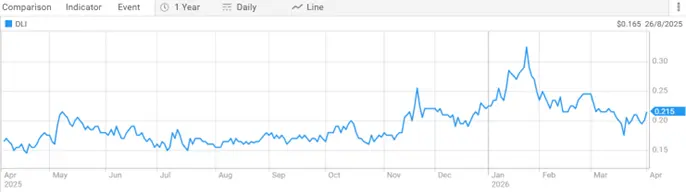
Figure 4: Delta Lithium Limited (ASX: DLI) share price performance over the past year [Courtesy: ASX]
Industry Outlook
The global critical minerals sector is undergoing a structural repricing as Western governments accelerate efforts to diversify supply chains away from China. Rubidium, tantalum, and lithium all feature on major allied nations’ critical minerals lists.
Funding mechanisms under the US Inflation Reduction Act and allied equivalents are increasingly being directed toward exploration and processing infrastructure. Australia’s position as a stable, allied jurisdiction with significant in-ground critical mineral endowment continues to attract institutional and government attention at scale.
Future Direction and Impact on Delta Lithium Investors
For Delta Lithium investors, the near-term catalysts are multi-layered. The Australian rubidium deposit value at Mount Ida remains theoretical until a viable processing pathway is established and demand conditions evolve. The Pentagon engagement suggests that the timeline could accelerate meaningfully if allied government funding commitments materialise.
Croser has been candid that the Company is actively exploring mergers and acquisitions, though none have concluded yet. “We have been doing a fair bit of research on some mergers and acquisitions. None of that has borne fruit yet, but you have to kiss a lot of frogs,” he said. “Sometimes not making a bad decision is a good move.”
The Delta Lithium rubidium news cycle is still in its early stages. With a cash-rich balance sheet, a high-profile register, and a resource that Western defence agencies are actively evaluating, the Company is positioned at an unusual intersection of exploration upside and geopolitical relevance.
ALSO READ:Surefire Resources Discovers New High-Grade Gold Zone at Yidby’s “Loot” Prospect
Frequently Asked Questions
Q1. What is the Australian rubidium deposit value at Mount Ida?
Ans. Delta Lithium’s Mount Ida deposit holds an estimated 62,000 tonnes of rubidium. At current prices of roughly US$1.5 million per tonne.
Q2. What is rubidium used for?
Ans. Rubidium is used in night-vision goggles, atomic clocks, and quantum computing. It is also being evaluated as a potential substitute for caesium.
Q3. Why has the Pentagon shown interest in the Mount Ida rubidium discovery?
Ans. The United States defence establishment is seeking a secure supply of rubidium for strategic and defence applications. Delta Lithium’s deposit is one of the highest grades ever discovered globally.
Q4. What is the main challenge facing Delta Lithium rubidium commercialisation?
Ans. Global rubidium demand is less than five tonnes per year. There is also currently no processing facility outside China capable of extracting rubidium from mica, the mineral in which it is found at Mount Ida.
Q5. Who are Delta Lithium’s major shareholders?
Ans. Mineral Resources holds 22.9 per cent of Delta Lithium, and Hancock Prospecting, the vehicle of Gina Rinehart, holds 11.4 per cent.
Disclaimer
This article is intended for informational purposes only and does not constitute financial or investment advice. All content is based on reporting published by the Australian Financial Review on 1 Apr 2026 and supplementary market data from publicly available sources. Share price and market capitalisation data reflect figures provided at the time of publication. Investing in securities involves risk. Readers should conduct their own research and seek independent financial advice before making any investment decisions. Colitco does not hold any position in the companies or organisations mentioned.
Sources
https://www.asx.com.au/markets/company/DLI
https://www.deltalithium.com.au
Last modified: April 1, 2026