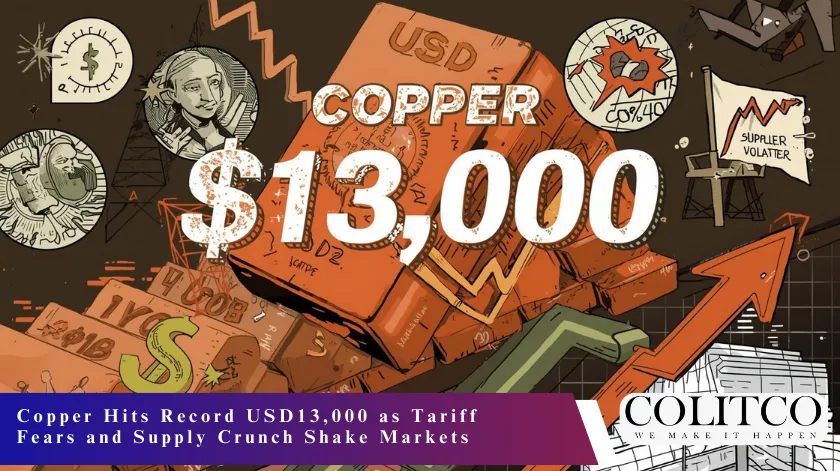
Something unusual is happening in the world of copper. The metal that powers everything from electric cars to data centres just broke through USD13,000 per ton for the first time. Copper prices today on the London Metal Exchange climbed to USD13,283 per ton on 06 Jan 2026, marking a 20% rally since mid-November 2025.

Figure 1: LME copper prices break above USD 13,000 per tonne in early January 2026. (Source: Yahoo Finance)
This is not just a price spike. It is a signal that supply is tightening while demand keeps growing. President Donald Trump’s tariff threats have sparked a rush to ship copper to the US, dominating copper trading news headlines. Mines in Chile and Indonesia face disruptions. And the rest of the world is starting to worry it might run short.
Why Copper Price Surge 2026 Is Breaking Records
The copper price surge 2026 started with a simple fear: tariffs. Trump has threatened to impose duties on imported copper, causing US prices to trade at a premium over London prices. This premium creates an arbitrage opportunity that traders cannot ignore.
Helen Amos, commodities analyst at BMO Capital Markets, explains it clearly. “The historic US inventory build is still in the driving seat of global copper prices.” In December 2025, US copper imports jumped to the highest level since July. That surge is not slowing down, reinforcing bullish copper trading news sentiment.
The Trump administration has asked the Commerce Department to review copper policy by the end of June 2026. A proposed 15% duty could begin in 2027, rising to 30% in 2028. Until then, everyone wants their copper safely landed in the US, adding pressure to copper prices today.
Here is the problem: the US holds roughly half of global copper inventories but uses less than 10% of global demand. That leaves the rest of the world scrambling. “Low inventories across major exchanges outside the US are leaving little room to absorb any further supply shocks,” warns Ewa Manthey, commodities strategist at ING Groep.
Mine Disruptions and Strikes Tighten Supply
Copper trading news is not just about tariffs. Physical supply is genuinely tight. A strike at Chile’s Mantoverde mine has reduced output. A deadly accident at the world’s second-largest copper mine in Indonesia halted production. An underground flood in the Democratic Republic of Congo caused further disruptions.
“Years of underinvestment and ongoing mine disruptions have left the market with little buffer,” Manthey adds. Miners have not been building enough new capacity to meet rising demand. And existing mines keep running into problems, keeping copper prices today elevated.

Figure 2: An open-pit copper mine highlighting global supply pressures. (Source: Mining Technology)
Smelters are also struggling. They have been forced to accept record-low fees because miners cannot secure enough raw material. This entire chain of pressure, from mines to smelters to traders, is pushing copper prices today higher.
Al Munro, senior base metals strategist at Marex, sees speculation at work too. “The reality is this is a speculative money-led bid as the market sees further topside, especially during the first quarter of 2026.” Investors who sat on the sidelines are now jumping in.
Energy Transition and Tech Demand Drive Long-Term Appetite
Beyond the short-term supply squeeze, copper has a structural story. It is essential for the energy transition. Electric vehicles use four times more copper than petrol cars. Wind turbines, solar panels and battery storage all need copper wiring.
Data centres are another massive source of demand. The artificial intelligence boom means more servers, more cooling systems and more copper cables. Miners and traders have warned for years that new supply is not keeping pace.

Figure 3: Processed copper products used across industrial and infrastructure sectors. (Source: RD2)
Kostas Bintas, head of metals at Mercuria Energy Group, warned in November 2025 that the US import rush would leave the rest of the world without copper. He called it “the big one” for copper bulls. That prediction is playing out now.
The market structure confirms the tightness. London copper is in backwardation, meaning spot prices exceed future prices. This pattern signals that physical metal is in short supply right now. It is not just a future problem; it is happening today.
Broader Metals Rally Lifts Entire Complex
Copper is not rising alone. The entire metals complex is surging. Gold, silver and platinum have hit records in recent weeks. Aluminium and tin are at multi-year highs. The LMEX Index, which tracks six base metals, reached its highest level since March 2022.
This coordinated strength suggests investors are seeking hard assets. Geopolitical tensions, inflation concerns and economic uncertainty are all playing a role. Copper benefits from being both an industrial metal and a strategic commodity.
Governments worldwide are worried about securing critical metals. Copper is vital for electrification, defence and infrastructure. That dual nature, industrial and strategic, makes it attractive to a wide range of buyers.
Market Outlook: More Upside Ahead
Copper trading news suggests the rally has room to run. Munro at Marex believes many investors have been “sidelined hoping for a dip.” As those buyers enter the market, prices could climb further in the first quarter of 2026.
UBS analysts note that while the global refined copper market was in surplus in 2025, flows were distorted by US tariffs. This means the surplus did not ease tightness where it was needed most. Regional imbalances are supporting prices.

Figure 4: Copper wiring used in power and construction applications. (Source: Economic Times Energy)
The cash-to-three-month spread in London remains firmly in backwardation. This pattern typically persists when physical tightness is real, not speculative. Until inventories rebuild outside the US, prices are likely to stay elevated.
Also Read: Culpeo Minerals Secures $3 Million to Advance High-Priority Copper Drilling Across Chile
Chinese demand also matters. As the world’s largest copper consumer, China’s buying patterns influence global prices. Seasonal demand typically picks up ahead of the Lunar New Year, which could add further support in January and February 2026.
FAQs
Q1. What are copper prices today?
Ans. Copper prices today on the London Metal Exchange last traded at USD13,156.50 per ton. The three-month benchmark surged to a record USD13,283 per ton.
Q2. Why is the copper price surge 2026 happening?
Ans. The copper price surge 2026 is driven by US import rush ahead of potential tariffs.
Q3. How do Trump tariffs affect copper trading news?
Ans. Trump tariff threats have caused US copper prices to trade at premiums over London prices. This incentivises shipments to the US, creating inventory imbalances.
Q4. What is the long-term outlook for copper prices?
Ans. Long-term copper trading news remains bullish on energy transition demand. Electric vehicles, data centres and renewable energy require significant copper content.