

Perenti Appoints New CEO Vanessa Torres
Perenti Limited (ASX: PRN) has announced on 1 Apr 2026 that Dr Vanessa Torres will succeed Mr Mark Norwell as Managing Director and Chief Executive Officer. The appointment follows an extensive search process led by the non-Executive Directors of the Perenti Board in partnership with a leading global executive search firm.

Figure 1: Perenti Limited logo [Courtesy: Perenti]
Dr Torres brings more than 25 years of senior leadership experience across global mining operations. Her appointment reflects the Board’s focus on building on Perenti’s strong foundations and continuing its evolution as a fully diversified mining services group.
A Proven Leader Chosen to Drive the Next Phase of Growth
The Board of Perenti positioned the CEO search around one clear objective. The Company needed a leader who could sustain the growth trajectory delivered under Mr Norwell’s tenure and advance Perenti’s long-term diversification strategy.
Torres Comes Directly from South32
Dr Torres most recently served as Chief Operating Officer at South32, a role she was appointed to in March 2024. In that position, she held full profit and loss accountability for Worsley Alumina, Cannington and Australia Manganese.

Figure 2: Dr Vanessa Torres, newly appointed Managing Director and CEO of Perenti Limited [Courtesy: ATSE]
A Career Built Across Four Continents
Dr Torres’s career spans four continents and over 25 years in global mining. Her key roles prior to joining Perenti include:
- Chief Operating Officer, South32, appointed March 2024, with full P&L accountability for Worsley Alumina, Cannington and Australia Manganese
- Chief Technical Officer and Chief Technology Officer, South32, joined in 2018, role expanded in 2020
- Senior executive roles at BHP for 11 years, including VP Production, Logistics and Operational Infrastructure, Head of Group Investments and Value Management, and VP Business Development at Nickel West
- Director of Business Development, Vale Base Metals, Canada, led major greenfield copper, nickel, phosphate and potash projects
Dr Torres holds a Doctorate and Master’s degree in Mineral Engineering from the University of São Paulo. She also holds a Bachelor of Science in Chemical Engineering from the Federal University of Minas Gerais, Brazil, and is a Graduate of the Australian Institute of Company Directors.
What the Board Said About the Decision
Perenti Board Chair, Diane Smith-Gander AO, spoke directly to both the outgoing and incoming leaders in the Company’s announcement.
Norwell’s Legacy of Fourfold Revenue Growth Acknowledged
Smith-Gander noted that under Mr Norwell’s leadership since 2018, Perenti delivered more than a fourfold increase in revenue and achieved material improvements across all key financial metrics. She acknowledged his genuine care for people as a hallmark of his leadership.
“On behalf of the Board and the entire Perenti workforce, I would like to thank Mark for his leadership in the transformation of Perenti and for his continued support through the transition,”Smith-Gander said.
Torres Welcomed as the Right Successor
Smith-Gander described Dr Torres as a highly accomplished executive with the right combination of qualities for the role.
“The Board believes Vanessa is the right successor for Mark and is confident her leadership will build on Perenti’s strong foundations, drive our strategy forward and support the Company’s next phase of growth,”she said.
Torres on Her Appointment and the Road Ahead
Dr Torres commented directly on why this Perenti CEO announcement details matter at this moment in the mining industry.
“It is an honour to have been appointed as Perenti’s next Managing Director and CEO at such an exciting time for the business and in a pivotal moment for the mining industry. I look forward to working collaboratively with the Board and management team to continue the development and delivery of …

WA Iron Ore Miners Face Diesel Risk Amid Global Supply Shock
Fuel Shortage Forces Operational Adjustments
Western Australia’s mining sector faced mounting pressure after a diesel supply disruption pushed some operators close to running out of fuel. Fenix Resources, a junior iron ore miner, reduced non-essential activities after its reserves dropped to critical levels. At certain points, the company had only one to two days of diesel available.
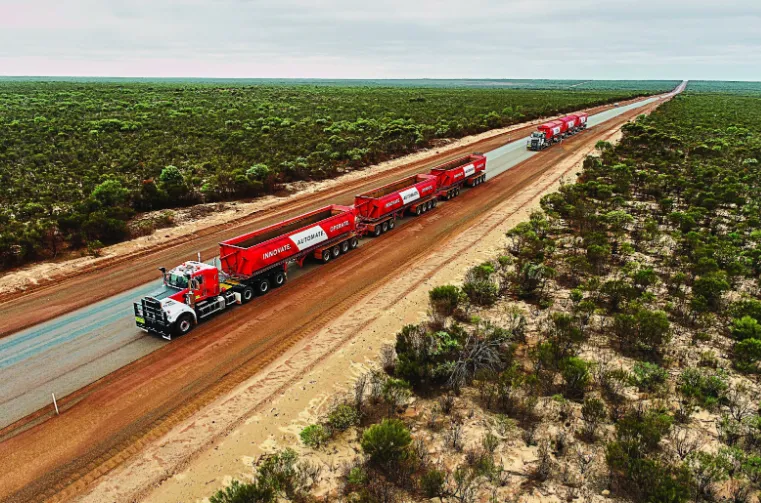
Road trains transport iron ore across long distances, increasing diesel demand for remote mining operations. [Australian Mining]
The Company typically maintains five to ten days of fuel on site. However, supply delays disrupted that buffer.
Management responded by prioritising core mining and haulage operations. This approach allowed the company to continue exporting iron ore while conserving fuel for essential tasks.
Heavy Diesel Reliance Exposes Supply Risk
Fenix Resources operates an integrated supply chain that includes mining, logistics, and port services. The company transports iron ore over long distances using road trains. This model depends heavily on a steady diesel supply.
The recent disruption exposed how quickly operations can come under strain. Without diesel, mining equipment cannot operate, and transport systems stop. This reliance makes fuel availability a critical factor in maintaining production continuity.
The issue extends beyond one company. Many smaller miners in remote areas rely on similar logistics systems. These operators often lack rail access and depend on trucking, which increases diesel consumption.
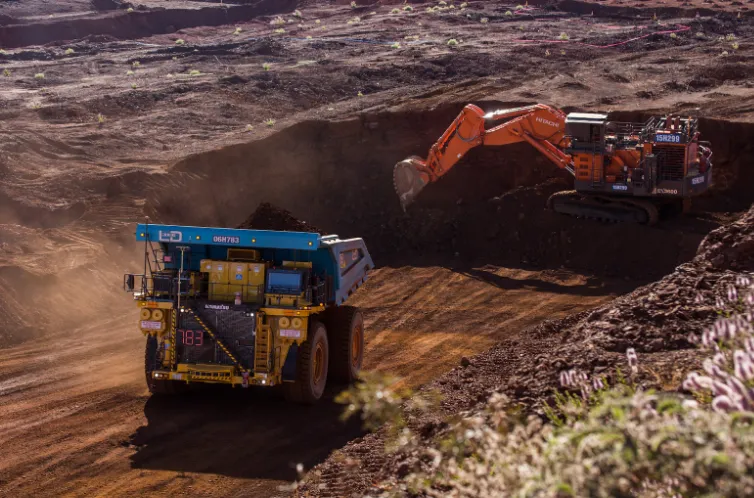
Iron ore mining operations in Western Australia rely heavily on diesel-powered equipment and transport systems. [International Mining]
Global Conflict Tightens Fuel Availability
The diesel shortage followed escalating tensions in the Middle East, which disrupted global energy markets. Damage to key infrastructure and the closure of major shipping routes reduced fuel supply flows. These developments affected countries that rely on imports, including Australia.
Australia imports a large share of its diesel. This dependency increases exposure to global disruptions. While contracted shipments continue to arrive, spot market supplies have tightened. These spot purchases usually act as a buffer during supply gaps.
As a result, suppliers have struggled to meet all delivery schedules. Some mining companies received notice of delays with little warning. This uncertainty has made fuel planning more difficult for operators.
Rising Costs Add Financial Pressure
Fuel price increases have added to the operational strain. At Fenix Resources, diesel costs rose from about 20 percent of total expenses to around 30 percent. This shift has reduced profit margins, even as production continues.
Higher fuel costs affect several aspects of mining operations. Transport expenses increase, and equipment operation becomes more expensive. These changes can reduce overall efficiency and financial performance.
Small and mid-sized miners face greater pressure from these cost increases. Larger companies often have stronger supply agreements and better access to reserves. In contrast, smaller firms operate with tighter margins and fewer alternatives.
Industry Faces Week-to-Week Supply Uncertainty
Industry groups have described the current fuel situation as unstable. Many smaller miners now operate on a week-to-week basis regarding diesel availability. This short-term outlook makes planning more difficult and increases operational risk.
Businesses that support the mining sector have also reported challenges. Contractors, transport providers, and regional service firms rely on diesel for daily operations. Limited supply affects their ability to maintain services, which in turn impacts mining activity.
The uncertainty has already forced some companies to adjust workflows. Operators have reduced non-essential work and delayed certain tasks. These measures aim to extend fuel reserves while awaiting new deliveries.
Government Moves to Stabilise Supply Chains
The Western Australian government has stepped in to address the situation. Authorities have requested detailed information from fuel distributors on supply allocation. The aim is to ensure that critical industries receive priority …

3 Best Stocks to Buy Amid Mounting Stagflation Fears
The Best Stocks To Buy Amid Stagflation Fears are getting a lot of attention as the world faces rising uncertainty. Oil prices have gone up sharply because of the U.S.-Iran conflict.
This has made people worry about stagflation, which is when prices go up, and the economy does not grow. Investors are now looking at sectors with strong business models. Wall Street analysts think Brookfield Infrastructure Partners, SLB and RTX are choices.
These companies make money in a way and work in areas that are always needed, even when the economy is slow. Each of these stocks has a Strong Buy rating, which means people think they will do well. They are good for investors who are careful.

Rising oil prices and geopolitical tensions drive investors towards defensive stocks. [Courtesy: Reuters]
Why Are Stagflation Fears Increasing Globally?
Stagflation fears are going up because of problems between countries and higher energy costs.
The U.S.-Iran conflict has made oil prices go up a lot. Higher oil prices make inflation go everywhere. At the time, the economy is not growing because money is tight.
This makes it hard for businesses and people. Analysts think that if inflation stays high for a time, it could hurt how much money people can buy and how much companies can make.
As things get more uncertain, investors are moving away from stocks that are risky stocks. Instead, they want stability and steady returns.
Which Stocks Are Identified As Top Picks By Wall Street?
Wall Street analysts are highlighting three resilient stocks as top picks amid rising stagflation concerns, supported by strong fundamentals and upside potential.
- Brookfield Infrastructure Partners (BIP): Operates diversified assets across utilities, transport, midstream, and data sectors, expects annual distribution growth of 5% to 9%, offers a dividend yield of about 5%, has gained more than 18% over the past year, holds a Strong Buy rating (five Buys, one Hold), and its $45 price target implies 28% upside.
- SLB (formerly Schlumberger): Operates in over 100 countries, has surged more than 34% year-to-date, increased its quarterly dividend by 3.5% to $0.295, offers a forward dividend yield of about 2.3%, holds a Strong Buy rating with 15 unanimous Buys, and its $55.51 price target suggests 8% upside.
- RTX Corp. (RTX): Benefits from rising geopolitical tensions, reported a $268 billion backlog (including $161 billion commercial and $107 billion defence), has gained 42% over the past year, offers a dividend yield of about 1.5%, expects ~6% organic growth in FY26 with EPS of about $6.70, and its $227.45 price target indicates 21.5% upside.

Infrastructure, energy, and defence stocks lead Wall Street’s stagflation strategy. [Courtesy: The Economic Times]
How Do These Companies Perform During Economic Stress?
The companies succeed during times of economic distress because they operate under business frameworks that demonstrate strong durability. Essential infrastructure assets create a steady income for Brookfield Infrastructure.
The company maintains economic stability through its various business operations. SLB experiences direct advantages from higher oil prices because they boost demand for its services.
The worldwide operations of the company help it establish additional income sources. Geopolitical conflicts lead to increased defence budgets, which benefit RTX operations.
The organisation maintains a substantial order backlog, which provides them with extended revenue projection capabilities. The three companies establish themselves as dependable options during times when economic conditions remain unpredictable.
What Makes Defensive Stocks Attractive In The Current Market?
Defensive stocks attract investors who want to protect their investments when market conditions become unpredictable. Investors seek companies that can maintain earnings despite inflationary pressures.
Infrastructure, energy and defence sectors continue to operate as essential industries throughout …

Turaco Gold Lifts Afema Resource to 4.65Moz in Major 2026 Upgrade
Turaco Gold has expanded its Afema Project resource in Côte d’Ivoire to 4.65 million ounces, the company’s third upgrade in under two years and the clearest signal yet that the project is maturing into something substantial.
The March 2026 Mineral Resource Estimate follows an extended drilling campaign across seven deposits on the Afema shear corridor, all sitting within a 10-kilometre radius of each other.
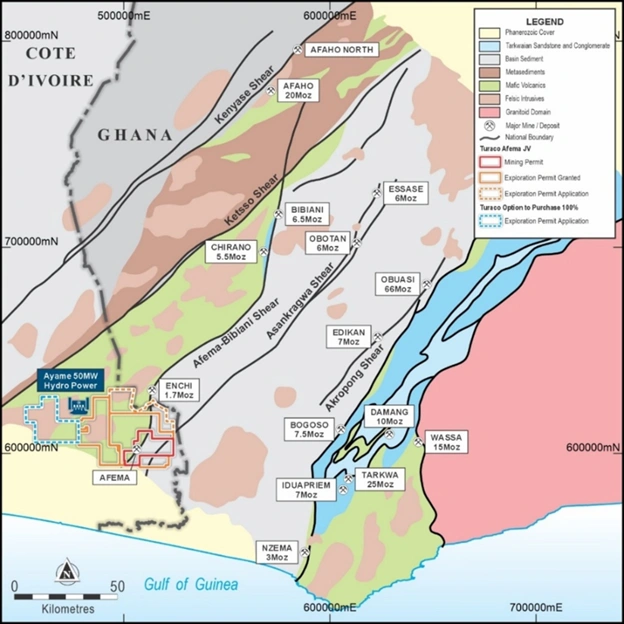
Afema Gold Project, Côte d’Ivoire — 2026 Mineral Resource Expansion [Turaco Gold]
The resource now stands at 115.3 million tonnes at 1.3 grams per tonne. Since the maiden estimate in 2024, Turaco has added more than two million ounces, a rate of growth that has few recent parallels in the region.
Managing Director Justin Tremain pointed to geology, drilling intensity and the sheer scale of the mineralised system.
“Afema continues to demonstrate exceptional growth potential, with several deposits still open along strike and at depth,” he said.
Tremain noted that shallow mineralisation and strong recoveries have helped the company move quickly through resource modelling.
A Rapid Rise Over Eighteen Months
The maiden Afema MRE, released in August 2024, outlined a promising but early system. By May 2025, it had reached 3.55Moz. October brought another jump to 4.06Moz. The latest update adds 590,000 ounces on top of that, driven by drilling at Woulo Woulo, Adiopan, Asupiri, Toilesso, Anuiri, Begnopan, Herman and Jonction.
Most deposits sit close together, linked by the Afema shear, a structure that had been identified as prospective for years before Turaco moved in. The exploration program has drawn on RC and diamond drilling, geophysics, soil sampling and auger drilling, with JORC-compliant modelling handled by independent consultants.
Metallurgical test work completed in 2025 returned recoveries of between 84.4% and 90.3% across key deposits. Those numbers fed into pit optimisations based on a gold price assumption of US$3,250 per ounce, underpinning the resource classification.
A Strengthening Position in Côte d’Ivoire’s Mining Landscape
Gold output in Côte d’Ivoire has risen sharply over the past decade. Where Burkina Faso and Mali once dominated West African exploration coverage, the Ivorian government’s permitting framework and investment climate have drawn increasing interest from developers.
Afema’s growth adds to that picture. For Turaco specifically, it firms up the company’s standing among ASX-listed West African explorers. The company closed 2025 with A$68 million in cash, giving it room to push toward development while keeping the drills turning.
The scale of the resource has drawn comparisons to other multi-million-ounce projects in the region. With several corridors still underexplored, the argument for further growth has not weakened.
Drilling Strategy and Technical Work Behind the Growth
Turaco ran multiple rigs through 2025, working first on near-surface delineation before extending along strike. The sequencing allowed the company to build inferred and indicated ounces without losing pace across multiple deposits at once.
Gradient array IP surveys mapped chargeability anomalies and sharpened drill targeting. Soil geochemistry defined high-priority structures, many of which are still producing strong intercepts.
All seven deposits in the MRE remain open, with the most immediate growth expected at Woulo Woulo, Herman, Jonction, Adiopan and the Niamienlessa tren, a 25-kilometre corridor that has seen minimal drilling.
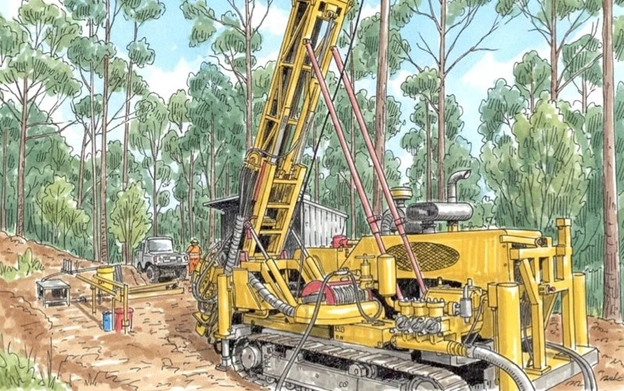
Turaco’s multi-rig drilling program has driven rapid resource growth. [Small caps]
Infrastructure, Location and Permitting Advantage
Afema sits roughly 120 kilometres east of Abidjan, near the Ghanaian border. Sealed road access, nearby power infrastructure and a mining permit valid through 2033 reduce the logistical friction that slows many greenfield projects at this stage.
Côte d’Ivoire’s mining code has a reputation for relative clarity on permitting and land-use approvals.
The government has pushed for …

ASX Growth Shares Under Pressure – A Closer Look at the Current Opportunity
The best ASX growth shares have taken a hit in recent weeks as global market volatility continues to weigh on investor sentiment. The pullback has been broad, affecting high-quality platform businesses that have continued to execute operationally despite the turbulence. For long-term investors, the gap between share price and business performance is drawing renewed attention.
Figure 1: ASX logo displayed on market board highlighting Australian equities performance [Courtesy: Reuters]
The question of whether to buy the market dip is rarely straightforward. Prices falling does not automatically mean value is appearing. But when strong businesses are sold off alongside weaker ones, the case for selective positioning tends to become more compelling.
High-Quality Businesses Caught in a Broad Sell-Off
The current weakness across the best ASX growth shares appears driven more by sentiment than fundamentals. That distinction matters for investors trying to assess whether today’s prices reflect a genuine deterioration in business quality or simply a shift in market mood.
What Is Driving the Derating?
Several factors are behind the current pressure on ASX tech shares outlook. Rising interest rates, concerns around artificial intelligence, and broader global growth fears have all contributed to a reassessment of growth stock valuations.
When rates are elevated, the future earnings that growth companies promise are discounted more heavily. That mechanical pressure has weighed on multiples across the sector, even for businesses whose operational performance has not changed. The decision to buy the market dip in this environment requires distinguishing between businesses whose long-term thesis remains intact and those facing genuine structural headwinds.
Wisetech, TechnologyOne, and Life360 Pull Back Despite Solid Execution
Three names that reflect the current tension between sentiment and fundamentals are Wisetech Global Ltd (ASX: WTC), TechnologyOne Ltd (ASX: TNE), and Life360 Inc. (ASX: 360). Each has seen significant share price declines despite continuing to execute on their respective growth strategies.
Wisetech operates a global logistics software platform with a deeply embedded customer base. TechnologyOne is an enterprise software business with a strong track record of recurring revenue growth. Life360 provides a family safety and location-sharing platform with a growing global subscriber base.

Figure 2: Digital network visual representing technology-driven growth companies [Courtesy: Freepik]
All three sit within the broader ASX tech shares outlook that investors are currently reassessing. For those tracking the best ASX growth shares, the operational profiles of these businesses have not materially changed. What has changed is how much investors are willing to pay for them.
The Case for Gradual Accumulation During Volatility
Growth investing does not become easy simply because prices fall. The trade-off between paying a premium for future earnings and the risk that expectations shift remains present at every point in the cycle.
Selectivity Matters More Than Timing
The most practical approach to buying the market dip in growth shares is gradual accumulation rather than attempting to pick an exact bottom. Building positions over time smooths out volatility and reduces the pressure of needing perfect timing.
Selectivity remains essential. Not every business that falls is worth buying. The strongest candidates among the best ASX growth shares tend to share common characteristics: strong balance sheets, clear competitive advantages, and a demonstrated track record of execution through difficult conditions.
Long-Term Drivers Remain Intact
What makes the current environment worth paying attention to is the combination of short-term uncertainty and long-term structural growth. Digital transformation continues across industries.
Enterprise software adoption has not slowed. Healthcare innovation is accelerating. These are the tailwinds that underpin the ASX tech shares outlook over a multi-year horizon. The macro concerns around rates and global growth are real. But they are cyclical.

Figure …

St George Mining Forges Strategic European Alliance to Unlock World-Class Araxá Rare Earths
St George Mining Limited (ASX: SGQ) has taken a significant...

REA Group Share Price Slides to Multi-Year Low
REA Group Ltd (ASX: REA) saw its share price sink to a multi-year low on 30 Mar 2026, touching A$147.57 in intraday trade. That marked the weakest level for the REA share price forecast watchers have tracked since October 2023, extending a difficult run that has seen the stock fall around 17% since the start of the year.
Figure 1: REA Group office building exterior displaying the company logo [Courtesy: ABC News]
The sell-off is unfolding even as REA continues executing an on-market buy-back programme of up to A$200 million. For investors weighing ASX REA buy or sell decisions, the combination of a declining share price and active Company-backed buying adds a layer of complexity to the current picture. Broader shifts across the sector can also be seen in major bank transformation strategies.
The Sell-Off Behind the Multi-Year Low
The REA share price forecast has deteriorated sharply since October 2025, when shares were trading above A$220. The move to the A$147 to A$151 range represents a significant derating of one of the ASX’s most recognised technology and property platform businesses.
Valuation Reset, Not a Business Breakdown
The current weakness appears driven by a broad reassessment of how much investors are willing to pay for growth. Similar valuation pressures have been visible across ASX financial stocks outlook.
REA has historically commanded a premium valuation, supported by its dominant position in online property listings, strong profit margins, and reliable cash generation.
That premium is now being wound back. The ASX REA buy or sell debate centres less on any deterioration in business fundamentals and more on a market-wide shift away from paying high multiples for growth stocks. REA’s agent network, audience reach, and pricing power across premium listing products remain intact.
Property Market Conditions Add Pressure
A second layer of concern is the state of Australia’s housing market. REA’s revenue is closely tied to listing volumes, developer advertising budgets, and overall property transaction activity.
With interest rates remaining elevated and housing affordability stretched, investors are questioning the pace at which listing activity can recover. Fewer homes changing hands reduces demand for premium listing products and display advertising, both of which are central to REA’s growth profile.
This dynamic was also a driver of weakness the last time the REA share price forecast reached these levels in October 2023.
REA’s On-Market Buy-Back Continues Through the Weakness
While the share price has fallen, REA Group has been systematically buying back its own shares on the market since 23 Feb 2026. The programme runs until 31 Dec 2026 and is being executed through Goldman Sachs Australia Pty Ltd.
Buy-Back Data From the 31 Mar 2026 ASX Filing
According to the Appendix 3C notification filed on 31 Mar 2026, REA had bought back a total of 439,259 ordinary fully paid shares as at the end of 30 Mar 2026. Of that total, 33,863 shares were bought back on 30 Mar 2026 alone, at a total consideration of A$5,090,272.61.
The highest price paid across the entire programme to date was A$174.00 per share on 9 Mar 2026. The lowest price paid was A$147.83 per share on 27 Mar 2026. The buy-back does not require shareholder approval and has no fixed minimum or maximum number of securities, giving the Company full discretion on timing and volume.
The programme covers ordinary fully paid shares from a total pool of 132,117,217 securities on issue. For those tracking REA stock undervalued 2026 signals, the fact that the Company is actively purchasing shares near multi-year lows carries some weight.
REA Group Share Price
REA Group Ltd (ASX: REA) is …

Challenger Backs APRA Capital Rule Changes
Challenger Limited (ASX: CGF) has welcomed APRA’s announcement on 31 Mar 2026 of the final changes to capital standard settings for providers of longevity products. The insurance company capital changes Australia has been anticipating will come into effect from 1 Jul 2026, marking a significant shift in how longevity product providers are regulated.

Figure 1: Challenger Limited logo representing the Australian retirement income provider [Courtesy: Stocklight]
Challenger, Australia’s largest provider of annuities, sees the APRA regulatory changes 2026 Australia as a meaningful step forward for the country’s retirement income market. Challenger’s recent momentum was also evident in its strong 1H26 results, which showed rising earnings, record annuity sales, and continued funds growth.
The new framework is expected to support wider uptake of lifetime income products as more Australians approach retirement each year.
APRA’s Capital Framework and Its Significance for Longevity Providers
The final capital standard settings represent a generational shift in how regulators approach longevity product providers. For Challenger Investment Solutions Australia, the practical implications are direct and material.

Figure 2: APRA logo representing Australia’s prudential regulator [Courtesy: LinkedIn]
Lower Capital Requirements and Reduced Cyclical Risk
Challenger has confirmed that the new framework will lower the levels of required capital for the Company. It will also reduce cyclical risks to its capital position during periods of market stress, while maintaining policyholder security.
The insurance company capital changes Australia introduces are targeted specifically at providers operating in the retirement income space. These changes reflect a broader recognition that Australia’s superannuation system, while strong at accumulating savings, requires better structural support on the retirement income side.
Nick Hamilton Calls the Reforms a Generational Change
Challenger Managing Director and Chief Executive Officer Nick Hamilton offered a direct view on the significance of the APRA regulatory changes 2026 Australia represents.
“We strongly welcome APRA’s reforms, which represent the biggest changes for providers of longevity products in a generation. For Challenger, it will lower the levels of required capital and cyclical risks to our capital position during times of market stress, while maintaining policyholder security.”

Figure 3: Nick Hamilton, Managing Director and CEO of Challenger Limited [Courtesy: Challenger]
Hamilton also addressed the broader retirement challenge, noting:
“Our superannuation system is world-class at building retirement savings, but it’s still a work in progress when it comes to delivering sustainable incomes in retirement. Market volatility and high inflation are a sobering reminder that Australian retirees carry all the risks to their financial security and are ill-equipped to quantify and manage these.”
Challenger’s Role in Australia’s Retirement Income Market
Challenger is an investment management firm focused on delivering financial security for customers in or approaching retirement. The Company operates two divisions: a fiduciary Funds Management division and an APRA-regulated Life division.
Challenger Life Company Limited is Australia’s largest provider of annuities. The Company’s positioning as the country’s leading annuity provider makes it one of the most directly exposed beneficiaries of the APRA regulatory changes 2026 Australia has finalised.
Investor Day Set for 26 May 2026
Challenger is currently working through the full details of the final capital standards for longevity products. The Company has confirmed it will provide further detail on how the insurance company capital changes Australia introduces will relate to the business at its Investor Day, to be held on 26 May 2026.
The Investor Day is expected to give analysts and investors a clearer picture of how the regulatory changes translate into financial outcomes for Challenger Investment Solutions Australia, delivered through its Life division.
Challenger Share Price
Challenger Limited (ASX: CGF) is currently trading at A$8.390 …

Magellan Completes Share Purchase Plan (MFG)
Magellan Financial Group Ltd (ASX: MFG) has confirmed the successful completion of its Share Purchase Plan, marking a key milestone in its capital raising strategy.
The plan closed at 5:00 pm Sydney time on Wednesday, 25 March 2026, achieving its stated target of $20 million.
The Company issued approximately 2,366,548 new fully paid ordinary shares at a price of $8.45 per share, which matched the institutional placement price that it announced on Monday, 2 March 2026.
The Magellan shareholder update demonstrates a systematic method to handle capital, which protects current shareholder interests.

Magellan confirms completion of its $20M share purchase plan. [Courtesy: Dreamstime]
What Happened In The Magellan Shareholder Update?
The Magellan share plan news demonstrates high shareholder engagement because the Company received $129.4 million in legitimate applications. A total of 5,195 eligible shareholders participated, representing a participation rate of 17%.
The Company followed the plan’s rules to implement a scale-back process because demand for the product exceeded the $20 million target.
Applications up to $997.10 or up to 118 shares were not scaled back, while larger applications were reduced on a pro-rata basis. The allocation process used shareholdings recorded at 7:00 pm Sydney time on Friday, 27 February 2026, to establish an equal distribution method for all participants.
Magellan Completes Share Plan News Highlights Oversubscription Strength
The oversubscription reached its maximum level because investors showed strong confidence in Magellan Financial Group’s future prospects.
The offer attracted six times more demand than its original target, which proved to be its most attractive feature. The structured scale-back process distributed assets fairly to shareholders, who received their maximum application limit of $30,000.
The program provided each eligible participant with 118 new shares as their base allocation, which maintained the program’s open access policy.
The Company demonstrates its capability to raise funds because it secures investments from sources that compete with its market position.

Oversubscription reflects strong investor confidence in Magellan. [Courtesy: Magellan Investment Partners]
Why Does This Magellan Shareholder Update Matter To Investors?
The current development shows that investors want to invest while the Company keeps its capital spending under strict control.
The Company achieved $129.4 million in application increase because investors believe in its business plan and future results. The pricing of shares matches institutional placements, which gives investors equal access to the market.
The scale-back mechanism shows that the Company treats its shareholders according to equitable standards. The asset management industry displays positive market sentiment when participation levels reach these thresholds.
MFG Share Plan Details, Outline, Allocation, and Timeline Clarity
The MFG share plan details establish precise timelines that investors and stakeholders can use to track their investments. The new shares are expected to be issued on Wednesday, 1 April 2026, and commence trading on the ASX on Thursday, 2 April 2026.
These shares will maintain the same rights as current shares, which protects existing shareholders from losing their entitlements. The Company plans to send holding statements between the scheduled date and Wednesday, 8 April 2026.
The Company will process refunds for scaled-back applications through direct credit on Wednesday, 1 April 2026, according to the SPP Booklet, which was issued on Wednesday, 11 March 2026.

Timeline confirms issuance, trading, and refund schedule for investors. [Courtesy: Nacha]
How Will The Magellan Shareholder Update Influence Future Strategy?
A strong capital raise and investor backing position Magellan for its next phase of growth and strategic execution:
- Enhances capital structure, supporting long-term strategic initiatives and financial stability.
- Provides additional funds to improve operational flexibility across business segments.
- Enables investment in emerging market opportunities and potential growth areas.
- Encourages market participants to

Telstra’s Coverage Maps Are Shrinking. Here’s What That Means for You
Australia’s communications regulator, the Australian Communications and Media Authority (ACMA), published its final Telecommunications (Mobile Network Coverage Maps) Industry Standard 2026 on 31 March. Mobile operators must publish standardised 4G and 5G coverage maps by 30 June 2026, using one of four categories: good, moderate, basic, or no coverage.
The rule is meant to give consumers an apples-to-apples comparison between Telstra, Optus, and TPG. But Telstra says the fine print could mislead millions of customers, particularly those in regional Australia.
A Signal Threshold That Could Redraw the Map
The crux of the issue is a single technical number.
Under the new rules, areas with signal strengths below -115 dBm are declared as not having a usable service and cannot be shown on coverage maps. That threshold determines what counts as “coverage” and what gets labelled as nothing at all.
Telstra says the draft would wipe roughly a third of its landmass from its map, potentially erasing around one million square kilometres. The company argued for a lower cutoff of -122 dBm, which it says more accurately reflects where calls, texts, and data actually work.
Every month, more than 1.5 million Telstra customers use coverage that sits below that -115 dBm threshold. That includes people travelling through remote areas, not just those who live there.
What Telstra Says Its Network Actually Delivers
Telstra ran independent tests to back its position before the final standard was handed down.
In late 2025, a third party drove 60,000 kilometres across the country using a standard Samsung S25 smartphone with no external antenna. Results showed that more than 90% of the time, customers at -122 dBm could load web pages within seconds, start apps without excessive delay, and make clear voice calls.
The company also points to the volume of emergency calls made in areas that will now appear blank on the new maps. Around 57,000 emergency calls are made each year in those zones, along with 700,000 voice calls and 750,000 texts per day, plus 300TB of data.
Shailin Sehgal, Telstra’s Group Executive for Global Networks and Technology, put it plainly: “If a map says ‘no coverage’ but a customer can still call, text or get online nine out of ten times, there’s a very real risk of confusion.“

Telstra’s existing coverage map (left) compared to the projected reduced map under the ACMA standard (right). [Telstra]
Optus and TPG Are on the Other Side
Not everyone agrees with Telstra’s reading.
TPG Telecom urged the ACMA to adopt the -115 dBm threshold, saying it was “deemed acceptable” by the federal government’s National Audit of Mobile Coverage. The carrier also repeated claims that its engineers could not make calls in areas Telstra labelled as full coverage.
A TPG spokesperson called the new standard “a win for consumers,” saying coverage should mean a phone actually works, not that it might show a bar of signal that cannot support a call.
The ACCC also backed the stricter approach, saying the lack of a transparent standard had prevented it from taking enforcement action against misleading coverage claims. The competition regulator recommended that telcos not be given flexibility to adopt alternative thresholds, at least for now.
What the New Standard Actually Requires
The new rules are not just about what counts as coverage. They also standardise how maps are presented.
The ACMA acknowledged that in areas shown as having no coverage, some people may still be able to make calls or send SMS, but overall service is expected to be very limited, inconsistent, or non-existent. Maps must also be updated at least every three months.
ACMA …

