
Canada said it respects its obligations under the United States–Mexico–Canada Agreement and will not pursue free trade deals with non-market economies. Prime Minister Mark Carney responded after U.S. President Donald Trump warned of sweeping tariffs over any agreement with China.
Carney Restates USMCA Obligations
Prime Minister Mark Carney said Canada remains bound by its commitments under the USMCA. He told reporters in Ottawa that Canada has no plans to sign free trade agreements with non-market economies.
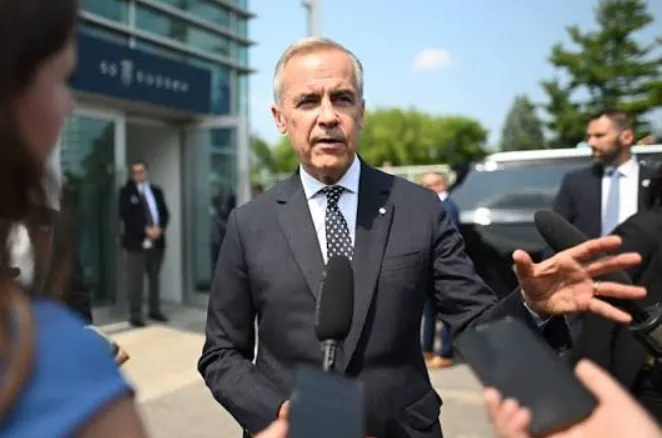
Canadian Prime Minister Mark Carney speaks to reporters in Ottawa on Jan. 25, 2026, following comments on USMCA commitments and China trade ties. Source: Westcentralonline
Carney said the government will not pursue such deals with China or any similar economy. He added that Canada continues to respect notification rules required by the trade pact.
The USMCA requires advance notice if a member seeks an agreement with a non-market country. Carney said Canada will follow those provisions and maintain transparency with partners.
He said Canada is not seeking a new trade framework with China. He stressed that recent actions aim to address existing trade disputes.
Response to Trump’s Tariff Threat
Carney’s comments followed a warning from U.S. President Donald Trump. Trump said the United States would impose a 100 percent tariff on Canadian goods.
The threat was tied to any deal Canada might make with China. Trump did not define what would qualify as a “deal.”
Carney said Canada has no intention of entering a free trade agreement with China. He said Canada’s actions do not breach USMCA obligations.
He said the government seeks stability in trade relations with the United States. He also said Canada values its role within North American supply chains.
Addressing Trade Issues With China
Carney said Canada is working to resolve issues that developed in recent years. He described the effort as “going back to the future” on several trade fronts.
He said the focus includes electric vehicles, agriculture, and fish products. He added that Canada is strengthening protective measures in these sectors.
Canada recently reached an agreement with China on electric vehicle imports. The deal allows 49,000 Chinese EVs at a reduced tariff rate.
In exchange, China lowered tariffs on Canadian canola and other products. Carney said the arrangement aims to correct imbalances.
Trump’s Social Media Posts Escalate Tensions
Trump addressed the issue on his Truth Social account. He claimed China was taking over Canada’s economy and social fabric.
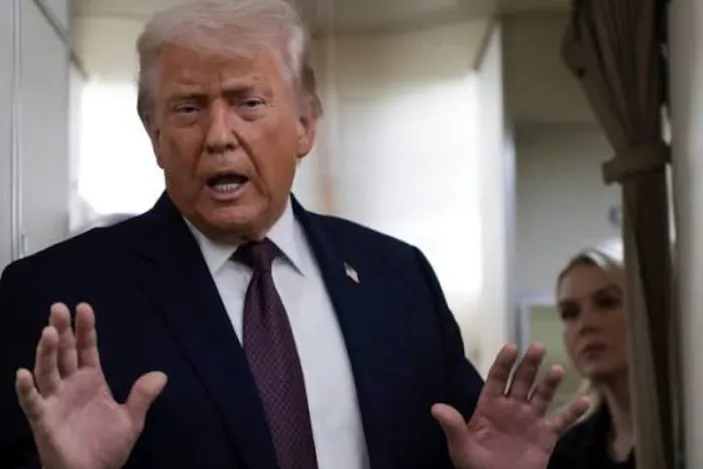
U.S. President Donald Trump’s Truth Social post warning Canada over a potential trade deal with China. Source: PBS
He wrote that Canada would face tariffs if it became a conduit for Chinese goods. He also referred to Carney as “Governor,” echoing past remarks.
The post followed an earlier statement where Trump praised Canada’s China agreement. He had said securing a deal was a good thing.
The shift in tone drew attention in Ottawa. Canadian officials said they are seeking clarity on the administration’s position.
U.S. Treasury Secretary Adds Conditions
U.S. Treasury Secretary Scott Bessent later clarified the tariff threat. He said tariffs could follow if Canada made a free trade deal with China.
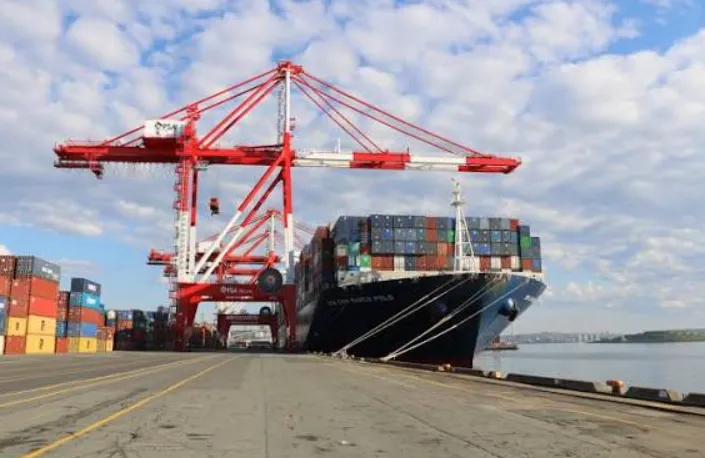
Cargo vessels at a Canadian port, reflecting ongoing trade flows between Canada and China. Source: Port of Halifax
He said concerns would grow if Canada allowed Chinese goods to enter the United States. He described such a scenario as dumping.
Bessent made the comments during an interview on ABC’s This Week. He linked the warning to broader trade enforcement goals.
Canadian officials noted that no free trade agreement is under discussion. They said recent arrangements remain sector specific.
Trade Diversification and China Visit
Carney visited China earlier this month. The trip aimed to diversify trade and resolve tariff disputes.
China is Canada’s third-largest trading partner. Officials said dialogue was needed to stabilize commercial ties.
Carney said diversification does not mean abandoning existing commitments. He said Canada seeks balanced trade relations.
He said recent measures are limited to correcting specific barriers. He denied any plan for a comprehensive trade pact.
Foreign Affairs Minister Signals Broader Strategy
Foreign Affairs Minister Anita Anand said Canada will not rely on a single partner. She said trade diversification remains a core policy.
She said Canada will pursue pragmatic steps with multiple countries. She cited cooperation with allies on energy needs for Ukraine.
Anand said Canada plans further engagement with India. She said the government will continue outreach in Asia.
She said protecting the Canadian economy requires wider market access. She said diversification supports resilience during trade disputes.
Davos Speech Adds Diplomatic Strain
Tensions rose after Carney’s speech at the World Economic Forum in Davos. He said economic integration was being used as a weapon.
Trump criticized those remarks. He said Canada depended on the United States for its prosperity.
Carney later said his comments reflected concerns shared by middle powers. He said cooperation remains essential.
Anand said Canada would continue its Middle East policy. She said recent U.S. actions would not alter Canada’s approach.
Also Read: Australia Names Greg Moriarty as New US Ambassador Amid Shifting Global Alliances
Outlook for Canada–U.S. Trade Relations
Canadian officials said they remain focused on the upcoming USMCA review. They said maintaining stable relations with Washington remains a priority.
Economists said Trump’s threats reflect a strategy to limit Canada’s options. They said diversification could strengthen Canada’s bargaining position.
Carney said Canada will continue to respect all treaty obligations. He said the government seeks constructive engagement with all partners.
He said Canada’s goal is predictable trade relations. He said the government will act within existing legal frameworks.