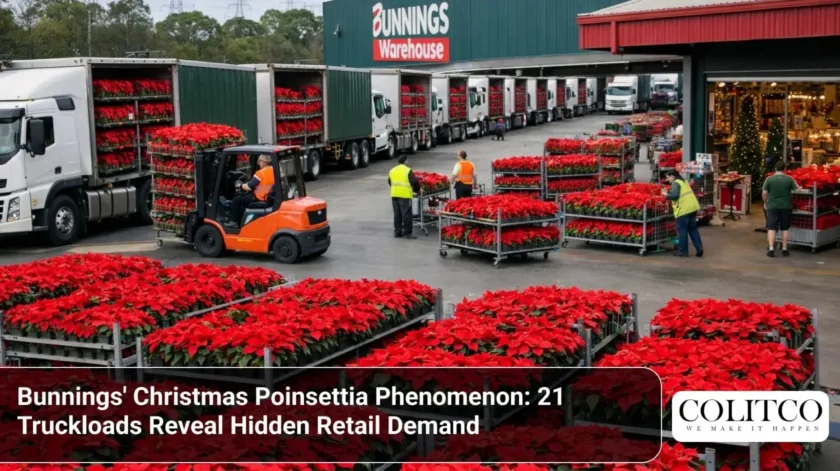
Bunnings customers flock to hardware stores seeking trampolines, swing sets, and viral Mini Bear blind boxes each Christmas season. Yet one unassuming item consistently outperforms expectations across the retail giant’s shelves. A modest $10 potted flowering plant with brilliant red leaves dominates December purchasing patterns nationwide.
Poinsettias have become the unexpected Christmas sensation at Bunnings stores. The hardware chain moves approximately 21 B-double truckloads of these distinctive plants across New South Wales, South Australia, and Victoria during November and December annually. Demand continues to climb each year without fail.
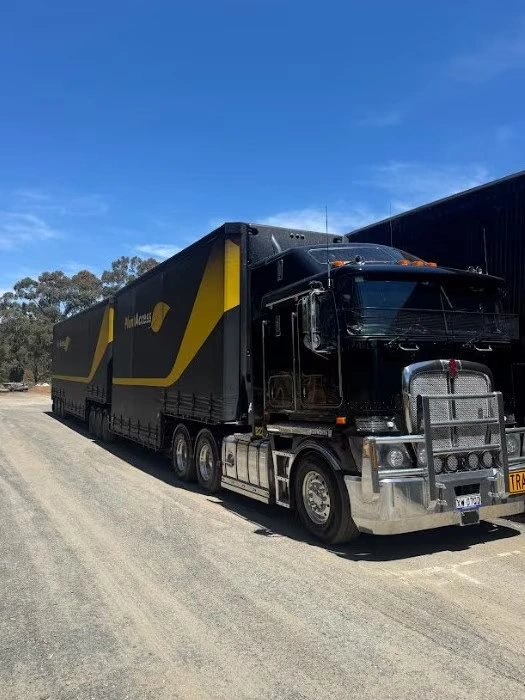
Bunnings sells approximately 21 B-double truckloads of Poinsettias
The 125mm pot size remains the customer favourite, retailing at $9.98. Bunnings stocks various sizes, yet this compact version consistently outsells alternatives. The popularity of this single product line reveals consumer preferences that extend far beyond traditional hardware purchases.
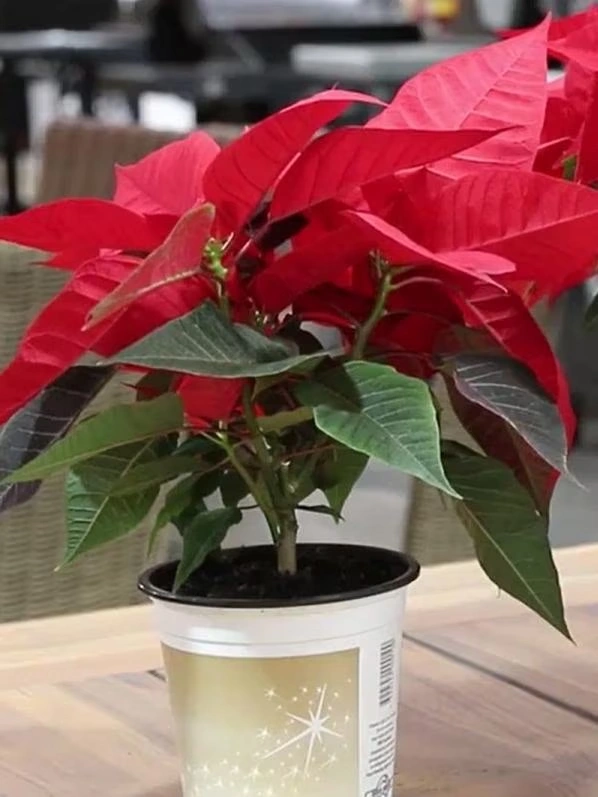
The 125mm pot size retails at $9.98
Ancient Mexican Roots Meet Modern Australian Retail
The poinsettia carries centuries of cultural significance across global communities. Mexico recognises the plant as La Flor de Nochebuena, translating to the Flower of Christmas Eve. A cherished Mexican legend narrates the story of a young girl preparing for Christmas Eve church services. She possessed no money for a traditional gift to present at the altar.
Instead, the resourceful girl gathered roadside weeds and placed them before the church gathering. The humble weeds miraculously transformed into magnificent red flowers. This narrative established the poinsettia’s enduring connection to Christmas celebrations worldwide.
The plant’s association with festive traditions spread globally over subsequent centuries. Australian households embraced the custom with equal enthusiasm. However, Australia’s climate presents unique cultivation challenges that complicate large-scale production during peak demand periods.
The 12-Month Preparation Cycle Behind Success
Brooks Nursery operates as the primary supplier fulfilling Bunnings’ substantial poinsettia orders. The Victoria-based business has maintained operations for over 40 years, specialising in seasonal crop production. Brooks Nursery cultivates specialist plants timed specifically for occasions including Christmas and Mother’s Day celebrations.
Simon Sheldon-Collins serves as general manager at Brooks Nursery. His team comprises six staff members operating two greenhouse sites near Monbulk, Victoria. The facilities encompass 17,000 square metres of climate-controlled, fully automatic greenhouse infrastructure.
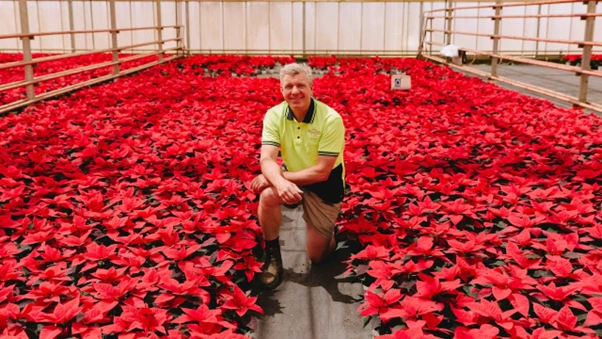
Simon Sheldon-Collins, General Manager at Brooks Nursery
Growing Christmas poinsettias demands meticulous year-round planning and execution. “From growing mother stock, to the delivery of small plugs ready for potting mid-June through to mid-August to meet our delivery dates for Christmas,” Sheldon-Collins explained. The timeline extends across the entire calendar year without interruption.
The production process involves collaborating with multiple external suppliers. Sheldon-Collins stated: “We rely on several suppliers to provide the growing material necessary to develop the plants. From biological services to soil providers, the result of our product is the effort of many.”
Scale Of Operation Demonstrates Supply Chain Complexity
Brooks Nursery cultivates approximately 250,000 individual poinsettia pots annually. The range includes sizes from 125mm to 190mm in diameter. Meeting production targets requires sourcing 350,000 small plants to compensate for natural losses throughout the growing cycle.
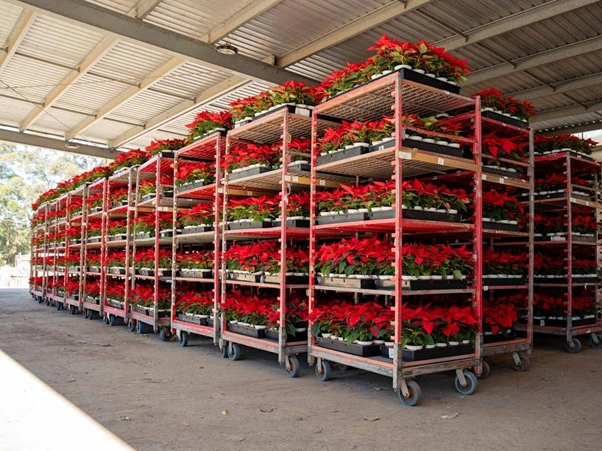
The nursery cultivates approximately 250,000 individual poinsettia pots annually
This enormous volume necessitates sophisticated logistical coordination across multiple months. Bunnings operates dedicated Greenlife facilities and distribution services supporting peak seasonal demand. Sheldon-Collins acknowledged the critical role these facilities play in their operational success.
“We utilise these facilities during our peak seasons to help distribute our products across Victoria, New South Wales and South Australia,” Sheldon-Collins said. “Without these facilities we would never be able to deliver the amount of product we grow.”
The partnership exemplifies how major retailers support regional agricultural producers. Bunnings’ integrated supply chain infrastructure enables small-scale nurseries to achieve distribution at unprecedented scales.
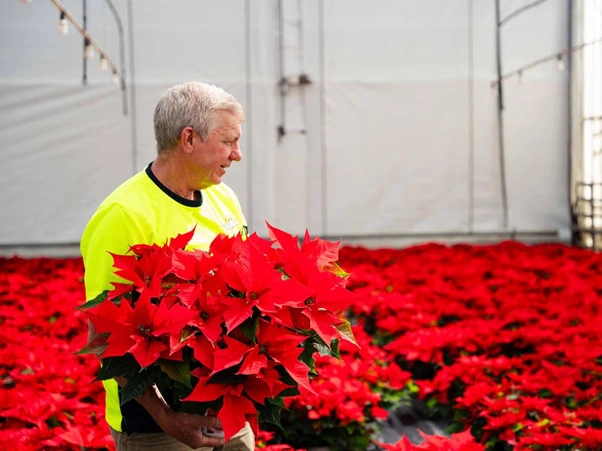
The plants need 12 months of planning to grow
Recognition For Exceptional Teamwork And Dedication
Sheldon-Collins emphasised the indispensable contribution his small team provides throughout demanding production seasons. He stated: “We are a small team that leaves a big impact with our product and we are proud of our stock.”
The nursery manager highlighted team members who “always go the extra mile when needed” during critical production periods. Managing 250,000 potted plants requires exceptional coordination, horticultural expertise, and commitment from every team member. The six-person operation demonstrates how focused teams deliver substantial results.
Practical Care Extends Festive Enjoyment Beyond Christmas
Customers purchasing poinsettias benefit from their straightforward maintenance requirements. The plants require minimal watering, needing only sparse irrigation with complete drainage between waterings. Direct sunlight and wind exposure should be avoided for optimal indoor performance.
Poinsettias thrive as indoor houseplants in protected locations. Outdoor placement remains suitable provided the plants receive covered, sheltered positioning. Appropriate care maintains the vibrant red leaf colouration for up to six months post-purchase. Customers enjoying poinsettias this Christmas can anticipate festive decoration extending well into the new year.
The poinsettia’s unexpected dominance at Bunnings reflects how practical, affordable, and culturally significant products capture consumer attention during holiday seasons. These humble $10 plants move 21 truckloads annually because they deliver genuine value to Australian households.