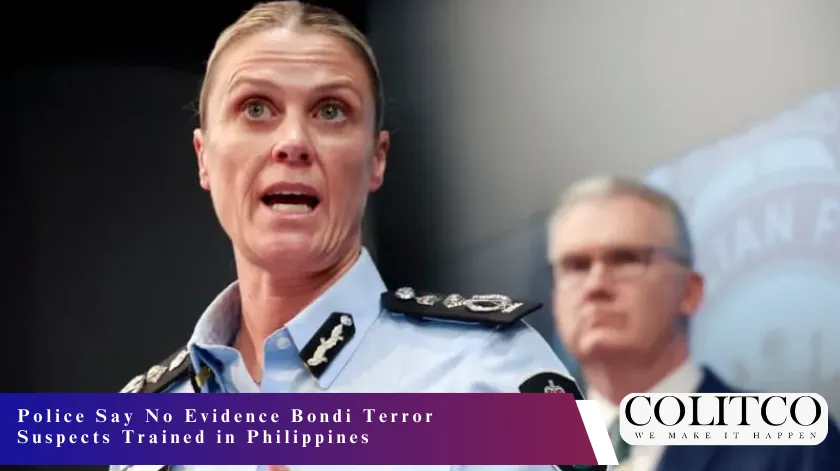
Police say there is no evidence the Bondi terror suspects received terrorist training outside Australia. The update marks a key development in the Bondi Beach terrorism investigation, which has drawn international attention since the 14 Dec 2025 attack. Australian authorities confirm the suspects’ overseas movements were examined closely through coordination with Philippine law enforcement agencies.
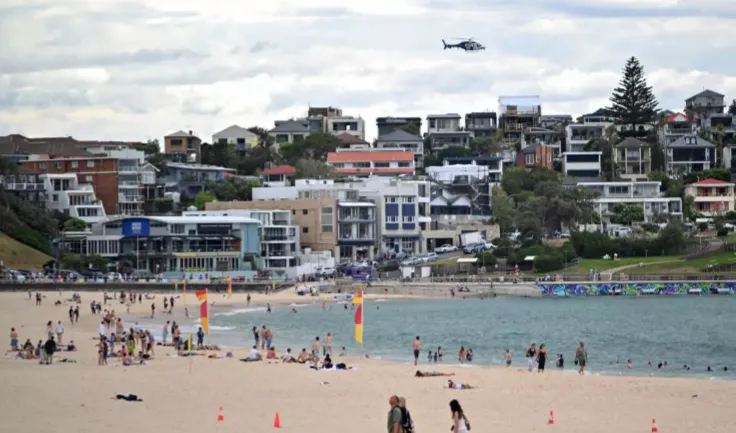
Figure 1: A general view of Bondi Beach as police maintain an increased security presence following the December 2025 attack in Sydney. [France24.com]
Investigators found no indication of organised militant involvement during the November trip to the Philippines. The Australian Federal Police Bondi probe remains active with ongoing evidence collection and analysis. Australian Federal Police Commissioner Krissy Barrett announced the findings during a media conference on 30 Dec 2025, providing the first comprehensive update since the attack.
Initial Assessment Remains Subject to Change
Police caution that assessments are preliminary and subject to change as evidence is reviewed. Officials stress that the absence of training evidence does not reduce the seriousness of the alleged crimes. The Bondi terror suspects remain central to one of Australia’s largest counter-terror investigations conducted under Operation Arques.
Commissioner Barrett emphasised the findings represent a point-in-time assessment based on currently available evidence. The Australian Federal Police Bondi probe continues analysing materials including CCTV footage and digital communications. Investigators remain open to discovering new information that may alter current conclusions about the Bondi Beach terrorism investigation.
Bondi Terror Suspects Acted Alone, Police Confirm
Police say the Bondi terror suspects acted independently without direction from external terrorist organisations. There is no evidence linking them to a broader terrorist cell or overseas handlers. Investigators have ruled out operational direction from foreign extremist groups, including the Islamic State, despite alleged ideological inspiration.
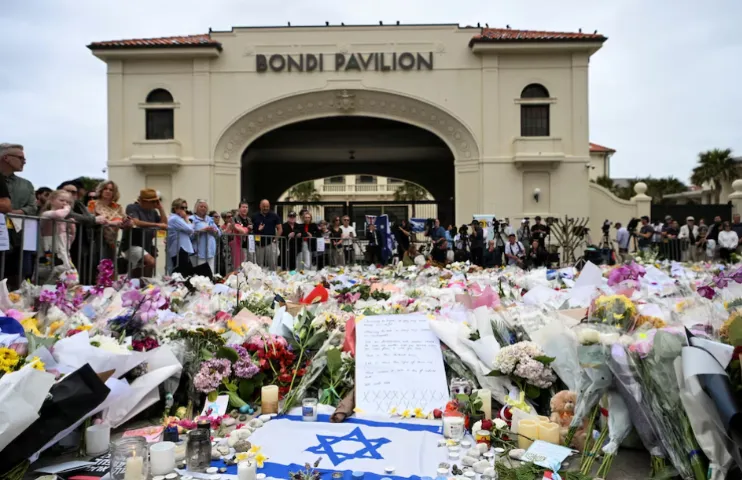
Figure 2: Floral tributes and memorial messages are laid outside the Bondi Pavilion in remembrance of victims of the December 14 attack. [Reuters]
The Bondi Beach terrorism investigation has found no communication suggesting coordinated planning with international militants. Authorities say the alleged attackers planned the assault domestically over several months. Commissioner Barrett emphasised that this finding represents a point-in-time assessment based on current evidence available to investigators.
Philippines Travel Examined in Bondi Beach Terrorism Investigation
The suspects’ November travel to the Philippines became a major focus of the Bondi Beach terrorism investigation immediately following the attack. The region, particularly Mindanao, has previously been associated with extremist activity, including historical Islamic State affiliates. Police reviewed extensive CCTV footage supplied by the Philippine authorities covering the suspects’ entire stay.
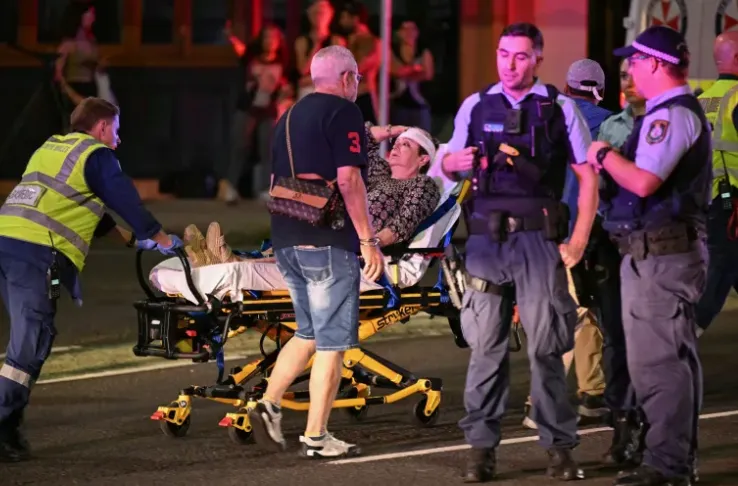
Figure 3: Emergency services and police officers assist an injured person at the scene following the Bondi Beach shooting incident on December 14, 2025. [Fortune.com]
The pair arrived in Manila on 1 Nov 2025 before travelling to Davao City in Mindanao. They returned to Sydney on 29 Nov 2025, just two weeks before the attack. The Australian Federal Police Bondi probe examined every movement during this critical period to determine if overseas training occurred.
CCTV Review Finds No Signs of Training Activity
The footage shows the Bondi terror suspects rarely left their hotel during the trip spanning nearly one month. Investigators found no evidence of firearms training or explosives preparation during their two-week stay. No contact with militant groups was identified during their stay in the Philippines.
The Australian Federal Police Bondi probe confirms cooperation with Philippine National Police continues with ongoing intelligence sharing. Authorities stress inquiries into the trip are ongoing despite initial findings showing no training activity. Commissioner Barrett stated clearly she was not suggesting the trip was for tourism purposes.
Details of the Bondi Beach Attack That Shocked Australia
The attack occurred on 14 Dec 2025 during a Jewish Hanukkah celebration at Bondi Beach in Sydney. Fifteen people were killed, making it Australia’s deadliest mass shooting in nearly three decades. An additional 41 people were injured during the rampage that targeted members of the Jewish community.
The targeting of a Jewish religious celebration has been classified as an act of terrorism. The attack shocked Australia and led to immediate national security and legislative responses. The Australian Federal Police Bondi probe involves examining all aspects of planning, preparation and execution.
Months of Meticulous Planning Preceded Attack
Police allege the Bondi terror suspects planned the attack over several months with meticulous preparation. Investigators released images showing weapons handling and firearms training within Australia prior to the attack. The images show the suspects practising with shotguns in rural Australian countryside locations.
Investigators revealed the suspects recorded a video in October railing against Zionists while sitting before an Islamic State flag. This evidence forms part of the prosecution’s case, demonstrating alleged ideological motivation. Police discovered homemade Islamic State flags in the suspects’ vehicle following the attack.
One Suspect Killed, Another Faces 59 Criminal Charges
One suspect, 50-year-old Sajid Akram, was shot and killed by police during the incident. The surviving accused, 24-year-old Naveed Akram, faces 59 criminal charges, including 15 counts of murder. Additional charges include terrorism offences and explosives-related crimes.
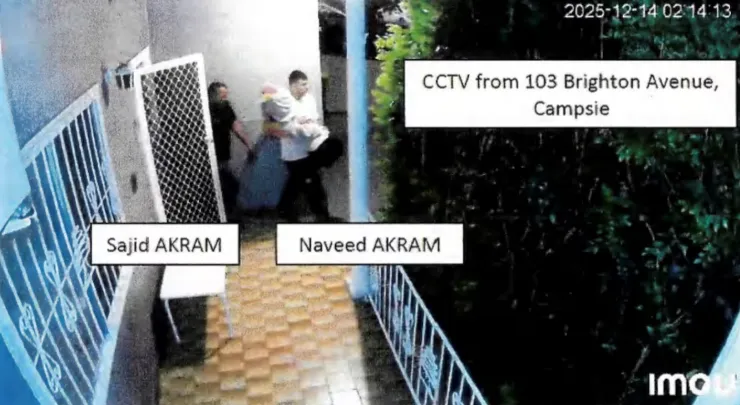
Figure 4: CCTV footage released by police shows the alleged suspects exiting a residential property in Campsie, New South Wales, prior to the Bondi Beach attack. [Reuters]
The Bondi Beach terrorism investigation continues gathering forensic and digital evidence from multiple crime scenes. Court proceedings remain underway with Naveed Akram remaining in custody after waking from a days-long coma. Authorities continue appealing for any witnesses or individuals with information to come forward.
National Security Response Following the Attack
The Australian Federal Police Bondi probe operates under Operation Arques, involving multiple law enforcement and intelligence agencies. It involves federal police, state police, the Australian Security Intelligence Organisation and the NSW Crime Commission working jointly. Authorities say investigations remain active in Australia and overseas with continued international cooperation.
The Bondi terror suspects case continues to shape counter-terror priorities across Australian security agencies. Following the attack, the federal government announced stricter gun control measures, including a nationwide buyback scheme. Prime Minister Anthony Albanese promised to “get guns off our streets” through the largest buyback since 1996.
Stricter Gun Control and Hate Speech Laws Announced
A nationwide review of hate speech laws is also underway, with promises of harsher penalties. The 1996 Port Arthur massacre, which killed 35 people, led to Australia’s strict gun laws. The Bondi attack has prompted renewed focus on weapons control and extremism prevention.
Prime Minister Albanese ordered a comprehensive review of police and intelligence services to identify any potential failures. The investigation continues examining how the Bondi terror suspects obtained weapons and planned the attack. Authorities remain focused on preventing similar incidents through enhanced surveillance and community engagement.
What the Investigation Findings Mean for Counter-Terrorism Strategy
The finding that the Bondi terror suspects acted alone without overseas training poses significant implications for Australian counter-terrorism strategy. Traditional models focused on disrupting international terrorist networks may be less effective against domestic lone actors. The Australian Federal Police Bondi probe reveals the challenges of identifying self-radicalised individuals before attacks occur.
The absence of international training or coordination suggests the Bondi Beach terrorism investigation must focus heavily on domestic factors. Online radicalisation, access to extremist content and local weapons acquisition become primary investigative concerns. Authorities acknowledge that lone-actor attacks are increasingly difficult to detect and prevent compared to organised plots.
FAQs
Q1. Did the Bondi terror suspects receive training in the Philippines?
Ans. Police say there is no evidence of overseas training. CCTV footage shows the suspects rarely leaving their hotel.
Q2. Are the Bondi terror suspects part of a terrorist cell?
Ans. Authorities say there is no evidence linking them to a wider terrorist network.
Q3. Why was overseas travel examined in the Bondi Beach terrorism investigation?
Ans. Travel was reviewed due to regional extremist history, but no links were found.
Q4. Who is leading the Australian Federal Police Bondi probe?
Ans. The investigation is led by the Australian Federal Police under Operation Arques.