
Bitcoin has lost half its market value over the last four months. The price fell from a peak in October 2025. This decline coincides with a broader contraction in the digital asset sector. Investors are now exiting positions across the globe. The market continues to face significant pressure from multiple directions.
Bitcoin Price Reaches Yearly Lows
The price of Bitcoin sank to US$63,000 on Thursday. This figure represents the lowest level for the currency in over a year. It stands at half the peak recorded in October 2025. Bitcoin reached US$126,210.50 on 6 October. This record followed a period of steady growth throughout 2025.
The valuation began to dip during the final months of last year. This trend accelerated throughout January and early February. Data from Coinbase confirms these price movements. The currency has now entered a phase of high volatility. Market participants remain cautious about future price stability.
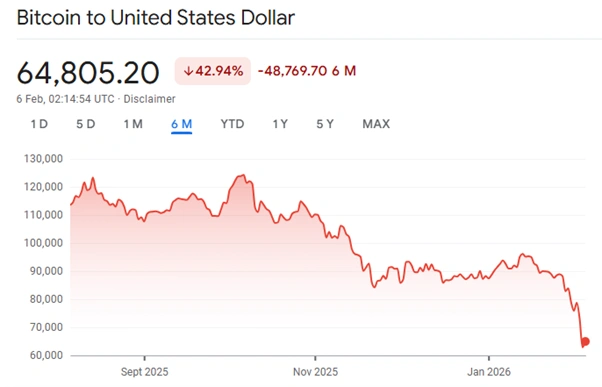
Bitcoin faces its biggest dip in the last 6 months
Global Crypto Market Capitalisation Shrinks
The total cryptocurrency market has lost US$2 trillion in value. This loss has occurred since the peak in October. CoinGecko data tracks these changes in market capitalisation. The industry lost US$800 billion in the last month alone. This contraction affects a wide range of digital tokens.
- Bitcoin fell 12.6 per cent in one day.
- Ether dropped more than 13 per cent.
- The total market value now sits at US$2.38 trillion.
- Liquidations exceeded US$1 billion within 24 hours.
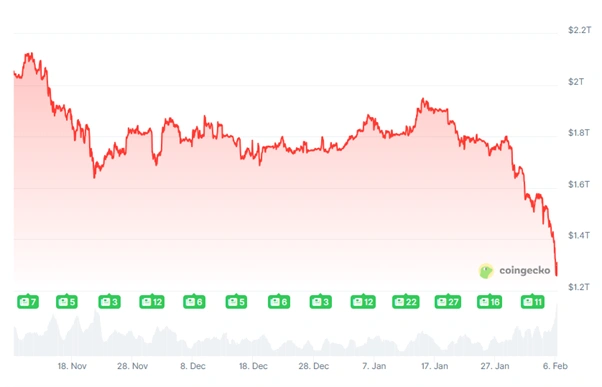
Bitcoin’s market cap over the last 3 months [coingecko]
Liquidations Impact Trading Positions
Traders faced significant losses during the recent price drop. Roughly US$1 billion in Bitcoin positions underwent liquidation. This process occurred within a single 24-hour window. Data from CoinGlass highlights the scale of these liquidations. Forced sales often occur when prices hit specific thresholds.
These liquidations add further downward pressure on the market price. Many investors utilised leverage to increase their exposure. Rapid price drops trigger automatic sell orders for these positions. This cycle creates a feedback loop in the trading environment. Analysts monitor these figures to gauge market sentiment.
Institutional Interest Fades Amid Outflows
Exchange-traded funds have experienced a reversal in capital flows. Investors withdrew US$3 billion from spot Bitcoin ETFs in January. This followed US$2 billion in outflows during December. November saw the largest exit with US$7 billion in withdrawals. These figures suggest a shift in institutional strategy.
Professional investors are reducing their exposure to digital assets. The steady selling indicates a decline in interest from traditional finance. Many funds now hold fewer coins than they did last year. This trend reflects a growing pessimism within the sector. Analysts view these outflows as a signal of market cooling.
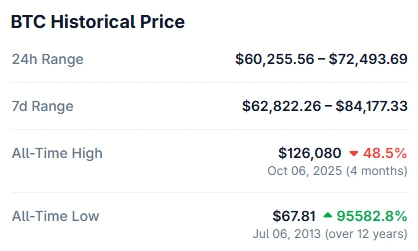
Bitcoin’s price range [coingecko]
Technology Sector Correlation Drives Sell-off
Bitcoin maintains a strong correlation with technology shares. A sell-off in the tech sector recently impacted crypto prices. The Nasdaq Composite fell as enthusiasm for artificial intelligence slowed. Investors moved capital away from high-risk assets. This shift affected both stocks and digital currencies.
The market currently treats Bitcoin as a proxy for tech growth. Price movements often mirror the performance of major software companies. This relationship exposes the currency to broader economic trends. Many traders now watch equity markets for price signals. The link between these asset classes remains firm.
Political and Regulatory Uncertainty Increases
The selection of Kevin Warsh as Federal Reserve chair influenced prices. Analysts believe the market fears a more restrictive monetary policy. A smaller Fed balance sheet could remove liquidity from markets. This liquidity previously supported the rise of cryptocurrencies. Market participants now anticipate higher interest rates.
Regulatory scrutiny also poses a challenge for the industry. Some watchdogs in the US raise concerns about conflicts of interest. Politicians have announced plans to investigate specific cryptocurrency ventures. These investigations focus on foreign investments and policy changes. Regulatory news often triggers immediate reactions in the price.

Impact on Corporate Entities
Companies with Bitcoin holdings face balance sheet losses. Shares in firms that invested heavily in the currency have declined. These businesses now deal with the consequences of the market slump. “Companies that went all in on Bitcoin have been hit hard in the recent sell-off,” reports the news media.
- MicroStrategy shares tracked the price of Bitcoin downward.
- Coinbase reported a decline in trading revenue.
- Crypto miners face lower profits due to price drops.
- Publicly listed ventures saw their valuations decrease significantly.
Expert Analysis on Market Cycles
Analysts compare the current trend to previous market cycles. Some experts believe the market has entered a capitulation phase. This phase often involves a reset of asset prices. Nic Puckrin, an investment analyst, provided his view on the situation. He noted that the transition might take a long time.
“If previous cycles are anything to go by, this is no longer a short-term correction, but rather a transition from distribution to reset – and these typically take months, not weeks,” Puckrin said. This perspective suggests a prolonged period of lower prices. Market cycles in crypto often follow these patterns. Investors must now prepare for a different environment.
Secondary Currencies Experience Higher Losses
Ether has faced larger percentage losses than Bitcoin this year. The second-largest cryptocurrency fell nearly 38 per cent in 2026. It missed the growth seen in other sectors during 2025. Other tokens like Solana also saw double-digit price drops. These assets often show higher volatility than Bitcoin.
Investors typically view these currencies as even higher risk. The decline in Ether reflects a broader retreat from the ecosystem. Decentralised finance platforms also report lower activity levels. This downturn affects the entire digital asset landscape. Most tokens have failed to maintain their previous valuations.
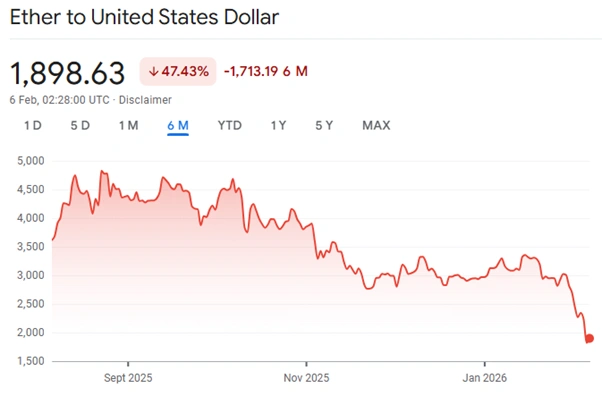
Safe Haven Assets Attract Capital
Capital is moving from crypto into traditional assets. Gold and silver prices have shown increased volatility recently. Some investors view precious metals as a safer alternative. This rotation happens when risk sentiment weakens across the board. The US dollar has also strengthened against many currencies.
Bitcoin failed to act as a hedge against inflation this year. Many holders expected the currency to protect their wealth. The current data contradicts this long-held theory. Markets now favour established stores of value during periods of uncertainty. This shift highlights a change in investor perception.
Also Read: Global Stock Market Fall Triggers Trillion-Dollar Tech Rout
Future Outlook and Support Levels
Technical analysts identify potential support levels for the price. Some reports suggest Bitcoin could fall to US$56,000. This level acted as a milestone in previous cycles. Investors watch the 200-week moving average for signs of a bottom. Breaking these levels could lead to further declines.
The market remains in a state of flux. Buyers have not yet returned in significant numbers. The lack of accumulation suggests a lack of confidence. Participants now wait for a clearer signal of stability. Future price movements will likely depend on global economic data.