
Australian shares are bracing for further losses after Rio Tinto walked away from a $260 billion merger with Glencore. The collapse came just hours before a regulatory deadline, sending shockwaves through Australia stock market news channels and triggering sharp sell-offs in mining stocks.
Figure 1: Glencore and Rio Tinto corporate signage following the collapse of merger talks [Yahoo Finance]
Rio Tinto (ASX: RIO) confirmed on 5 February 2026 that it could not reach an agreement delivering value to shareholders. Glencore responded by stating the proposed terms significantly undervalued its copper assets. The failed deal marks the third time merger talks between the two giants have fallen apart.
Rio Tinto Pulls Plug Hours Before UK Takeover Deadline
Rio Tinto made its final decision around 3 pm UK time on Thursday. The Company determined that extending negotiations would be futile. Glencore was demanding 40 per cent ownership of the combined entity, a position it refused to soften.
The breakdown occurred despite weeks of intensive due diligence work. Rio dealmakers made multiple trips to Glencore’s Switzerland headquarters. Both sides initially expected an extension beyond the 5 pm London deadline.

Figure 2: Rio Tinto workers at an operational site, highlighting ongoing mining activities [Rio Tinto]
Under UK takeover rules, Rio cannot make another bid for six months. The restriction applies unless the Takeover Panel consents or Glencore formally requests renewed talks. Industry observers note this marks the fourth time merger discussions between the two companies have collapsed.
Glencore Shares Plunge on News of Deal Collapse
Glencore shares fell as much as 10.8 per cent immediately after the announcement. The stock later recouped some losses but remained the biggest faller on the FTSE 100. Rio Tinto shares declined 1.4 per cent in London trading.
Australian shares today are set to open lower following the offshore weakness. The benchmark S&P/ASX 200 index fell 0.4 per cent to close at 8,889.20 points on Thursday. Market analysts expect further pressure in Friday’s session.
Mining stocks Australia face additional headwinds from falling commodity prices. Silver and oil both tumbled overnight, while copper prices remain volatile. A stronger US dollar and easing geopolitical tensions also weighed on investor sentiment.
What the Failed Merger Meant for Global Mining
The proposed combination would have created a mining powerhouse worth $260 billion. Rio Tinto would have overtaken BHP Group as the world’s largest mining company. The merged entity would have doubled Rio’s copper output.
The deal aimed to establish the combined group as the world’s top copper producer. It would have added one million tonnes of future copper growth. Resources, including iron ore, copper, cobalt and lithium, were central to the strategic rationale.
Copper remains critical for technology products and artificial intelligence infrastructure. Prices recently hit all-time highs above $14,000 per tonne. Analysts predict a potential supply shortfall of 10 million tonnes by 2040.
Sticking Points That Killed the $260 Billion Deal
Glencore insisted the proposed terms undervalued its copper business and growth pipeline. The Company particularly objected to Rio keeping both chairman and chief executive roles. Glencore believed its relative value contribution was not adequately recognised.
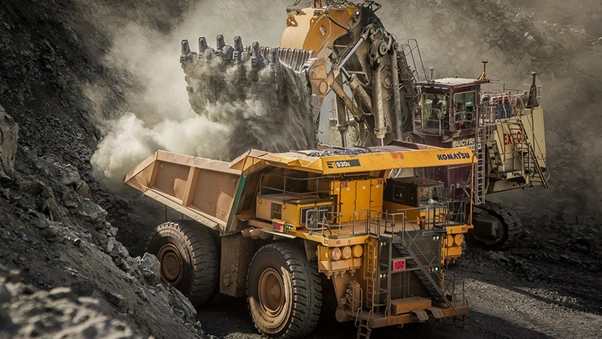
Figure 3: Heavy mining equipment in operation at a large-scale open-pit mine [Rio Tinto]
Rio tied its bid to share prices on the day talks became public. Glencore viewed this arbitrary ratio as failing to reflect past and future performance. Frustration grew on both sides as the deadline approached.
Gary Nagle and Simon Trott spoke twice on the final day. The conversations aimed to break the impasse but failed. Their last discussion focused on how to announce the deal’s collapse to investors.
Australia Stock Market News Reflects Broader Industry Challenges
The failed merger highlights challenges facing major mining companies. Rio Tinto’s earnings remain heavily dependent on iron ore markets. Iron ore prices have been buckling under rising supply and waning demand.
Glencore has seen its copper output drop more than 40 per cent over a decade. The Company recently convinced investors it had turned the business around. Without the Rio deal, both companies face questions about growth strategies.
The September merger between Anglo American and Teck created competitive pressure. That $53 billion deal combined two of the world’s largest copper producers. Rio and Glencore faced mounting risks from inaction.
What Happens Next for Rio Tinto and Glencore
Rio Tinto cannot pursue Glencore for at least six months under UK regulations. Exceptions exist if a rival bidder emerges or Glencore requests renewed discussions. Some analysts suggest BHP Group could step in as a competing suitor.
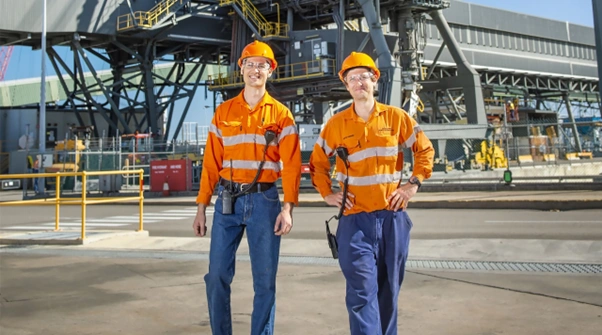
Figure 4: Glencore employees at a port operations facility in Queensland [Glencore]
RBC Capital Markets analyst Ben Davis noted BHP as the most likely interloper. However, BHP would face challenges explaining the value proposition to Australian shareholders. Rio’s inability to justify the price complicates matters for any rival bidder.
Glencore Chief Executive Gary Nagle stated in December the Company aims to become the world’s biggest copper producer. Glencore currently ranks as the sixth-largest copper producer globally. It also holds the position as the largest listed coal producer.
REA Group Reports Lower First-Half Earnings
In separate Australia stock market news, REA Group (ASX: REA) reported fiscal first-half earnings on 6 February 2026. The Company posted earnings of $2.545 per share on revenue of $915.8 million. This compares to earnings of $3.339 per share on revenue of $872.9 million last year.
The decline reflects challenges in Australian property markets. Listing volumes remain under pressure despite price increases in major cities. REA Group’s performance adds to concerns about broader economic conditions affecting Australian shares today.
Overnight US Market Weakness Adds Pressure
US markets closed lower overnight, adding to pressure on Australian shares. The S&P 500 and Dow Jones Industrial Average each fell 1.2 per cent. The Nasdaq Composite declined 1.6 per cent.

Figure 5: Stock market chart illustrating heightened volatility following major mining deal developments [Freepik]
Investors await speeches from Reserve Bank of Australia officials next week. Deputy Governor Andrew Hauser and Assistant Governor Sarah Hunter are scheduled to speak. Markets will scrutinise comments for interest rate guidance.
The stronger US dollar weighs on commodity-denominated assets. Easing geopolitical tensions reduces safe-haven demand. These factors combine with the Rio-Glencore news to pressure mining stocks Australia.
Industry Outlook and Market Context
The mining sector faces a period of consolidation and strategic repositioning. Major producers seek exposure to copper and battery metals. Traditional iron ore and coal assets face long-term demand uncertainty.
Supply constraints in copper markets support long-term price outlooks. However, near-term volatility creates challenges for deal-making. Regulatory hurdles and shareholder expectations complicate mega-mergers.
Australian shares today reflect these broader industry dynamics. The resource sector remains central to the local market’s performance. Commodity price movements drive significant portions of ASX returns.
Final Thoughts
The collapse of the Rio Tinto-Glencore merger represents a significant setback for mining consolidation. Both companies must now pursue independent strategies in competitive copper markets. Australian shares face near-term pressure from the news and falling commodity prices.
Mining stocks Australia remain vulnerable to global economic conditions and Chinese demand. The sector’s outlook depends heavily on infrastructure spending and energy transition investments. Investors should monitor commodity price trends and potential rival bids for Glencore.
FAQ
Q1. Why did the Rio Tinto-Glencore merger collapse?
Ans. Rio Tinto determined it could not reach an agreement delivering shareholder value, while Glencore insisted the proposed terms significantly undervalued its copper business and growth pipeline.
Q2. How did Australian shares react to the deal collapse?
Ans. Australian shares are set to fall on Friday following the news, with Rio Tinto shares declining 1.4 per cent and Glencore shares dropping as much as 10.8 per cent offshore.
Q3. Can Rio Tinto make another bid for Glencore?
Ans. Under UK takeover rules, Rio Tinto cannot make another bid for six months unless the Takeover Panel consents or Glencore formally requests renewed talks.
Q4. What would the Rio-Glencore merger have created?
Ans. The $260 billion merger would have created the world’s largest mining company, overtaking BHP Group and establishing the combined entity as the top copper producer globally.