Investors in Australia monitor the prices of gold and silver in February 2026. Data from the Perth Mint shows gold trading at $7,149 per ounce. Silver maintains a price of $116 per ounce on the spot market. These figures reflect a shift in the bullion sector over the last month. Market participants compare these two assets to determine the allocation of capital.
The Reserve Bank of Australia keeps the cash rate at levels that influence bullion demand. Inflation remains a factor for those holding Australian dollars. Gold serves as a hedge against the loss of purchasing power in the domestic economy. Silver offers a different profile due to its use in the production of goods. Both metals attract attention from retail and institutional buyers across the country.
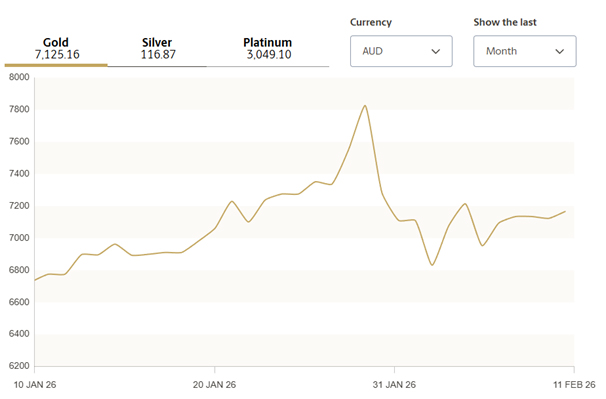
Gold price in Australia [The Perth Mint]
Performance of Gold in the Australian Market
Gold prices reached levels above AUD $7,500 earlier in the year. The market saw a correction following changes in global monetary policy expectations. Central banks continue to purchase gold to diversify their reserves away from currencies. This demand provides a floor for the price during periods of market change. In Australia, the metal remains a primary choice for wealth preservation.
- Gold spot price: AUD $7,149.35
- Perth Mint 1oz Gold Kangaroo: AUD $7,381.70
- Buyback price for 1oz gold: AUD $6,920.92
Investors use gold to mitigate risks in their investment portfolios. The metal does not pay interest or dividends to the holder. Its value depends on the balance of supply and demand in the global market. Analysts track the movement of the Australian dollar against the United States dollar. A weaker local currency often increases the price of gold for Australians.
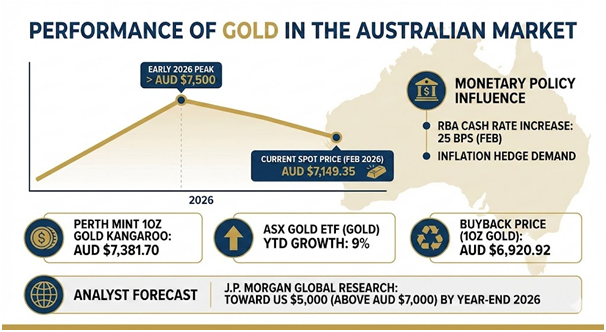
Australian gold market’s performance
Silver Demand from Industry and Investors
Silver prices experienced swings in the first weeks of 2026. The metal reached a peak near AUD $170 before retreating to the current level. Demand for silver comes from the solar energy sector and the electronics industry. Manufacturers require silver for the production of photovoltaic cells and electric vehicle components. This link to the industry creates a different price dynamic compared to gold.
The supply of silver remains in a deficit for the fifth year. Mines produce silver mostly as a byproduct of lead, zinc, and copper extraction. This limits the ability of the market to increase supply when prices rise. Investors observe the gold-to-silver ratio to assess the relative value of each metal. In February 2026, the ratio sits near 61 to 1.
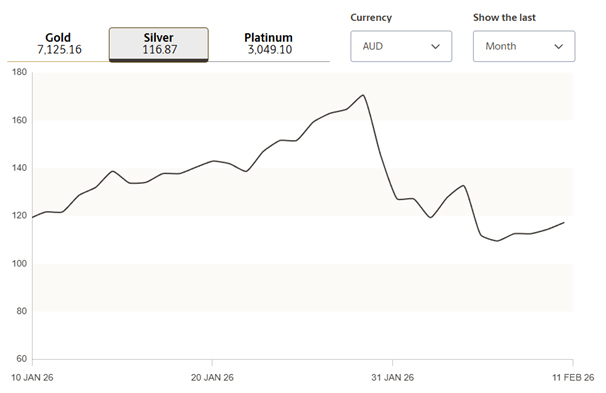
Silver price in Australia [The Perth Mint]
Trends in Exchange Traded Funds
Data from the Australian Securities Exchange shows growth in metal-backed funds. Inflows into gold ETFs reached US $202 million during the month of January. Total investments in these products in Australia now total US $8.6 billion. Investors choose these funds to gain exposure to metal prices without physical storage. The ease of trading on the ASX attracts a wide range of participants.
- ASX Gold ETF (GOLD) growth: 9% year-to-date
- ASX Silver ETF (ETPMAG) growth: 6% year-to-date
- Retail trading activity in silver: 1,000% increase over 12 months
Silver ETFs see a rise in the frequency of trades among retail investors. This activity suggests a focus on price momentum rather than long-term stability. Gold ETFs show more consistent patterns of buying and holding by larger institutions. Both products allow for the inclusion of metals in superannuation accounts. The choice between them depends on the risk tolerance of the individual.
Impact of Global Monetary Policy
The appointment of Kevin Warsh to the Federal Reserve in the United States impacted prices. Markets adjust their expectations for interest rate cuts in the coming months. Higher interest rates often decrease the appeal of assets that yield no income. Gold and silver prices reacted with a drop on the 30th of January. This event removed some of the speculation from the bullion market.
The Reserve Bank of Australia raised the cash rate by 25 basis points in February. This move aims to return inflation to the target band of 2.5 per cent. Analysts expect inflation to reach this level by mid-2027. Higher domestic interest rates support the value of the Australian dollar. This currency strength can offset gains in the international price of gold and silver.
Supply Chain Factors in Australia
Australia ranks as a major producer of gold and silver on the global stage. Mining operations in Western Australia and Queensland contribute to the total supply. The cost of extraction influences the minimum price level for these metals. Energy costs and labour availability affect the output of mines across the continent. Investors monitor these factors to predict the future availability of bullion.
Refineries like the Perth Mint process the ore into bars and coins. These products meet international standards for purity and weight. The demand for physical bullion remains steady among collectors and private investors. Delivery times for some silver products now extend to several weeks. This indicates a tightening of the physical market despite the price correction.
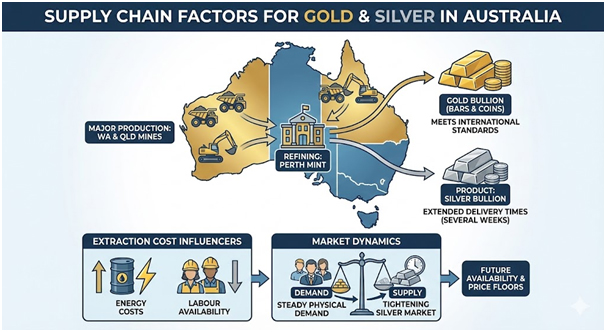
Supply Chain Factors in Australia
Expert Commentary on Market Value
Financial analysts provide perspectives on the outlook for both metals in 2026. J.P. Morgan Global Research forecasts gold to move toward US $5,000 by the end of the year. This equates to a price above AUD $7,000 at current exchange rates. Analysts point to the “debasement trade” as a driver for gold investment. Governments continue to manage high levels of debt through monetary expansion.
“We believe central bank demand will remain elevated next year and have been encouraged by strong buying in the third quarter of 2025, even with much higher gold prices,” said Greg Shearer.
The outlook for silver depends on the growth of the green economy. Solar panel installations are increasing the consumption in China and the United States. If industrial demand remains firm, silver could outperform gold on a percentage basis. However, the metal carries more risk during periods of economic contraction. Investors must weigh the potential for gains against the possibility of price drops.
Comparing Value for Today
Gold offers stability for those seeking a defensive position in their portfolio. Its history as a store of value spans thousands of years. The metal reacts less to changes in industrial output than silver. For Australians, gold provides a way to protect wealth against currency fluctuations. It remains a staple for diversified investment strategies in the current year.
Silver presents an opportunity for growth linked to technological advancement. Its lower price per ounce makes it accessible to a larger number of buyers. The current price level sits below the peaks seen earlier in the year. This attracts those looking for an entry point into the market. Value in the silver market relies on the continuation of the supply deficit.
Allocation Strategies for Investors
Advisers suggest an allocation to metals between 5 and 15 per cent of a portfolio. This range helps to manage the risks associated with price swings. Gold serves as the core of the bullion component for most investors. Silver acts as a satellite holding to enhance returns during bull markets. The balance between the two metals changes according to market conditions.