
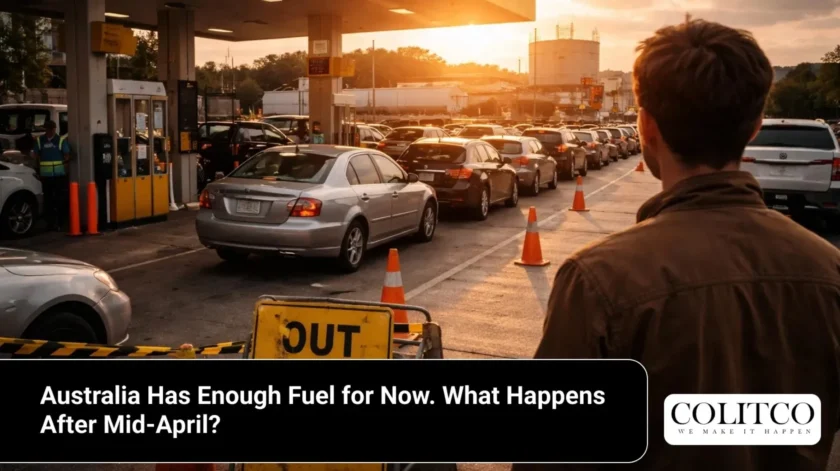
Energy Minister Chris Bowen told reporters this week that Australia has sufficient fuel supply through March and April, but the second half of April is when there is more uncertainty. That single sentence has put the nation on edge, and for good reason.
The crisis has been building since late February. US and Israeli attacks on Iran triggered retaliatory strikes on major oil facilities in the Middle East. Iran has effectively closed the Strait of Hormuz, a critical passageway that carries 20 per cent of the world’s oil supply.
Australia, which imports roughly 90 per cent of its liquid fuel, sits squarely in the path of that disruption.
What Is Actually in the Tank Right Now?
At the start of 2026, Australia had an estimated 36 days of petrol, 34 days of diesel, and 32 days of jet fuel. The government calls it the highest level in 15 years.
The problem is it is still nowhere near enough. Australia is the only member of the IEA that does not hold the mandatory 90-day fuel reserve requirement, something the country has failed to meet since 2012.
Australia consumes approximately 44 million litres of petrol and 92 million litres of diesel every 24 hours. Do the maths on 36 days, and the margin for error becomes painfully clear.
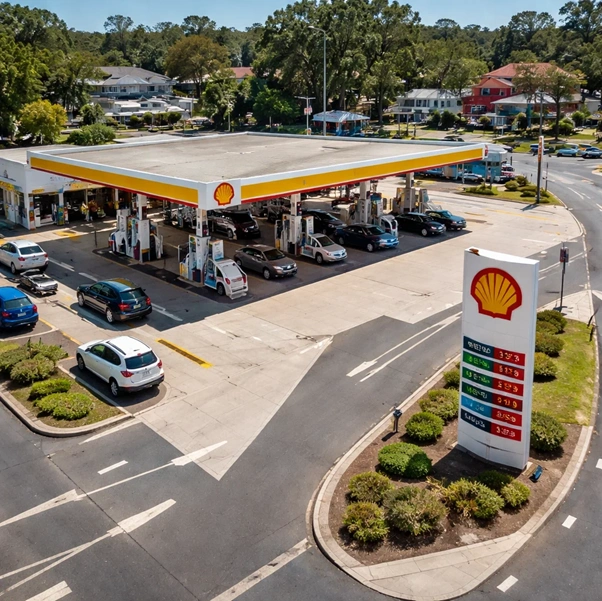
Petrol prices across Australia’s five major cities rose nearly 50 cents a litre between late February and mid-March 2026.
Why Mid-April Is the Danger Zone
Three nations account for 65 per cent of all refined fuel imports into Australia: South Korea, Singapore, and Malaysia, with South Korea alone representing 26.2 per cent of the total. Of Australia’s top eight import sources, approximately 59 per cent of their collective oil imports come via the Strait of Hormuz.
That is the exposure. As long as the strait stays choked, the countries supplying Australia face their own pressure to conserve.
China has told refiners and exporters to suspend new fuel export contracts and cancel already contracted shipments. Australia is not the only buyer scrambling right now.
At least three to five Medium Range tankers have been booked to load gasoline and diesel from the US Gulf Coast in late March, heading toward Australia. That is the stopgap. But the question experts are asking is whether those ships arrive fast enough, and in sufficient volume, to cover what runs out by late April.
What the Government Has Done So Far
The federal government announced the release of an extra 800 million litres of petrol and diesel from domestic reserves. Energy Minister Bowen also confirmed the government has temporarily lowered fuel quality standards for 60 days to allow higher-sulphur fuel to be sold, which will inject roughly 100 million litres of extra petrol per month into rural and regional areas.
But experts have been quick to point out those are short-term patches.
What Experts Say Comes Next
Dr Lurion De Mello, Senior Lecturer of Applied Finance at Macquarie Business School, has been among the most direct voices in this debate. He warned that in an emergency it could take 30 to 40 days to ship crude to Singapore for refining and then transport the fuel back to Australia.
“If the crisis at Hormuz continues for weeks or spreads further, genuine shortages become plausible,” De Mello said. “This is not a theoretical scenario. It is a foreseeable consequence of failing to build resilience.“
There is a more measured view as well. Maritime security specialist Jennifer Parker, who served in the Royal Australian Navy for more than 20 years, said Iran’s capacity to enforce the blockade is weakening after large parts of its naval capability were destroyed. “I don’t think we’re going to see a reduction in flow through the Strait for a prolonged period,” she told Sky News.
Parker’s assessment suggests prices may ease once the blockade loosens, but the timeline remains unclear.
Compare the Market spokesperson Chris Ford warned that “in an extreme event, a 30 per cent increase in fuel prices from where they are currently could push the price of unleaded 91 past $2.50 a litre in some regions.” Some analysts believe $3.50 per litre is not off the table if the conflict drags on.
The regional picture is already bad. Independent petrol stations in rural Victoria ran completely dry last week. Victorian Farmers Federation president Brett Hocking said the situation was “quite widespread throughout rural Victoria,” with some farmers facing a two-week wait for diesel deliveries.
The Structural Problem That Has Been Ignored for Years
Australia now finds itself with a perverse sense of déjà vu. The current fuel security issue was entirely predictable, and in fact comprehensively predicted.
The Maritime Union of Australia’s National Secretary Jake Field said: “We mustn’t gamble our economic stability on uninterrupted access to foreign fuel markets. We cannot assume that geopolitical tensions will always resolve before our reserves run dry.”
Australia once had eight operating oil refineries. Today, only two remain in Brisbane and Geelong, supplying less than 20 per cent of national demand. Almost all refined fuel now arrives on foreign vessels from Japan, South Korea, Singapore, Malaysia, and Vietnam.
That is the exposure Chris Bowen’s “more uncertainty” comment is really pointing at.
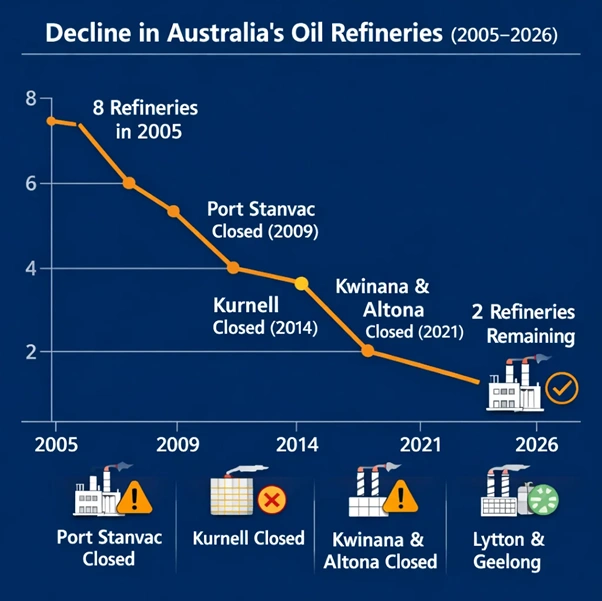
Australia’s domestic refining capacity has collapsed over two decades, leaving the country dependent on overseas fuel for more than 80 per cent of its needs.
Also Read: Koala’s Founders Are Sitting on $117M. Now the Mattress Brand Wants Your Money Too
FAQs
Q: What did Energy Minister Chris Bowen say about fuel supply after mid-April?
A: Bowen said Australia has sufficient supply through March and into April, but described the second half of April as the period of “more uncertainty” given ongoing disruption to global supply chains from the Middle East conflict.
Q: Why is Australia so vulnerable to global fuel supply disruptions?
A: Australia imports roughly 90 per cent of its refined liquid fuel and holds fewer than 40 days of reserves, well below the International Energy Agency’s 90-day minimum requirement, which the country has not met since 2012.
Q: How much have petrol prices risen in Australia since the conflict started?
A: Average petrol prices across Australia’s five major capital cities rose by close to 50 cents a litre between late February and mid-March 2026, according to the ACCC’s weekly fuel price monitoring report.
Q: Could Australia face fuel rationing?
A: The federal government has said it has no plans to introduce rationing at this stage, but has not ruled it out. A national fuel supply task force has been established to monitor the situation and coordinate federal and state responses.
Q: When could petrol prices fall?
A: Maritime security experts suggest Iran’s ability to maintain the blockade is deteriorating. If the Strait of Hormuz reopens, prices could stabilise within weeks. However, if the conflict spreads or persists into late April, analysts warn of further price increases and potential supply disruptions.
Disclaimer: This article is for informational purposes only and does not constitute financial or investment advice. Fuel prices and supply conditions are subject to rapid change. Readers should consult official government sources and the ACCC for the most current data.