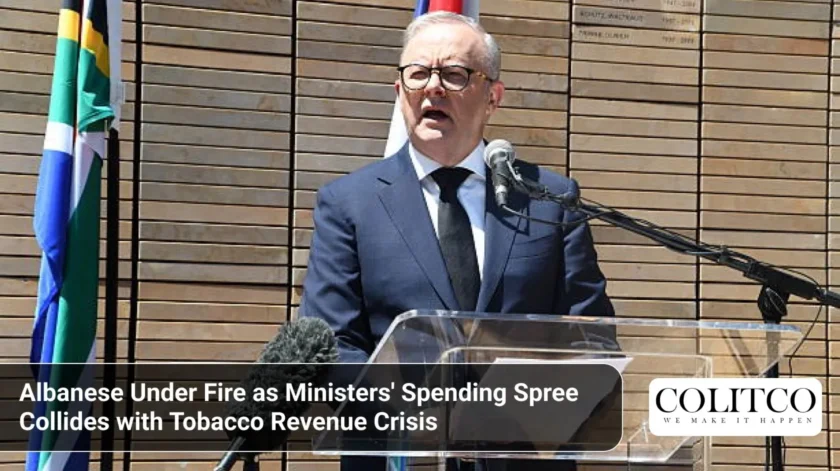
Prime Minister Anthony Albanese is fighting to maintain control of the political narrative as his government battles mounting criticism over ministerial expense claims while facing revelations that Australia is losing up to $11.8 billion annually to illicit tobacco markets.
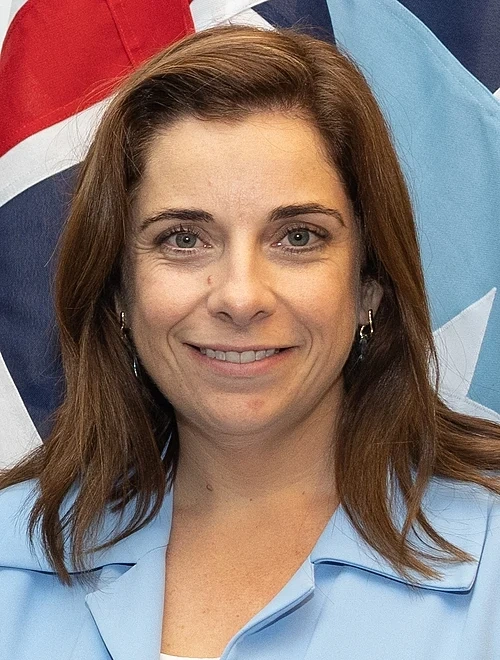
The timing couldn’t be worse for the Labor leader. Communications Minister Anika Wells has become the focal point of an expenses controversy that refuses to die, with fresh details emerging almost daily about taxpayer-funded trips to New York, Paris and Thredbo.
At the same time, the government’s illicit tobacco commissioner has confirmed what many suspected: black market cigarettes now account for up to 60 per cent of the Australian market, representing a staggering revenue loss that dwarfs any ministerial spending concerns.
Wells Refers Herself for Independent Review
The expenses scandal reached a turning point when Wells caved to public pressure and referred her travel spending to the Independent Parliamentary Expenses Authority. The move came after intense scrutiny of her team’s $100,000 trip to New York in September to promote Australia’s world-first social media ban.
But the New York spending was just the beginning. Additional details emerged showing:
- $3,000 to fly her husband and children to Thredbo ski resort using family reunion entitlements
- Nearly $2,000 for a Sydney trip that coincided with a Labor Party fundraiser
- $1,000 for a seven-hour chauffeur on the day she attended the 2023 Australian Open
- $1,200 for nine hours of chauffeured transport during the 2022 NRL grand finals
Albanese defended his minister on ABC Insiders, saying Wells was “doing her job” when she travelled to New York, and that all expenses were “within entitlements”.
The Prime Minister has repeatedly reminded critics that the current entitlement rules were established by the previous Coalition government after Sussan Ley resigned from Malcolm Turnbull’s ministry over her own travel controversy in 2017.
Yet Albanese himself hasn’t escaped scrutiny. The Australian Financial Review reported he arranged ministry meetings in Sydney to coincide with Labor fundraisers, allowing ministers to claim taxpayer-funded flights and accommodation.
Black Market Cigarettes Dominate Australian Market
While the expenses controversy generates headlines, a far larger revenue crisis is unfolding in plain sight. Illicit Tobacco and E-cigarette Commissioner Amber Shuhyta’s inaugural annual report estimates black market cigarettes climbed to 55 per cent of total market share, potentially reaching 60 per cent.
The financial implications are enormous. Taxpayers are missing out on up to $11.8 billion in foregone excise revenue each year as consumers opt for cheap, readily available illegal cigarettes.
The problem has escalated despite successive federal governments ratcheting up tobacco excise to discourage smoking. The excise on a 20-pack of cigarettes has surged from around $8 in 2010 to $30 in 2025, pushing legal pack prices above $40.
Black market packs? Less than $15.
“Illicit tobacco and e-cigarettes represent a threat to Australia’s public health, community safety, and economy,” Commissioner Shuhyta said. “These illegal markets undermine hard-won gains in reducing smoking rates, expose consumers to unregulated products, and fuel organised crime.”
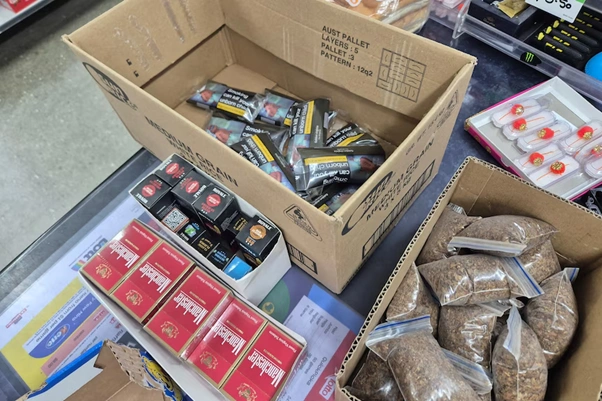
Seized illicit tobacco products
Government Response Falls Short
The Albanese government has responded with enforcement measures, but researchers at the e61 Institute argue the approach misses the mark. They found that while enforcement agencies received an extra $300 million in resources over the past two years, the underlying policy problem remains.
Simply lowering the excise rate won’t fix things either. Cutting tobacco excise back to 2019 levels could boost revenue by $3.2 billion or lower it by $2.1 billion, depending on how smokers and black market sellers respond.
The government committed $188.5 million over four years to the Australian Border Force in January 2024 to crack down on illicit tobacco imports. Treasurer Jim Chalmers described it as “all about deterring illegal tobacco use and distribution in Australia, and sending a clear message to the crooks and syndicates that dealing in illegal tobacco is a serious tax crime“.
Record seizures tell only part of the story. Authorities confiscated 2,244 tonnes of illicit tobacco during 2024-25, yet the black market continues expanding.
Political Timing Creates Perfect Storm
The convergence of these two issues threatens to derail Labor’s message ahead of next week’s budget update, which is expected to include spending cuts.
Opposition finance spokesperson James Paterson seized on the expenses revelations to attack government credibility. “Labor has said for years they need to increase the number of public servants so they can reduce the costs of consultants,” he said, pointing to separate data showing consulting expenditure remains high under Labor.
The timing also overshadows what should have been a positive news cycle for the government. Australia’s groundbreaking social media ban for under-16s took effect this month, marking the world’s first such restriction.
Instead, Labor finds itself defending ministerial perks while a multi-billion-dollar revenue leak continues largely unaddressed.
What Comes Next
Wells’ self-referral to the expenses authority may provide an off-ramp for the government if it results in recommendations to tighten family reunion entitlements. Albanese has indicated he would be willing to act on any recommendations, though he stopped short of acknowledging the rules need changing.
On the tobacco front, no quick fixes exist. The government’s enforcement-heavy approach has produced impressive seizure statistics but hasn’t stemmed consumer demand for cheap cigarettes.
Commissioner Shuhyta placed some responsibility on consumers themselves, urging people battling nicotine addiction to “recognise that illicit tobacco is not a victimless crime.”
That message faces an uphill battle when legal cigarettes cost three times more than black market alternatives.
FAQ
Q: How much revenue is Australia losing to illicit tobacco?
A: Up to $11.8 billion annually in foregone excise revenue, according to the government’s illicit tobacco commissioner.
Q: What percentage of cigarettes sold in Australia are now from the black market?
A: Estimates suggest between 55 and 60 per cent of cigarettes sold are now illicit.
Q: Has Anika Wells broken any rules with her expense claims?
A: All of Wells’ expenses have been deemed within the existing parliamentary entitlement rules, though questions remain about whether they meet community expectations.
Q: What has the government spent on combating illicit tobacco?
A: The government committed $188.5 million over four years to the Australian Border Force in 2024, plus an additional $300 million in enforcement resources over the past two years.
Q: Will the expense rules be changed?
A: Albanese has indicated he would act on recommendations from the Independent Parliamentary Expenses Authority, which is now reviewing Wells’ spending, but has not committed to specific changes.