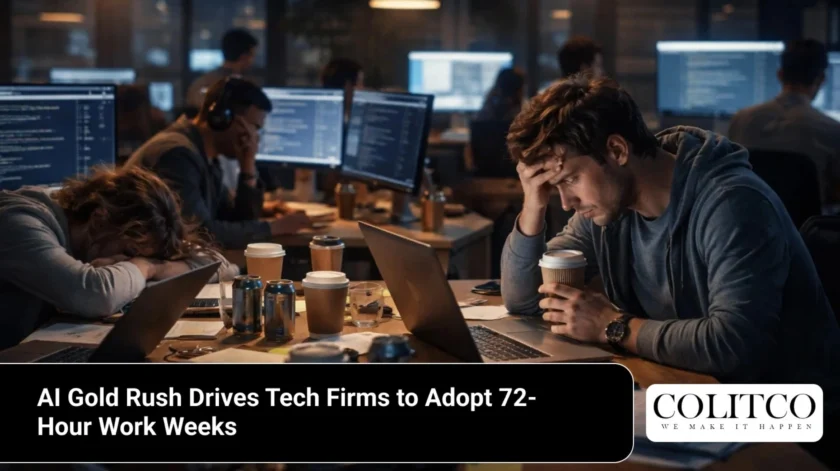
The artificial intelligence boom is pushing technology companies to embrace extreme working hours known as 996 culture. AI startup trends show firms now openly advertising 70-hour work weeks as standard expectations for employees seeking to join the sector.

Figure 1: Employees working together in a modern coworking space, reflecting collaborative startup environments and long work hours. [Source: Freepik]
The term 996 refers to working 9 am to 9 pm, six days per week. Companies racing to develop and monetise artificial intelligence applications believe long hours provide a competitive advantage in a rapidly evolving market.
AI Startup Trends Embrace 996 Hustle Culture
Rilla, a New York-based technology business, exemplifies AI startup trends toward extreme working hours. The Company sells AI-based systems allowing employers to monitor sales representatives during client interactions. Job advertisements on Rilla’s website explicitly warn applicants: “Please don’t join if you’re not excited about working approximately 70 hours per week in person.”
Will Gao, head of growth at Rilla, says the Company’s 120 employees embrace the demanding schedule. “We look for people who are like Olympian athletes, with characteristics of obsession and infinite ambition,” he explains. Gao insists there is no rigid structure despite long hours. Employees work until 2 am or 3 am on projects, then arrive at noon the following day.
Why AI-Driven Productivity Demands Justify Extended Hours
AI-driven productivity pressures stem from a breakneck development pace across the technology sector. Companies worldwide work to exploit and monetise artificial intelligence capabilities before competitors. Huge amounts of money flow into AI ventures, particularly start-ups seeking first-mover advantages.

Figure 2: Artificial intelligence concept illustration highlighting the rapid growth and competitive pressure driving AI-driven productivity. [Source: Freepik]
Adrian Kinnersley, who runs recruitment businesses in Europe and North America, identifies a pattern. The trend centres on AI companies with venture capital backing racing to launch products before rivals.
AI Tech Company News Shows Founders Living in Hacker Houses
Magnus Müller co-founded Browser-Use, developing tools helping AI applications interact with web browsers. He lives in a “hacker-house,” a shared living and workspace where colleagues continually swap ideas. Müller believes AI tech company news reflects the reality that long hours are unavoidable.
The challenges of building advanced AI capabilities are significant and highly competitive. Browser-Use currently has seven staff but is recruiting more. Anyone wanting to work a 40-hour workweek is unlikely to fit the Company culture. The firm seeks people passionate about the work who remain deeply engaged with problems.
Origins of 996 Culture in China’s Tech Sector
The 996 culture first appeared in China a decade ago. Technology companies and start-ups embraced it when the country focused on transforming from a manufacturing hub to an advanced technology leader. Jack Ma, billionaire founder of Alibaba.com, became a powerful advocate. He described the ability to work such hours as enormously beneficial for employees.
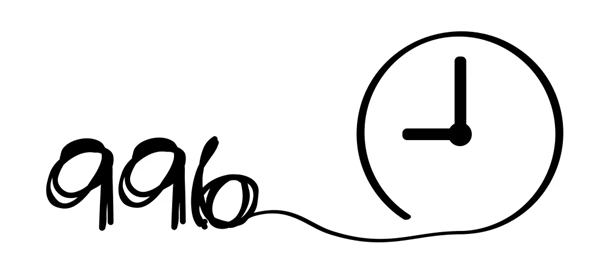
Figure 3: Visual representation of 996 work culture, symbolising extended working hours common in high-pressure technology sectors. [Source: VectorStock]
Richard Liu, founder of JD.com, railed against a declining work ethic. In a 2019 email to staff that sparked controversy, he stated that individuals avoiding hard work were not aligned with the Company values. However, the approach prompted backlash, including online complaints about labour law violations. By 2021, Chinese authorities launched a legal crackdown on excessive working hours.
Venture Capitalists Question AI-Driven Productivity Logic
Deedy Das, a partner at Menlo Ventures, thinks young entrepreneurs make mistakes by insisting employees work 996-style hours. The common error involves treating hours worked as both necessary and sufficient proof of productivity, rather than focusing on actual outcomes
Das believes the approach alienates workers with families and experienced professionals who achieve more by working less. Continual long hours lead to burnout. However, he concedes that different rules apply for Company founders with potential wealth at stake. He expresses surprise when founders fail to work 70 to 80 hours weekly, given their financial incentives.
Industry Outlook: Artificial Intelligence Sector Workplace Culture
The artificial intelligence sector’s rapid growth creates intense competitive pressure among firms racing to develop breakthrough applications. Venture capital funding flows heavily into AI start-ups, amplifying expectations for accelerated development timelines.

Figure 4: Office worker showing signs of stress and fatigue, illustrating burnout risks linked to extreme work schedules in tech companies. [Source: Freepik]
However, sustainability questions emerge as workplace culture experts warn that extreme hours cannot be maintained long-term. The technology sector may face talent retention challenges if burnout becomes widespread among employees expected to maintain 996 schedules.
Academic Experts Warn Against Unsustainable Practices
Tamara Myles, academic and author on workplace culture, says hustle culture is unsustainable, especially when people feel compelled to work constantly. However, she concedes that grey areas exist. Many technology companies following the 996 pattern openly promote this as something to be proud of rather than concealing the expectations.
Myles argues that not everyone working 996 genuinely wants to participate. “You might be staying because the job market is tough right now, or you might be here for a visa,” she explains. Power dynamics may force employees to accept extreme hours despite personal preferences or family obligations.
Final Thoughts
AI startup trends toward extreme working hours reflect intense competitive pressure in the artificial intelligence sector. While some employees genuinely embrace 996 culture, questions remain about long-term sustainability and whether AI-driven productivity goals justify the approach.
The technology sector faces a balancing act between speed to market and employee well-being. As AI tech company news continues highlighting extreme work cultures, firms must consider whether short-term competitive advantages outweigh risks of burnout and talent loss.
FAQs
Q1. What does 996 culture mean in AI startup trends?
Ans. The 996 culture refers to working 9 am to 9 pm, six days per week, totalling approximately 70 hours. AI startup trends show technology companies openly advertising these extreme hours as standard expectations for employees.
Q2. Why are AI companies adopting 70-hour work weeks?
Ans. AI-driven productivity demands stem from intense competition to develop and monetise artificial intelligence applications first. Companies believe working longer hours provides a competitive advantage in the rapidly evolving market.
Q3. Where did the 996 work culture originate?
Ans. The 996 culture first emerged in China’s technology sector a decade ago. Companies embraced it when the country focused on becoming an advanced technology leader. Chinese authorities later cracked down on excessive working hours.
Q4. Do all technology workers support extreme hours?
Ans. No. Academic experts note that power dynamics may force employees to accept 996 schedules despite personal preferences. Factors include tough job markets, visa requirements, and family obligations that create compliance pressure.