Most Australians know Queensland for coal, copper, and zinc. But a sweeping belt of territory stretching from Julia Creek to Richmond in the state’s north-west holds a resource that has quietly climbed the global agenda: vanadium.
The numbers are hard to ignore. Australia hosts the world’s highest vanadium reserves, around 8.5 million tonnes as of 2024, according to the US Geological Survey. Queensland punches well above its weight within that total, with the Julia Creek and Richmond regions alone containing multiple world-scale deposits.
This isn’t new geology. But what’s new is the urgency, the investment, and, critically, the government machinery now moving behind it. Vanadium investment Queensland has entered a different phase, and the global supply chain is about to feel it.

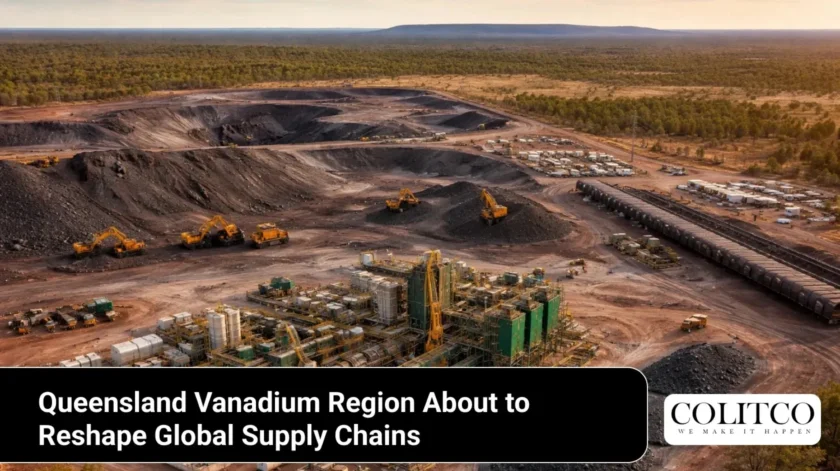
Figure 1: Queensland’s Julia Creek–Richmond region holds major vanadium reserves, attracting investment and government backing that could reshape global supply chains. [Source: Pexels]
What Makes This Region So Significant
One of the Single Largest Vanadium Deposits on Earth
The Julia Creek Vanadium and Energy Project, operated by ASX-listed QEM Limited (ASX: QEM), holds a JORC-compliant resource of 2.87 billion tonnes at an average grade of 0.31 per cent vanadium pentoxide (V₂O₅). That makes it one of the single largest vanadium deposits anywhere in the world.
The deposit forms part of the vast Toolebuc Formation, a geological sequence of vanadium and oil shale that the region has been built on for millions of years.
Just down the road, Richmond Vanadium Technology (RVT) holds the Lilyvale deposit: a mineral resource of 1.8 billion tonnes at 0.36 per cent V₂O₅, making it the world’s largest non-titanomagnetite vanadium deposit of its kind.
And then there’s Critical Minerals Group (ASX: CMG) and its Lindfield vanadium project — another 713 million tonne resource at 0.32 per cent vanadium pentoxide, sitting in the same North West Minerals Province corridor.
The key takeaway: this isn’t one project. This is a region.
Why Vanadium Matters Right Now
- Steel industry: Vanadium has long been a core strengthening agent in rebar and structural steel, and new Chinese rebar standards introduced in 2025 now mandate higher vanadium content, tightening global demand
- Energy storage: Vanadium redox flow batteries (VRFBs) are forecast to grow at more than 20 per cent per year, making them one of the fastest-growing clean energy applications on the planet
- Supply chain vulnerability: Around 70 per cent of current global vanadium production comes from China and Russia — a concentration that has alarm bells ringing in Western capitals
- Critical mineral status: The Australian Government lists vanadium as a critical mineral, with the Federal Future Made in Australia package now offering tax incentives covering 10 per cent of production and refining costs
The Queensland Government Backs In
A $10 Million Anchor Investment
In September 2025, the Crisafulli Government committed $10 million to Vecco Group’s vanadium electrolyte facility in Townsville, delivered in partnership with Idemitsu Australia. The facility, built to anchor a pit-to-port product manufacturing chain, will draw vanadium sourced directly from Julia Creek.
Early construction works are scheduled to begin in 2026, with full operations targeted for early 2028.
That investment alone is expected to create close to 600 jobs across North and North West Queensland — a significant lift for communities in the Julia Creek and Richmond districts.
“Queensland has the resources the world needs, and the Crisafulli Government is making sure those resources deliver jobs, trade, and prosperity for our regions,” said Minister for Finance, Trade, Employment and Training Ros Bates at the announcement.
The Common User Facility: Infrastructure for the Whole Sector
The Queensland Resources Common User Facility (QRCUF), under construction at Cleveland Bay Industrial Park in Townsville, is a critical piece of the puzzle that benefits every vanadium project in the province, not just one company.
Construction and commissioning of the facility are scheduled for completion in late 2026. Once completed, companies will be able to access the facility to trial extraction and production processes.
The facility allows smaller vanadium companies without the capital to build their own processing infrastructure to access commercial-scale production capabilities. The Queensland Government estimates North Queensland’s critical mineral reserves at a staggering $500 billion in value.
CopperString: Connecting the Province to the Grid
The $5 billion CopperString 2032 project, a 1,100-kilometre high-voltage electricity transmission line from Townsville to Mount Isa, will connect the North West Minerals Province to the national electricity grid for the first time. For energy-intensive vanadium processing, affordable and reliable power is non-negotiable. CopperString removes one of the last major infrastructure barriers standing between the province and commercial production.
Who’s Driving the Projects Forward
QEM: A Dual-Commodity Model
QEM’s Julia Creek project stands out not just for its vanadium scale but for its dual-commodity design. The same ore body that produces vanadium pentoxide contains up to 654 million barrels of in-situ oil equivalent, offering a second revenue stream that improves project economics considerably.
The project aims to produce 10,571 tonnes of high-purity vanadium pentoxide and 313 million litres of transport fuel per annum over a 30-year mine life.
QEM managing director Gavin Loyden put the strategic case clearly: “The adoption of vanadium flow batteries is accelerating around the world and Queensland is uniquely positioned to establish a ‘pit to battery’ manufacturing industry.”
RVT: Targeting BFS Completion in 2026
Richmond Vanadium Technology completed a significant 2025 drilling program and continues to advance its bankable feasibility study (BFS), targeting completion in the second half of 2026.
RVT executive chair Brendon Grylls said the 2025 work “positions the company to tighten project economics and approvals.” The company is also developing a vanadium flow battery demonstration in partnership with Rongke Power to strengthen market access ahead of production.
CMG and the Grant-Backed Supply Chain Push
Critical Minerals Group recently received a $900,000 progress payment under its $2.7 million grant agreement with the Department of Industry, Science and Resources. The company achieved key milestones, including pilot plant test work, processing flowsheet development, environmental field studies, and completion of front-end engineering for its vanadium electrolyte manufacturing facility.
How This Reshapes Global Supply Chains
Breaking China and Russia’s Grip
Right now, China and Russia control roughly 70 per cent of global vanadium supply. Around 70 per cent of production is associated with vanadium-rich slags generated during iron ore smelting or oil refining, predominantly in China and Russia.
That concentration is a strategic liability for every country building renewable energy infrastructure or upgrading steel standards. The Queensland vanadium corridor, with its massive primary mining deposits and government-backed downstream processing, offers the most credible alternative supply chain outside those two nations.
Investors tracking this kind of geopolitical shift away from Chinese commodity dominance will recognise the pattern. The same dynamic that has reshaped iron ore investment theses is now playing out in critical minerals, with vanadium at the front of the queue.
From Mine to Battery: The End-to-End Ambition
What separates Queensland’s vanadium push from raw mineral exports is the ambition to capture the entire value chain domestically.
The strategy links:
- Mining at Julia Creek and Richmond
- On-site vanadium pentoxide processing
- Electrolyte production in Townsville
- Flow battery assembly for global energy storage markets
Vecco Group’s chief executive confirmed the plan directly: “By establishing a vanadium industry here in Queensland, multiple mines and battery manufacturing facilities can be supported, enabling export opportunities for locally manufactured vanadium and the battery electrolyte.”
This is the kind of pit-to-port model that investors in Queensland’s bauxite export sector will recognise, where proximity to infrastructure and government coordination transforms a mineral resource into a durable export industry.
Which Risks Still Deserve Attention
Not everything is straightforward. The vanadium market remained subdued through much of 2025, with prices for vanadium pentoxide trading in a relatively narrow range across the US, China, and Europe. Oversupply from China and Russia continued to cap upward price momentum.
The sector also faces a skilled labour shortage in North Queensland. Transitioning workers from coal-sector roles into vanadium processing is a technically demanding process — a challenge the Queensland Government has tried to address with a $3 million workforce development program.
And project timelines matter. Early works in 2026 and production in 2028 are aspirational targets, not guarantees. Permitting, environmental assessment, and financing all carry execution risk.
For investors looking at broader ASX small-cap critical minerals exposure, understanding how individual stocks perform within the All Ordinaries benchmark is worth considering — emerging miners on the ASX often move dramatically on project milestone news, and vanadium stocks in particular have shown that volatility.
The Bottom Line
Queensland’s North West Minerals Province is not a speculative play anymore. It hosts multiple world-scale vanadium deposits, a state government that has put serious capital behind the industry, and an infrastructure pipeline, CopperString, the Common User Facility, and the Townsville electrolyte plant, designed to move the sector from exploration to production.
The vanadium investment Queensland story in 2026 is about meeting timing readiness. Global demand for long-duration energy storage is accelerating. Western governments want to diversify away from Chinese-controlled critical mineral supply chains. And Queensland has both the geology and the policy architecture to fill that gap.
Whether you’re watching this as an investor, a policymaker, or a regional job seeker, the same conclusion holds: this region is no longer quietly waiting for its moment. It’s building toward it, one facility at a time.
Frequently Asked Questions (FAQs)
1. Why is Queensland’s Julia Creek–Richmond region important for vanadium?
Ans: The Julia Creek–Richmond corridor in North West Queensland hosts several world-scale vanadium deposits. Projects like the Julia Creek Vanadium and Energy Project, Lilyvale deposit, and Lindfield project position the region as a potential major global supplier of vanadium.
2. How large are Australia’s vanadium reserves?
Ans: Australia holds the largest vanadium reserves in the world, estimated at around 8.5 million tonnes in 2024, according to the US Geological Survey. A significant portion of these resources is located in Queensland’s North West Minerals Province.
3. What industries drive global demand for vanadium?
Ans: Vanadium demand is mainly driven by steel production, where it strengthens rebar and structural steel, and energy storage, particularly through vanadium redox flow batteries (VRFBs) used for large-scale renewable energy storage systems.
4. Which companies are developing vanadium projects in Queensland?
Ans: Several ASX-listed companies are advancing projects in the region, including QEM Limited, Richmond Vanadium Technology (RVT), and Critical Minerals Group (CMG). These companies are developing large vanadium resources within the Julia Creek–Richmond corridor.
5. How is the Queensland Government supporting the vanadium industry?
Ans: The Queensland Government is supporting the sector through investments and infrastructure, including funding for Vecco Group’s vanadium electrolyte plant in Townsville, the Queensland Resources Common User Facility, and the CopperString 2032 transmission project.
6. How could Queensland’s vanadium industry reshape global supply chains?
Ans: Currently, about 70% of global vanadium production comes from China and Russia. New mining and processing projects in Queensland could diversify supply and create an alternative Western vanadium supply chain for steel and energy storage industries.
Sources
- Australian Mining
- Australian Mining
- Australian Mining
- Queensland Government Ministerial Media Statements
- Queensland Coordinator-General
- Investing News Network