

Metro Mining Limited (ASX: MMI) kicked off its 2026 operating season on 11 March, restarting operations at its Bauxite Hills Mine in Cape York, North Queensland, following a planned wet season shutdown. The latest Metro Mining operational update signals a confident return to production, underpinned by a completed maintenance programme, a dry-docking vessel on schedule, and full-year shipment guidance of 6.6 to 7.1 million wet metric tonnes (WMT).
The Mine Behind the Milestone
Location and Operational Background
The Bauxite Hills Mine sits roughly 95 kilometres north of Weipa on the Skardon River, operating on the Weipa bauxite plateau in Far North Queensland. Metro Mining has run the site since April 2018, and the operation has grown into one of Australia’s most prominent independent bauxite producers.
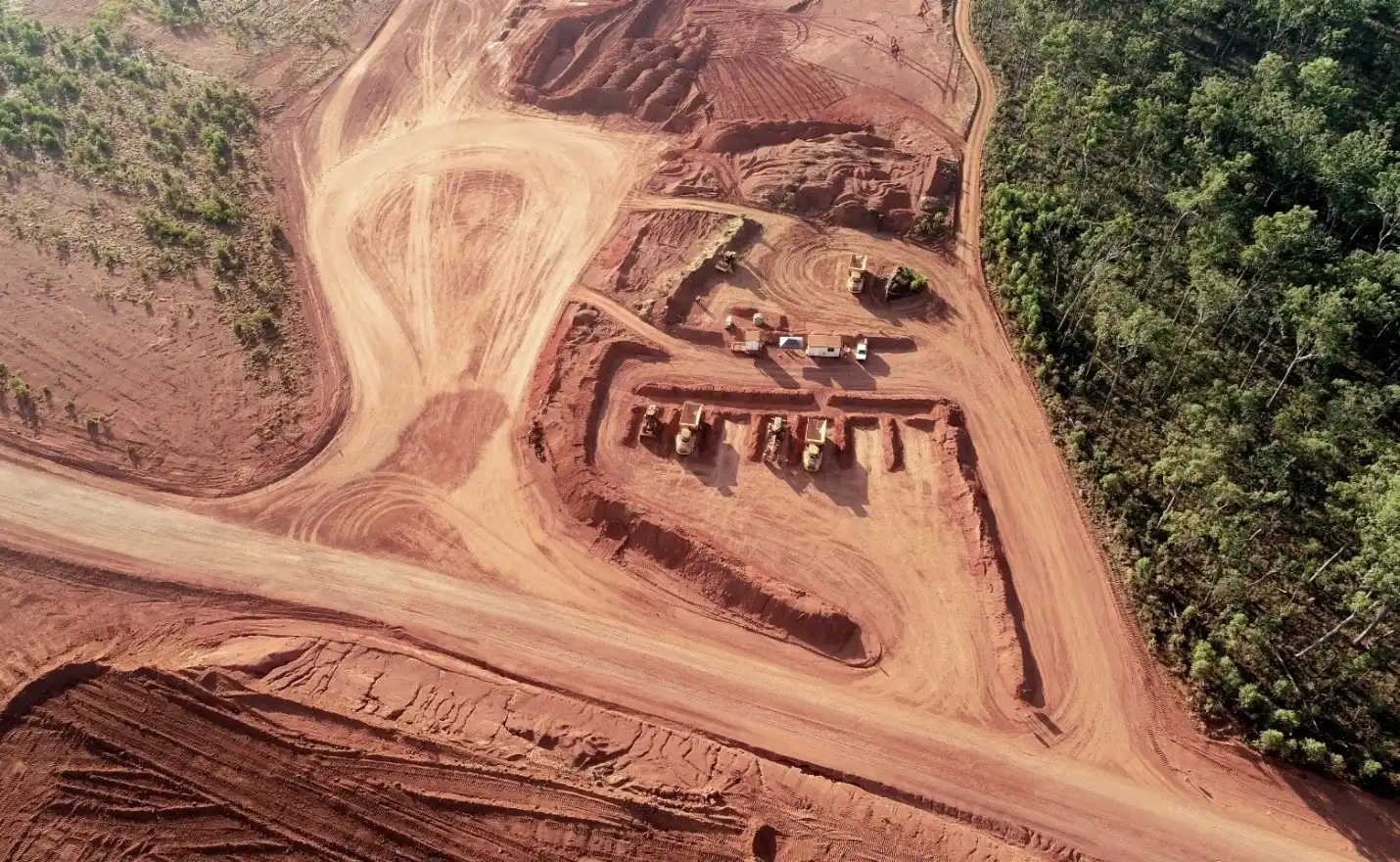
Figure 1: An image of ongoing drilling in Bauxite Hills Mine [Metro Mining]
Reserves and Resource Outlook
As of the end of 2024, Bauxite Hills held ore reserves of 77.7 million tonnes, supporting roughly 11 years of mine life. An additional mineral resource base of 114.4 million tonnes extends that outlook by approximately five more years.
Export Logistics and Key Markets
Metro ships its high-alumina bauxite directly to customers across Asia, predominantly China, via very large ore carriers, benefiting from a short nine-day voyage that keeps freight costs competitive.
Wet Season Maintenance Sets the Stage for Restart
Annual Wet Season Servicing Programme
Every year, Metro Mining uses the North Queensland wet season as an opportunity to service and inspect its equipment. This year’s shutdown delivered a thorough programme across the mining fleet, pontoon, and Barge Loading Facility.
The company confirmed that all required inspections and servicing have wrapped up successfully, positioning the operation for a safe and productive restart.
Early Mining and Operational Priorities
With approximately 20,000 WMT of bauxite already pre-loaded on barges and around 150,000 WMT sitting on the ROM (run-of-mine) stockpile, mining teams will focus early efforts on:
- Pre-stripping activities to expose fresh ore,
- Grade control to maintain product quality,
- Road maintenance to support haulage operations.
The OFT Ikamba Dry-Dock: On Track and Progressing Well
Role of the Offshore Floating Transhipper
One of the key items in this Metro Mining operational update is the dry-dock programme for the OFT Ikamba, the company’s offshore floating transhipper. The vessel played a strong role in 2025, recording impressive loading performance and availability, and Metro has taken this scheduled downtime to invest in a comprehensive refurbishment.
Current Progress of the Dry-Dock Programme
As of 11 March, the programme sits at 40 per cent completion, with all critical-path items well progressed. Structural and safety inspections have cleared without issue. Major refurbishment tasks currently underway include:
- Replacement of the Crane No. 2 slew bearing,
- Luffing cylinder and gearbox replacement,
- Hull blasting and repainting,
- Winch repair.
Expected Return to Service
Metro expects the Ikamba to depart the shipyard in late March 2026, with a return to operating duty at Bauxite Hills before the end of April. These upgrades are designed to enhance the vessel’s reliability and throughput rates for 2026 and beyond.
Maintaining Shipping Throughput During the Dry-Dock Gap
Metro has moved proactively to ensure the Ikamba’s temporary absence does not disrupt delivery schedules. From mid-March, the company will commence barge loading as ship arrivals and weather conditions allow.
Dual-Loading Operations Strategy
To cover the gap, Metro has chartered geared vessels to conduct dual-loading operations alongside the TSA Skardon Floating Crane. This parallel approach allows the company to maintain shipping throughput rates and protect both customer delivery timelines and sales volumes.
Seasonal Operational Advantages
CEO and Managing Director Simon Wensley had previously described the second half of the year as the “sweet spot” for the operation, noting that Bauxite Hills benefits from better weather and tidal conditions from mid-year onward. The mid-March shipping ramp-up sets the foundation for what Metro expects to be a strong performance across the remainder of 2026.
Market Conditions: Soft Short-Term, Constructive Longer-Term
Short-Term Market Weakness
The broader bauxite market has softened in the first quarter of 2026. A well-supplied global market and weak alumina prices have weighed on sentiment. However, the picture is not uniformly negative, and this Metro Mining operational update points to several factors providing downstream pricing support.
Aluminium Price Strength and Freight Market Disruption
Aluminium prices have risen to four-year highs. Middle East disruption continues to push up fuel costs and risk premiums, while altering global shipping routes. These dynamics have lifted seaborne freight costs, putting pressure on higher-cost West African producers and potentially reducing their competitive advantage against well-positioned Australian exporters like Metro.
Long-Term Demand Drivers
The direct impact on bauxite supply and demand volumes remains limited for now. But the competitive pressure on West African supply chains is strengthening the relative position of Australian producers. Metro, with its low operating costs and proximity to Asian markets, benefits from this structural advantage.
Longer term, the aluminium sector continues to attract demand growth of around 3 to 4 per cent annually, driven by EV manufacturing, renewable energy infrastructure, battery production, and lightweight transportation. As bauxite is the primary ore used to produce aluminium, that demand underpins Metro’s strategic outlook.
Fixed Contracts Underpin Q2 2026 Schedule
Metro’s Q2 2026 production and shipping schedule is locked in. The company’s offtake agreements and long-term freight contracts, which include fixed charter and bunker fuel rates, give Metro a significant degree of cost certainty in a volatile global freight environment.
Those contracts cover major global alumina and aluminium producers, including Chalco, Emirates Global Aluminium, Xinfa Aluminium, and Shandong Lubei Chemical. The contracted offtake position for 2026 stands at 6.1 million WMT, providing substantial revenue visibility.
Securing more than 85 per cent of agreed delivered volumes through contracts of affreightment means Metro is largely insulated from spot freight rate volatility, a meaningful advantage when Middle East tensions and rerouted shipping lanes are driving up maritime costs globally.
Full-Year 2026 Guidance and What It Means for Investors
Shipment Guidance and Growth Targets
Metro has confirmed its calendar year shipment guidance for 2026 at 6.6 to 7.1 million WMT. That range marks a step up from the 2025 target of 6.5 to 7 million WMT — a target the company was well on track to meet, having shipped 3.4 million WMT year-to-date by August 2025.
Expansion and Capacity Optimisation
Wensley has been explicit about the company’s 2026 priority: extracting maximum value from its 7-million-tonne expansion, which the company announced and funded in late 2022. Debottlenecking and optimisation studies are also underway to potentially push production toward 8 Mtpa beyond 2026.
Cost Position Among Global Producers
From a cost perspective, Metro is targeting delivered bauxite costs below US$30 per dry tonne CIF China, firmly in the lowest quartile of global producers. That cost position, combined with long-term offtake agreements and fixed freight contracts, makes the company’s earnings profile relatively resilient in the current softening market.
Australia’s National Bauxite Output Outlook
Australia’s broader bauxite output trajectory also reflects well on Metro. National bauxite production is forecast to lift from 102 million tonnes in 2024–25 to around 110 million tonnes in 2026–27, supported by new projects and sustained output at existing operations.
Australia’s Broader Resources Activity Mirrors the Momentum
Rising Exploration and Development Activity
Metro Mining’s progress reflects a broader trend of operational confidence across the Australian resources sector. Investors tracking ASX-listed miners are watching a range of resource companies push exploration and production milestones forward in 2026.
Recent Examples Across the Sector
For example, Cannindah Resources has expanded its Mt Cannindah porphyry project, demonstrating the continued appetite for copper-gold porphyry exploration in Queensland. Separately, St George Mining has delivered a 75 per cent resource upgrade, underlining the value that targeted drilling can unlock. And on the processing infrastructure front, Resolution Minerals has progressed its Idaho mill acquisition, a reminder that securing processing capacity is as critical as finding the ore in the ground.
Community Impact and Indigenous Employment
Regional Employment Contribution
Metro Mining’s Bauxite Hills operation carries social significance well beyond its production figures. The company employs more than 300 people, with around 80 per cent of its workforce based in North Queensland and Cape York. By 2022, the company had exceeded its Traditional Owner employment target of 30 per cent, with its indigenous workforce climbing to 35 per cent.
Relationship with Traditional Owners
Metro maintains productive agreements with the Traditional Owners of the land on which it operates. That relationship-first approach has been a consistent part of the company’s operating model since the mine opened in April 2018, and it continues to underpin community confidence in the project.
What to Watch in 2026
Key Operational Milestones Ahead
The Metro Mining operational update dated 11 March 2026 paints a constructive picture for the year ahead. Operations have restarted, maintenance is complete, and the Ikamba remains on track to resume duties before the end of April. Shipping volumes will ramp up from mid-March, supported by chartered geared vessels in the interim.
Key Indicators for Investors and Industry
Investors and industry observers will look closely at a few key markers over the coming months:
- Whether the Ikamba returns to service on schedule by end of April
- How Q2 shipping volumes track against the 6.6–7.1 million WMT full-year guidance
- Whether aluminium prices sustain their four-year highs and filter through to improved bauxite pricing
- Progress on debottlenecking studies targeting 8 Mtpa capacity beyond 2026
For a company running one of Australia’s lowest-cost bauxite operations with a strong customer base and secured freight contracts, this latest Metro Mining operational update reflects the confidence of a business well-placed to capitalise on the long-term energy transition demand for aluminium.
Investor Outlook for Metro Mining Limited (ASX: MMI)
Metro Mining’s share price recently closed at $0.066, gaining $0.002 (+3.13%) in the latest session. Despite the daily rise, the stock has shown mixed momentum across different timeframes:
- 1 Week: -4.35%
- 1 Month: 0.00% (flat performance)
- 2026 Year-to-Date: -13.16%
- 1 Year: +29.41%
Relative performance shows the stock has underperformed its broader mining sector over the past year by 10.58%, but it has outperformed the S&P/ASX 200 by 18.67% during the same period.
The market capitalisation of the company is approximately $405.6 million and with this much market cap, Metro Mining sits firmly within the mid-tier resource producer category on the ASX.
Frequently Asked Questions (FAQs)
1. What is the latest operational update from Metro Mining Limited about the Bauxite Hills Mine?
Ans: The latest operational update confirms that Metro Mining has restarted operations at the Bauxite Hills Mine in Cape York, North Queensland, after the annual wet season shutdown. The company completed maintenance across its mining fleet, pontoon, and Barge Loading Facility and has resumed production as part of its 2026 operating season.
2. What is Metro Mining’s shipment guidance for 2026?
Ans: Metro Mining has reaffirmed its 2026 shipment guidance of 6.6 to 7.1 million wet metric tonnes (WMT) of bauxite. This represents a slight increase compared to the 2025 target of 6.5 to 7 million WMT and could mark another record shipment year for the company if achieved.
3. Why is the Ikamba transhipper important for Metro Mining’s operations?
Ans: The OFT Ikamba offshore floating transhipper plays a crucial role in loading bauxite onto large export vessels at the Bauxite Hills Mine. The vessel is currently undergoing scheduled dry-dock refurbishment, and Metro expects it to return to operations before the end of April 2026, which should support higher shipping volumes for the remainder of the year.
4. How has the Metro Mining share price performed recently on the ASX?
Ans: Shares of Metro Mining Limited recently (as of 11 March 2026) traded around $0.066 on the ASX, with a market capitalisation of about $405 million. While the stock is down more than 13% year-to-date in 2026, it has delivered over 29% gains over the past year, outperforming the broader S&P/ASX 200 during that period.
5. Who are Metro Mining’s key bauxite customers?
Ans: Metro Mining supplies high-grade bauxite to major global aluminium producers under long-term offtake agreements. Key customers include Aluminum Corporation of China Limited (Chalco), Emirates Global Aluminium, and Xinfa Aluminium Group, providing revenue stability and shipment visibility.
6. What is bauxite and why is it important for the aluminium industry?
Ans: Bauxite is the primary ore of aluminium and is generally represented by the chemical formula Al₂O₃·nH₂O, which indicates hydrated aluminium oxide. A commonly cited form is hydrated aluminium oxide written as Al₂O₃·2H₂O or sometimes Al₂O₃·H₂O. Rather than being a single mineral, bauxite also contains varying amounts of silica, iron oxide, titania, aluminosilicates, and other minor or trace impurities.
It is refined into alumina and then smelted to create aluminium metal. Because aluminium is widely used in industries such as electric vehicles, renewable energy systems, construction, and transportation, global demand for bauxite remains closely linked to the growth of these sectors.
7. Where is bauxite mined in Australia?
Ans: Australia is the second-largest producer of bauxite globally, behind Guinea, and is known for hosting some of the world’s highest-quality deposits. The sector plays an important role in supporting the country’s competitiveness in global resources markets and contributes to the supply chain for the clean energy transition.
Most of Australia’s bauxite resources are concentrated in three major regions: Western Australia, Queensland, and the Northern Territory. According to data from 2012, Queensland accounted for about 61% of the nation’s Economic Demonstrated Resources (EDR), while Western Australia held roughly 35% and the Northern Territory around 4%.