
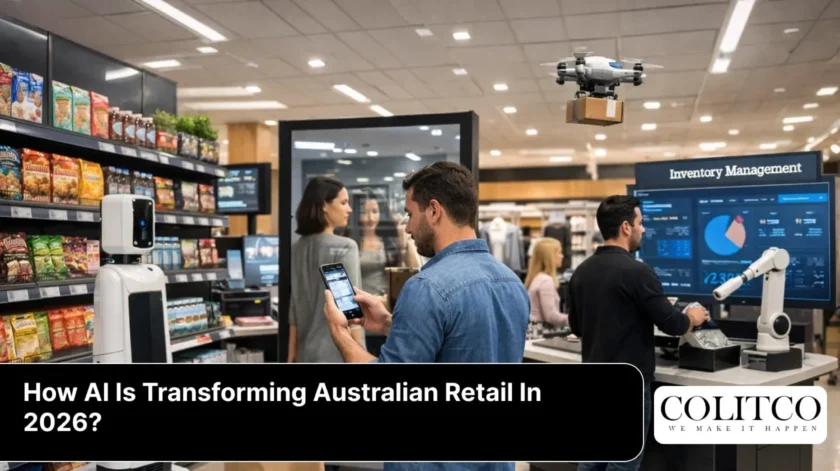
Australian retail giants are adopting artificial intelligence devices and smart technology in stores and online platforms more and more, and changing the way they recommend and sell products.
The demand for AI-powered devices and automated systems is increasing, and retailers mention the need to enhance customer interaction and higher profitability rates.
It is worth noting that one of the largest retail groups in Australia, Harvey Norman, has announced a notable increase in profit, which was partially fueled by the high desire of consumers to use AI-related technology products and digital innovation.
Those tendencies indicate the change towards a more personalised shopping experience with the help of AI data analysis, virtual assistants, and smart inventory management, changing the conventional retail models into more dynamic and technology-oriented processes.

Shoppers engage with AI-enabled displays at a major Australian retail store. [Australia]
How Big Was The Profit Rise At Major Retailers?
According to the most recent performance of Harvey Norman, profits before tax increased by over 16 per cent to reach an unprecedented high of 466.31 million strong demand in all products, which include technology and smart devices.
The performance of the company highlights the realisation of Retail Technology Australia 2026 strategies to convert into bottom-line gains of large retail operators.
The industry in general is witnessing the same trend with Australian consumers using more AI-enabled devices, such as AI-enabled TVs and personal computers, as well as smart homes that push buyers to acquire in greater volume and margin.
The technology revolution is not restricted to luxury and high-end goods, and the day-to-day appliances and connected devices are now included in the mainstream retail mix that is driving these profit booms.
What Are Key AI Retail Trends Australia Watching?
The mood amongst consumers shows a growing interest in customised buying experiences that are leveraged by AI to suggest products, personalise pricing, and streamline online purchasing interfaces.
Initial statistics indicate that Australia is one of the countries worldwide that are leading in applying the use of generative AI solutions that facilitate buying experience, optimise product search and minimise checkout efforts.
Customer service platforms also involve the integration of AI into retailer companies, where chatbots and virtual assistants will address simple queries and lessen the work strain on the frontline employees.
This has been under the wider societal adoption of AI retail trends that Australian companies are increasingly marketing as competitive advantages, both in-store and online, taking interactions to levels never imagined even a few years prior.

AI-driven personalised recommendation engines in action on mobile retail browsers. [Brainvire]
Investments In AI Are Shaping Shopping Behaviour
Large-scale Australian retailers are investing in technology to help them stay competitive in a global market where the prospects of consumers are rapidly increasing.
These investments consist of AI-based inventory analysis, marketers’ automation of business and smart logistics, waste minimisation, and improved delivery times.
This technology also, in most instances, gives granular information on the patterns of shopper behaviour that helps the retailers predict demand and customise offerings in a more precise manner.
This is a technological-focused move that is allowing companies to be deft, price on the fly, and keep up with the global chains that are redefining efficiency, convenience and customer satisfaction.
Are There Risks With Automation And AI Adoption?
Although the advantages of AI in retail are undeniable, there are also challenges involved in the integration process, such as unemployment caused by the automation of the more routine processes, the issue of data privacy, and the difficulty of ensuring customer loyalty.
Recent research recommends that a valuable portion of retail positions may see a drastic change by 2027, with AI technology eliminating the necessity of manual operations.
Retailers need to walk the fine line while implementing technology and balancing it with reskilling of the workforce and open data that safeguards consumers and builds trust. These will play a key role in making sure Retail Technology Australia 2026 does not go ahead of the societal readiness.

Robotic assistants and automated checkout solutions are emerging in modern Australian stores. [The Guardian]
What’s Next For AI In Australian Retail?
In future perspectives, it is projected by analysts that AI applications in the field of logistics, points of customer engagement, and product designing will continue to grow.
Firms that invest in obvious AI retail trends in Australia will probably establish the standards of customer service, operational effectiveness and profitability within the next several years.
With machine learning and predictive analytics even more integrated, shoppers will find their interfaces even more intuitive, offers more hyper-targeted and a more seamlessly integrated online-offline experience.
To the investors and market observers, the extent to which the Australian retailers can leverage AI will be a major measure of the competitiveness in the domestic and international markets in the long run.
Also read: Galaxy S26: Samsung Redefines Mobile AI and Privacy
Frequently Asked Questions
Q1. What Is Retail Technology Australia 2026?
A1: It refers to the adoption of AI, automation and data analytics solutions across retail operations to improve sales, customer engagement and operational efficiency.
Q2. How Is AI Helping Sales In Australian Retail?
A2: AI powers personalised recommendations, optimises inventory, enhances digital shopping experiences and supports smart pricing strategies that boost profitability.
Q3. Are Jobs At Risk With AI In Retail?
A3: Certain routine roles may be automated, but many retailers are also investing in workforce upskilling to manage technology-enhanced systems.
Q4. Will AI Make Shopping More Personalised?
A4: Yes, AI enables tailored suggestions, dynamic pricing, and custom promotions that align with individual shopper preferences.


