
Gold prices declined on February 12 after stronger-than-expected US jobs data reduced expectations of near-term Federal Reserve rate cuts. Spot gold slipped toward $5,058 per ounce, while futures edged lower as the US dollar strengthened.
Strong US Jobs Data Pressures Gold Price
The latest non-farm payroll report showed the US economy added 130,000 jobs in January. Economists had expected a far lower increase of about 55,000 jobs.
At the same time, the unemployment rate fell to 4.3%. Wage growth came in at 3.71%, indicating steady labour market conditions.
The stronger employment data reduced expectations of an immediate interest rate cut. As a result, gold prices moved lower during early trading hours.
Gold prices eased after stronger-than-expected US jobs data reduced expectations of near-term Federal Reserve rate cuts. [Istock]
Spot gold was down about 0.4% near $5,058 per ounce. US gold futures for April delivery also slipped toward $5,080 per ounce.
Market participants reassessed positions as bond yields rose. Higher yields tend to reduce demand for non-yielding assets like gold.
US Dollar Strength Adds Further Pressure
Following the jobs report, the US Dollar Index moved higher. A stronger dollar made gold more expensive for overseas buyers.
Because gold is priced in dollars, currency movements often affect global demand. When the dollar rises, foreign demand can ease.
Silver prices also declined by about one per cent during the session. The broader precious metals complex reacted to currency strength and higher yields.
However, the dollar’s advance remained moderate as previous payroll figures were revised lower. Annual benchmark revisions also reduced earlier job growth estimates.
Despite those revisions, the immediate market reaction favored the dollar. That kept gold trading under pressure through the morning session.
Market Focus Shifts to Inflation Data
Traders are now watching upcoming US inflation figures for further direction. Consumer Price Index data is scheduled for release later this week.
Inflation readings could influence expectations about the Federal Reserve’s policy path. If inflation remains elevated, rate cuts may be delayed.
Analysts quoted in live market updates noted that gold may trade within a defined range. Expected near-term levels were projected between $4,975 and $5,125.
Some market commentary shared on financial platforms indicated that gold remains vulnerable to short-term corrections. At the same time, geopolitical developments remain part of the broader outlook.
US Treasury yields moved higher following the jobs release. The two-year yield approached 3.5%, reflecting changing rate expectations.
MCX Gold and Domestic Price Movement
In India, MCX gold futures also traded lower in line with global benchmarks. April delivery contracts slipped to around ₹1,57,701 per 10 grams.
Silver futures on the MCX declined by about one per cent. Prices dropped near ₹2,60,453 per kilogram during early trade.
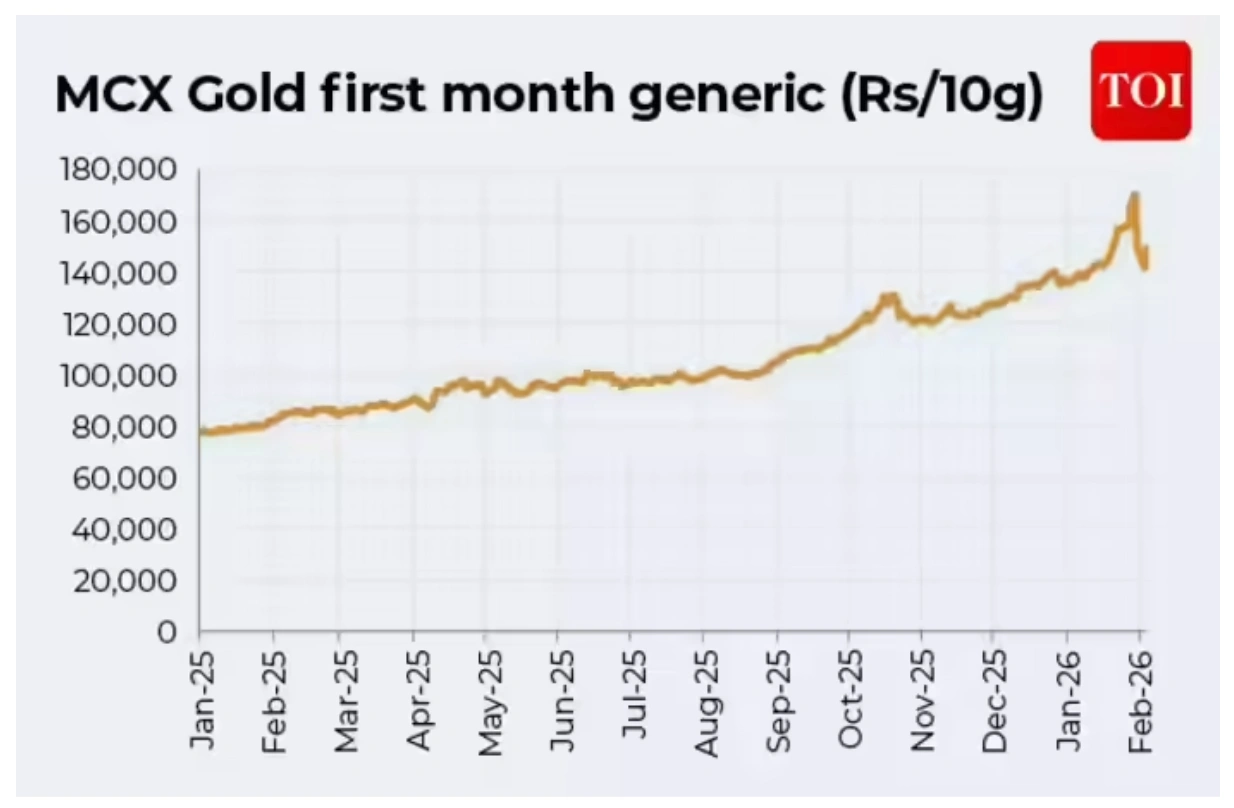
MCX gold futures declined in line with global trends as international prices slipped. [Times Of India]
Domestic gold prices per 10 grams slipped below ₹1.58 lakh. The decline mirrored international price action and dollar strength.
Market participants monitored support levels near ₹1,55,000 on the MCX. Resistance was seen in the ₹1,60,000 to ₹1,62,000 range.
Analysts suggested volatility may increase around US data releases. Traders adjusted positions ahead of inflation figures and global cues.
Why Gold Reacts to Jobs and Interest Rates
Gold does not generate interest income for holders. Therefore, it becomes less attractive when interest rates remain high.
When rate cut expectations decline, investors often shift toward yield-bearing assets. Bonds and money market instruments may offer better returns.
Employment data serves as a key indicator of economic health. Strong job growth signals stable income and consumer spending.
As a result, central banks may see less urgency to lower borrowing costs. That environment can weigh on gold prices.
Even so, gold remains supported by broader themes such as inflation concerns. Geopolitical tensions also continue to influence demand patterns.
Recent commentary from independent metals traders noted that gold has maintained higher highs since its earlier correction. Buyers remain active despite periodic pullbacks.
Gold Price Outlook for 2026 and Beyond
Despite the recent decline, gold has posted strong gains over the past year. In 2025, prices surged more than 50% and crossed $4,000 per ounce.
Forecasts from major financial institutions project further upside into late 2026. Some estimates suggest prices could approach $5,000 per ounce by year-end.
Average price projections for the fourth quarter of 2026 stand near $5,055 per ounce. Longer-term forecasts extend toward $5,400 by the end of 2027.
Demand from central banks and investors remains a central factor. Quarterly investor and central bank demand is projected to average about 585 tonnes in 2026.
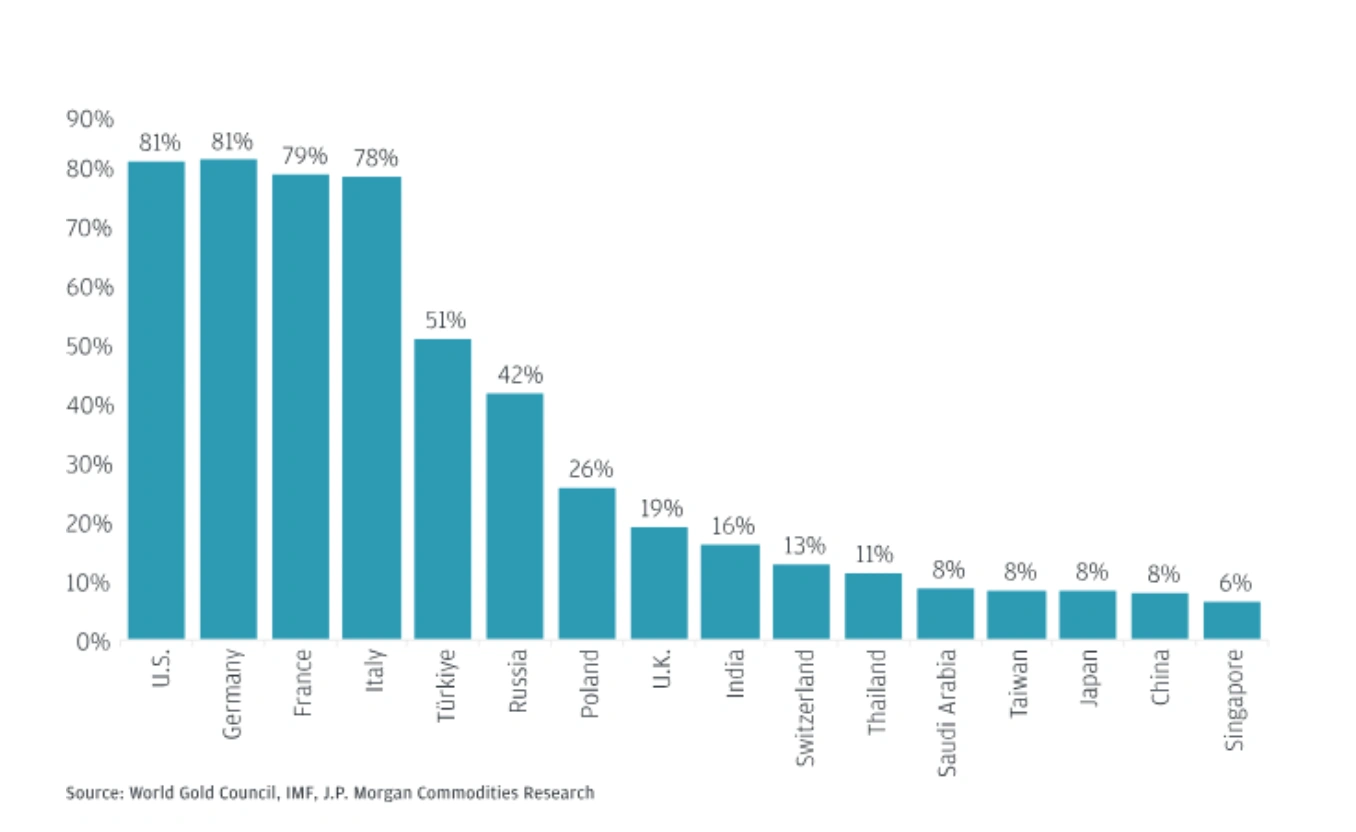
Gold as a percentage of foreign exchange reserves across major economies highlights the continued importance of gold in central bank portfolios. [J.P. Morgan]
Central banks are expected to purchase around 755 tonnes next year. Although below recent peaks, buying levels remain elevated compared to pre-2022 averages.
Investor holdings through ETFs, futures, bars, and coins have also increased. Gold now represents about 2.8% of total global financial assets under management.
Analysts estimate that further diversification into gold could lift that share toward 4 to 5% over time.
Also Read: ASX Hits Three-Month High as Banks and Miners Drive Market Rally
Volatility Expected in Near Term
Gold and silver prices have shown sharp swings in recent weeks. Both metals remain below their record highs achieved earlier this year.
Market participants continue to assess geopolitical developments and monetary policy signals. Profit booking at higher levels has also limited upward momentum.
Support levels for spot gold were identified near $5,000 to $5,055 per ounce. Resistance was seen between $5,122 and $5,170 in the short term.
Silver prices also reflected similar volatility, with defined support and resistance ranges. Traders are closely tracking the US dollar index for direction.
As markets await inflation data, gold prices remain sensitive to economic indicators. Rate expectations and currency movements are likely to guide the next move.
FAQs
Q: Why did the gold price fall after the US jobs report?
A: Gold prices declined because stronger-than-expected US jobs data reduced expectations of a near-term Federal Reserve rate cut. Higher interest rate expectations typically pressure gold since it does not offer yield.
Q: How does the US jobs report affect gold prices?
A: The US jobs report influences Federal Reserve policy expectations. Strong employment data suggests a stable economy, which may delay rate cuts and strengthen the US dollar, both of which can weigh on gold prices.
Q: What was the latest US non-farm payrolls figure?
A: The US economy added 130,000 jobs in January, significantly exceeding market expectations of around 55,000 jobs.
Q: Why does a stronger US dollar impact gold?
A: Gold is priced in US dollars. When the dollar strengthens, gold becomes more expensive for international buyers, which can reduce demand and push prices lower.
Q: What is the relationship between interest rates and gold prices?
A: Gold generally moves inversely to interest rates. When interest rates rise or remain high, investors may prefer yield-bearing assets, making gold less attractive.
Q: What is the near-term outlook for gold prices?
A: Gold may remain volatile as markets await US inflation data and further Federal Reserve signals. Key support and resistance levels are being closely monitored by traders.
Q: Is gold still in a long-term uptrend?
A: Despite short-term declines, gold has posted strong gains over the past year. Long-term forecasts remain supported by central bank demand and ongoing global economic uncertainties.