
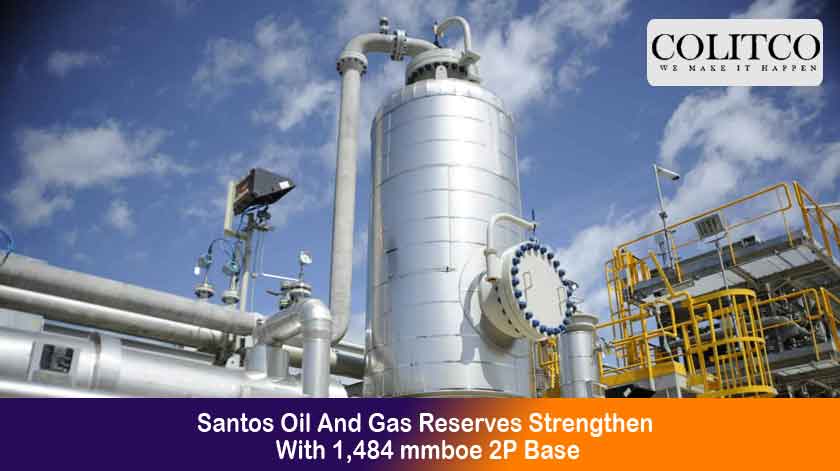
Santos published its most current Santos annual reserves report, including increased resource stability and discipline in the operations. Proved and probable reserves were 1,484 mmboe at the end of the year 2025.
This is an increase of 13 mmboe prior to production. The Cooper Basin and PNG assets were the major sources of growth. Year production amounted to 88 mmboe. The life expectancy has been reduced to 17 years.
The developed reserves represent 62 per cent of the total 2P reserves. The contribution of the international assets is 40 per cent of the 2P base. Gas is still a prevailing part of the portfolio. This is a blend that consists of 83 per cent gas and 17 per cent liquids.
According to the management, accuracy and reliability were enhanced by the disciplined review process. Approximately 97 per cent of total 2P volumes were measured by independent auditors.
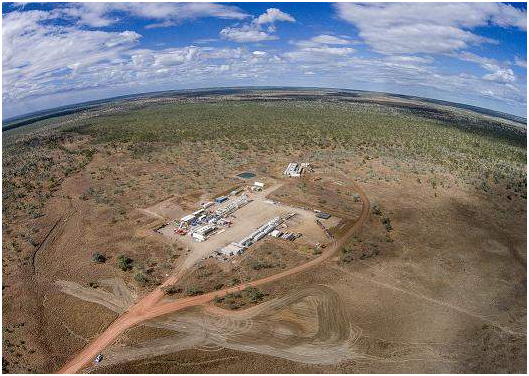
Santos operations are still on the increase of reserves in Cooper Basin and PNG assets. [NS Energy]
Reserves Replacement And Asset Quality Improved
The company had provided a 95 percent 1P reserves replacement ratio. The yearly ratio of 2P reserves replacement was 15 per cent. It was also 15 per cent in organic 2P replacement.
The number of developed resources grew significantly compared to 40 per cent last year. The change lowers the development risk and enhances the near term supply. Proved reserves were 913 mmboe as opposed to 917 mmboe in 2024.
Adjustments in production resulted in a drop in proved and probable reserves. According to Santos, additions and revisions counterbalanced divestment declines. The interest of the Petrel and Tern was previously sold.
The exposure to contingent resources was minimized by that sale. During unstable markets, investors tend to appreciate increased rates of development. Santos seems to be poised to have a stable performance and cash flow.
How Did Contingent Resources And CO2 Storage Change?
Long-term growth optionality of energy producers is offered by contingent resources. Santos disclosed 2C contingent resources of 3,212 mmboe. This was down by 3,338 mmboe in 2024. Sales counterbalanced new acquisitions in a number of basins.
New potential was introduced in Cooper Basin, Western Australia, and Alaska. The company increased its carbon storage profile as well. Unchallenged and likely absolute CO2 capacity is 8 million tonnes. Ever since start up, one million tonnes were injected.
The 2C contingent storage resources went up by 24 million tonnes, meanwhile. This has brought up to 202 million tonnes in the Cooper Basin. CS is considered by management as the core of the decarbonisation strategy.
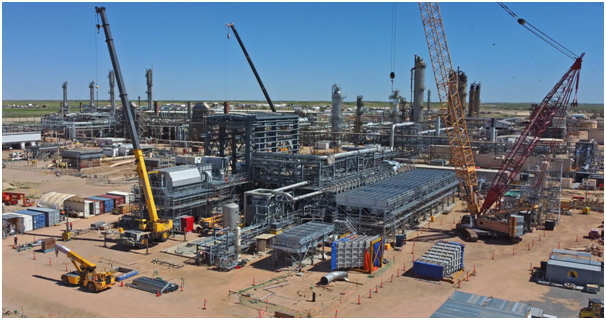
Santos has a growing carbon storage initiative that falls upon the Moomba CCS project. [Santos]
Financial Guidance Signals Stable Earnings Outlook
Santos made initial instructions with the reserves update. The product sales amount to about $4,939 million in revenue. Cost of sales is between 3,250-3, 300 million. Other revenue is anticipated to be estimated at $140-150 million.
Additional revenue can be in the range of 180-200 million. The net finance expenses are likely to be around 250-265 million. Other costs would amount to $375-395 million. Joint ventures are expected to result in a loss to the company in the tune of $20-30 million.
Its effective rate of taxation is approximately 31 per cent. The management has observed that the numbers are not audited and final. These figures still give transparency to investors.
Why Do Investors Watch The Santos Oil And Gas Reserves Closely?
Reserves make the difference in energy companies with regard to long-term value. Increased reserves prolong production and guarantee revenue. The 2P reserves of sales gas at Santos are 7,196 PJ.
It has 195 mmbbl of crude oil and 49 mmbbl of condensate in the portfolio. LPG totals 677,000 tonnes. The spread of the geography minimizes operational risk.
PNG and Northern Australia make a significant scale. Alaska is diversified by exposure to liquids. Such strengths can lure energy investors in the world in pursuit of dependable supply chains.
Australia, PNG, and Alaska have diverse assets that will help Santos sustain its production. [Energy Today]
Santos Positions For Future Energy And CCS Expansion
Kevin Gallagher, Chief Executive, announced that the company had high organic growth. He emphasized the need to increase CO2 storage. The Moomba CCS project facilitates customers’ needs for the solution to emissions.
Santos is targeting the integration of gas with reduced carbon routes. This two-sided approach could enhance the competitiveness in the transition markets. The update on Santos reserves 2025 demonstrates the resilience in the sales of assets.
Confidence is added by stable reserves of life and elevated levels of development. The team is now interested in disciplined capital expenditure and efficiency at work.
Also Read: Santos LNG Production Reaches Milestone With First Barossa Cargo
FAQs
Q1: What are Santos’ 2P reserves for 2025?
A1: They total 1,484 mmboe at 31 December 2025.
Q2: How long is the reserves’ life?
A2: The 2P reserves life is 17 years based on 88 mmboe production.
Q3: How large are contingent resources?
A3: 2C contingent resources equal 3,212 mmboe.
Q4: What is the current CO2 storage capacity?
A4: Proved plus probable CO2 storage capacity stands at 8 million tonnes.


