

How AI improves athlete performance has become a central question in professional sports. Top tennis players, including Novak Djokovic and Aryna Sabalenka, now use AI-driven analytics to refine their game. Athlete performance technology breaks down match performance, movement patterns and tactical decisions with unprecedented precision.
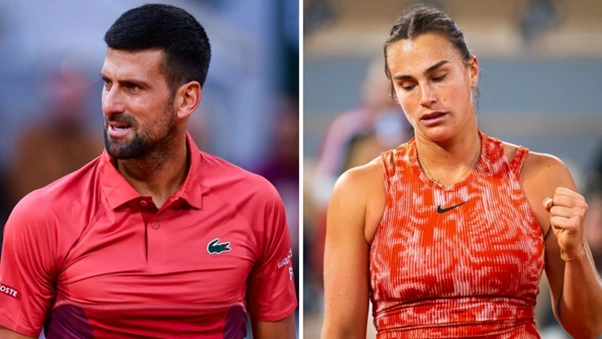
Figure 1: Novak Djokovic and Aryna Sabalenka during professional competition. (Source: BBC Sport)
These tools help refine training and in-match strategies by offering insights beyond what a coach can see in real time. AI performance monitoring systems process vast amounts of data to identify patterns that would be impossible to detect manually. The technology is fundamentally changing how elite athletes train and compete.
How AI Improves Athlete Performance Through Advanced Analytics Platforms
Innovative platforms such as TennisViz employ AI to process live ball and player tracking data. These systems produce detailed metrics on shot quality, phase of play and tactical patterns. Athlete performance technology enables coaches to tailor training and strategic preparation with unprecedented granularity.
The platforms analyse thousands of data points per match to provide actionable insights. Coaches can now see exactly how AI improves athlete performance through specific metrics. Shot selection, court positioning and movement efficiency are all measured in real time.
AI Performance Monitoring: Tour-Wide Technology Integration
Initiatives like ATP Tennis IQ Powered by PIF integrate richer data and video analytics across the ATP and Challenger tours. Players access advanced scouting, opponent insights and wearable data in near real time. This AI performance monitoring informs decision-making during matches and training sessions.
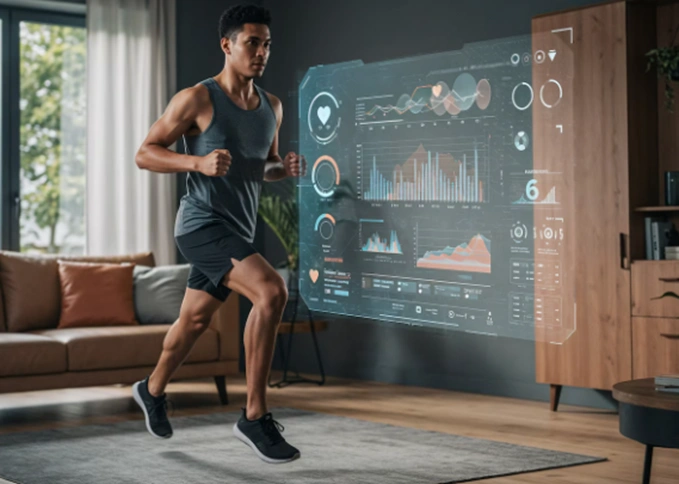
Figure 2: AI-powered fitness and performance monitoring interface displaying real-time biometric and training data during an athlete’s workout session. (Source: Freepik)
The tour-wide rollout demonstrates how seriously professional tennis takes athlete performance technology. Players at all levels can now benefit from data that was previously available only to top competitors. The democratisation of technology is changing the sport fundamentally.
Training and Technique Refinement Using Computer Vision
Computer vision applications such as SportAI and Tennis AI analyse swing mechanics, shot efficiency and body movement. These systems show exactly how AI improves athlete performance through detailed biomechanical feedback. The technology provides insights similar to having a dedicated biomechanical coach.
The applications can identify small inefficiencies in technique that the human eye might miss. Athlete performance technology captures movement at high frame rates, enabling frame-by-frame analysis. Players can adjust their technique based on objective data rather than subjective observation.
Predictive Models and Pattern Recognition in Match Strategy
AI and machine learning models trained on extensive historical and match data can predict likely outcomes. These systems uncover patterns in serve and return success rates. AI performance monitoring can forecast high-pressure point performance, helping with match planning and tactic selection.
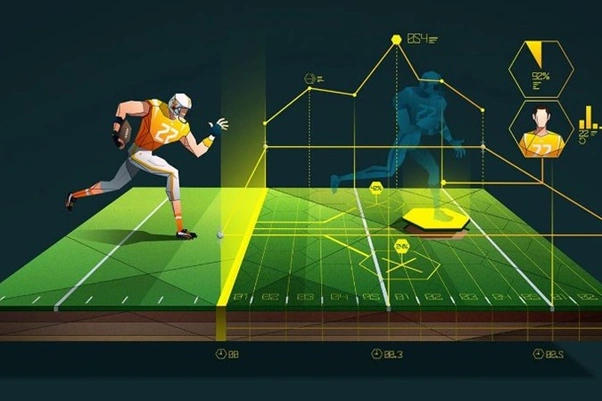
Figure 3: Conceptual illustration showing artificial intelligence and data analytics applied to athlete movement tracking and performance optimisation in professional sports. (Source: APAC Entrepreneur)
The predictive capabilities show how AI improves athlete performance before matches even begin. Coaches can prepare specific strategies based on opponent tendencies identified through data analysis. Athlete performance technology transforms preparation from art to science.
What Does the Future Hold for AI Performance Monitoring?
The future of athlete performance technology includes even more sophisticated analysis tools. Wearable sensors will provide real-time biometric data integrated with movement analysis. This will show how AI improves athlete performance through personalised insights based on individual physiology.
Research continues into applications of AI performance monitoring for injury prevention. Machine learning models can identify movement patterns that increase injury risk. Athlete performance technology will increasingly focus on long-term health alongside immediate performance gains.
Practical Benefits for Players at All Levels
The democratisation of athlete performance technology benefits recreational players alongside professionals. Mobile applications bring AI-powered analysis to anyone with a smartphone. This widespread access demonstrates how AI improves athlete performance across all skill levels.

Figure 4: Visual representation of artificial intelligence technology infrastructure. (Source: Freepik)
AI performance monitoring systems are becoming more affordable and user-friendly. Community tennis facilities can now install systems that were previously exclusive to professional training centres. The technology gap between elite and recreational players continues to narrow.
AI in Sports Market Outlook and Growth Trajectory
The global AI in sports market continues to expand rapidly as data-driven technologies become integral to modern sport. Market size is estimated at USD 8.92 billion in 2024 and is projected to reach USD 27.63 billion by 2030, reflecting a 21.1% CAGR from 2025 to 2030. Growth is driven by increasing adoption of AI to enhance athlete performance, optimise training efficiency, and improve fan engagement.
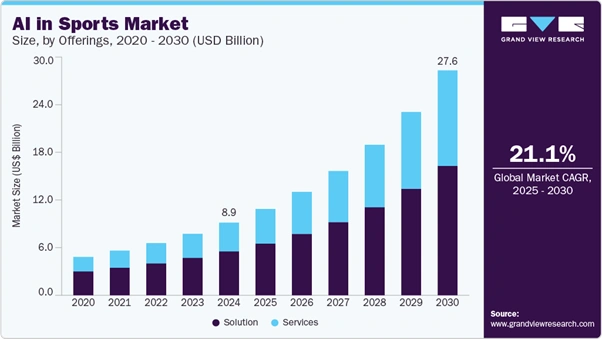
Figure 5: Global AI in sports market size by offering from 2020 to 2030. (Source: Grand View Research)
North America leads the market, accounting for 35.1% of global revenue in 2024, supported by early technology adoption and strong investment by professional sports organisations. Solution-based offerings dominate with a 60.4% revenue share, while generative AI represents the largest technology segment. Team sports remain the biggest contributors to market revenue, highlighting AI’s growing role in performance analytics, decision-making, content creation, and operational automation both on and off the field.
Final Thoughts
The integration of AI into professional tennis demonstrates how AI improves athlete performance through multiple channels. From training and technique refinement to match strategy and injury prevention, athlete performance technology transforms every aspect of the sport. The systems used by stars like Djokovic and Sabalenka represent the cutting edge of sports science.
AI performance monitoring will continue to evolve as machine learning models become more sophisticated. The democratisation of technology ensures benefits extend beyond elite professionals. Athlete performance technology represents one of the most significant developments in modern sports, creating new possibilities for players at all levels.
FAQs
Q1. How does AI improve athlete performance in tennis?
Ans. AI improves athlete performance through detailed analysis of swing mechanics, shot efficiency, tactical patterns and opponent tendencies using computer vision and machine learning systems.
Q2. What is athlete performance technology used by professional tennis players?
Ans. Professional players use athlete performance technology, including platforms like TennisViz, PlaySight SmartCourt, SportAI and Tennis AI for analytics and training optimisation.
Q3. How does AI performance monitoring work during matches?
Ans. AI performance monitoring processes live ball and player tracking data to produce real-time metrics on shot quality, court positioning and tactical decisions.
Q4. Which professional tennis players use AI technology?
Ans. Top players, including Novak Djokovic and Aryna Sabalenka, use AI-driven analytics to refine training and in-match strategies through advanced data analysis.


