
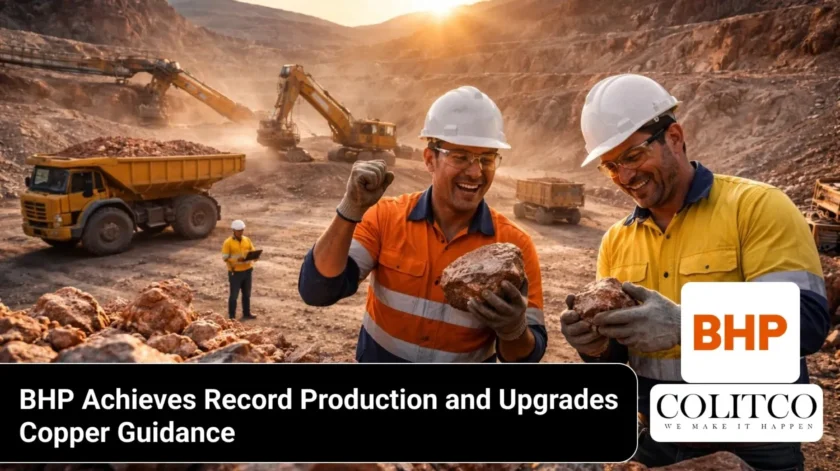
BHP delivered record operational performance at its copper and iron ore assets during the half year ended 31 December 2025. The Company capitalised on a positive commodity price environment. Copper prices rose 32% year on year. Iron ore prices increased 4% over the same period. This performance led to an increase in group copper production guidance for the 2026 financial year.
Chief Executive Officer Mike Henry discussed the results in the half-year operational review.
“BHP delivered another half of very strong performance with operational records at our copper and iron ore assets. This was achieved safely and in a positive commodity price environment, with copper prices up 32% and iron ore prices 4% higher year on year.”

BHP’s Chief Executive Officer Mike Henry
Copper Production Guidance Increases After Strong Half
The flagship Escondida operation in Chile achieved record concentrator throughput. Improved recoveries and operational enhancements drove this result. These enhancements included the introduction of new reagents at the site. This performance offset the planned lower concentrator feed grade of 0.93% during the half.
BHP increased the FY26 production guidance range for Escondida. The Company now expects production between 1,200 and 1,275 kt. The Company also raised guidance for Antamina. Antamina lifted its range to between 140 and 150 kt.
- Total group copper production reached 984 kt for the half year.
- Average realised copper price reached US$5.28 per pound.
- Antamina copper production increased 8% to 72 kt.
- Zinc production at Antamina rose 49% to 63 kt.
- Copper South Australia achieved a record refined gold output.
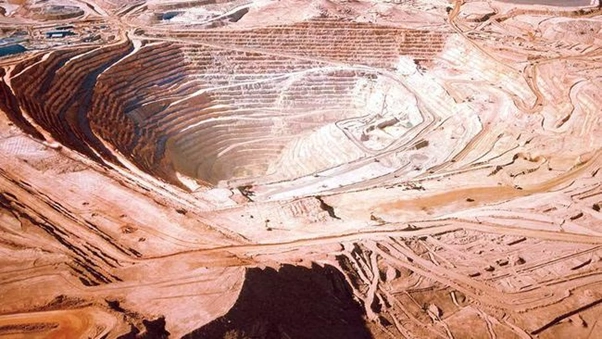
Iron Ore Operations Set Half-Year Records
Western Australia Iron Ore (WAIO) achieved record first-half production and shipments. Total iron ore production for the group hit 134 million tonnes. This represents a 2% increase compared to the previous half year. Strong supply chain performance across mine, rail, and port operations supported this growth.
Car Dumper 3 performance improved following the completion of a rebuild in the first quarter. This rebuild had a 4.3 million tonne impact on a 100% basis. Efficiency increased across the rail network as a result. WAIO shipments and production reached 130 million tonnes on a BHP interest basis.
- WAIO achieved record material mined with a 9% increase.
- Iron ore production guidance for FY26 remains between 258 and 269 million tonnes.
- Average realised iron ore price reached US$84.71 per wet metric tonne.
- Samarco production increased 48% to 4 million tonnes.
- BHP and Rio Tinto signed an agreement to explore Pilbara mining opportunities.
Steelmaking Coal Growth Amid Geotechnical Challenges
Steelmaking coal production increased 2% to 9.2 million tonnes during the period. The BMA operations achieved the highest stripping volumes in five years. This performance offset the impact of planned higher strip ratios. However, ground conditions at the Broadmeadow mine created operational difficulties.
Ongoing geotechnical challenges at Broadmeadow impacted underground performance in the second quarter. These conditions led to the deferral of a planned longwall move. Consequently, BMA now guides to the lower half of its production range. The Saraji South operation transitioned into care and maintenance during the second quarter.
Energy Coal Performance and Market Returns
Energy coal production from NSWEC rose 10% to 8.1 million tonnes. Strong operational performance followed increased bypass coal and mining in lower strip ratio areas. The operation achieved record wash plant throughput after planned maintenance in the first quarter. NSWEC production guidance remains between 14 and 16 million tonnes.
- Average realised steelmaking coal price reached US$188.58 per tonne.
- Average realised energy coal price reached US$95.76 per tonne.
- BMA unit cost guidance remains between US$116 and US$128 per tonne.
- NSWEC production sits in the upper half of its guidance range.
- Rainfall impacted stripping operations at coal assets during the second quarter.
Jansen Potash Project Progresses Toward Production
The Jansen potash Project in Canada remains on track for production in mid-2027. Stage 1 of the Project is now 75% complete. BHP expects Jansen to be a long-life and low-cost asset. The Company provided an updated cost estimate for Stage 1 separately.
Jansen Stage 2 reached 14% completion during the half year. This stage has a first production target date in the 2031 financial year. This Project adds a future-facing commodity to the BHP portfolio. The Company expects the asset to generate shareholder value for many decades.
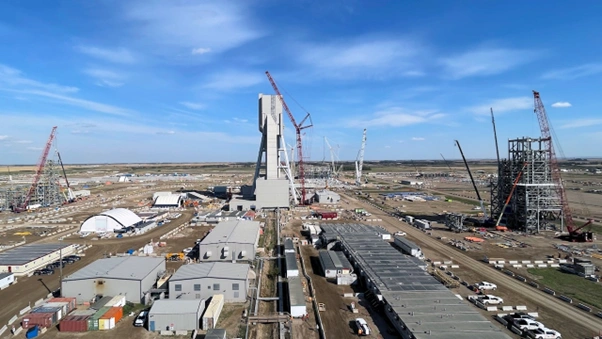
The Jansen Potash Project in Canada
Financial Summary and Capital Management Initiatives
BHP entered a US$2 billion infrastructure agreement with Global Infrastructure Partners in December 2025. This transaction involves the WAIO inland power network in Western Australia. BHP retains ownership and operational control of the network. The arrangement strengthens balance sheet flexibility and supports long-term value creation.
The Company expects net debt to be between US$14 billion and US$15 billion. Working capital increased by US$2.3 billion to US$2.4 billion during the half year. Net cash tax paid totalled between US$3.6 billion and US$3.7 billion. The group adjusted effective tax rate sits between 36% and 40%.
- Capital and exploration expenditure reached US$5.3 billion.
- BHP paid US$3.1 billion for the H2 FY25 dividend.
- Dividends paid to non-controlling interests reached US$1 billion.
- Asset sale proceeds generated between US$100 million and US$200 million.
- BHP Brasil paid US$1.1 billion for Samarco dam failure obligations.
- Minerals exploration expenditure reached US$193 million.
Also Read: Rare Aurora Australis Spectacle Spans Across Australia as Solar Activity Peaks
Decarbonisation and Technology Trials in the Pilbara
BHP commenced testing of battery-electric technology at its Jimblebar iron ore mine. Two battery-electric haul trucks arrived at the site in November. These trucks represent the start of on-site testing for Caterpillar’s technology. This initiative supports the decarbonisation goals in the Pilbara region.
The Company also received Australia’s first purpose-built battery-electric locomotives. These locomotives arrived in Western Australia for trials on the WAIO rail network. BHP continues to advance its copper growth options in South Australia and Chile. The Vicuña Project submitted an application for the Incentive Regime for Large Investments in Argentina.
Global Market Outlook and Demand Drivers
China’s commodity demand remains resilient through targeted policy measures. India is emerging as a key engine of demand for steel and copper. India’s domestic activity sustains high copper needs. Forecast global growth for 2026 sits at approximately 3%.
BHP enters the second half of FY26 with strong operating momentum. The Company targets 2 million tonnes of attributable copper production in the 2030s. Mike Henry discussed the outlook for copper production and prices.
“We have increased our FY26 copper production guidance, which enables us to further capitalise on record copper prices. The strong copper price is being driven by healthy demand and by supply disruptions at a number of competitors.”


