
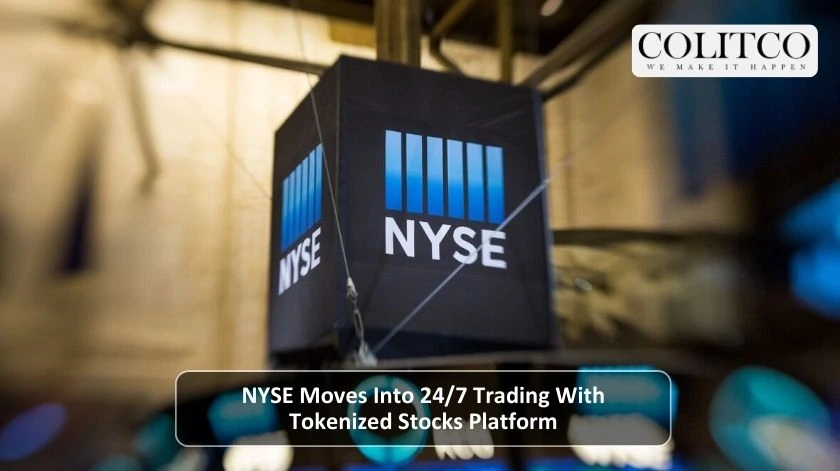
The New York Stock Exchange has confirmed plans to develop a 24/7 trading venue for tokenized U.S. stocks and ETFs, combining traditional market infrastructure with blockchain-based settlement systems, as interest in nonstop equity trading continues to accelerate among global investors and market operators.
Today, NYSE is proud to announce the development of a platform for trading and on-chain settlement of tokenized securities.
NYSE’s new digital platform will enable tokenized trading experiences, including 24/7 operations, instant settlement, orders sized in dollar amounts, and…
— NYSE 🏛 (@NYSE) January 19, 2026
The platform, developed by NYSE parent Intercontinental Exchange, will seek regulatory approval before launch and operate alongside the existing NYSE market structure. The initiative aims to enable continuous trading, on-chain settlement, and stablecoin-based funding while maintaining alignment with established regulatory standards.
According to official statements, the venue is designed to integrate NYSE’s Pillar matching engine with blockchain post-trade systems. This design allows equities to trade without daily market closures while preserving existing shareholder rights and institutional safeguards.
NYSE Introduces Parallel Market Built on On-Chain Infrastructure
The proposed digital venue is not an extension of the existing exchange but a separate market structure built specifically for tokenized securities. ICE confirmed that the system supports both tokenized versions of traditional shares and assets issued natively as digital securities.
NYSE stated that tokenized shares will remain fully fungible with traditionally issued securities. Investors will retain dividend entitlements and voting rights, ensuring economic parity between digital and conventional holdings.
The platform also enables fractional share purchases and orders sized in dollar amounts rather than share quantities. This structure is expected to broaden market accessibility for retail and institutional participants alike.
Settlement Model Replaces Traditional T+1 Cycle
The platform introduces instant settlement using tokenized capital, replacing the existing T+1 clearing and settlement cycle. Orders will be funded through stablecoins, allowing capital to move without reliance on traditional banking hours.
Custody and settlement will operate across multiple blockchains. NYSE indicated that the multi-chain design allows flexibility for institutions managing assets across different digital environments.
This structure reduces settlement delays that typically expose markets to counterparty and liquidity risks during volatile periods. Continuous settlement also allows capital to be redeployed without extended clearing windows.
Banks Integrated into Tokenized Clearing Architecture
ICE confirmed it is working with major banks, including BNY and Citigroup, to support tokenized deposits across its clearinghouses. These arrangements allow clearing members to manage funds outside standard banking hours.
The structure enables institutions to meet margin requirements across jurisdictions and time zones. It also supports capital mobility during periods when traditional payment rails are unavailable.
By embedding banks into the clearing framework, ICE seeks to align blockchain settlement with existing financial safeguards. This approach maintains institutional compliance while introducing blockchain efficiency.
Industry Reaction Signals Rising Market Confidence
The announcement has generated notable responses from both financial and crypto industry leaders. Fintech expert Simon Taylor said the exchange is building a new venue designed entirely for on-chain issuance and settlement.
Taylor stated that extended equity trading hours could increase demand for crypto liquidity. He added that markets may increasingly converge around continuous capital flows.
🚨 BREAKING: NYSE announces new tokenization platform.
Here’s what they’re building:
A completely new trading venue with:
• 24/7 operations (no market hours)
• Instant settlement (not T+1)
• Stablecoin-based funding (not bank wires)
• “Tokens natively issued as digital… pic.twitter.com/EKVovpoULK— Simon Taylor (@sytaylor) January 19, 2026
Former Binance CEO Changpeng Zhao described the move as bullish for crypto exchanges and the wider digital asset sector. Binance CEO Richard Teng added that traditional finance is now deploying blockchain infrastructure at scale rather than observing it passively.
TradFi isn’t just watching anymore, they’re building. The NYSE plans to launch 24/7 blockchain-based platform.
If the largest equities exchange in the world is going on-chain, what does that tell you about the future of global finance?
— Richard Teng (@_RichardTeng) January 20, 2026
Their remarks were shared through public social media posts following the announcement. The statements reflected growing convergence between regulated markets and digital asset platforms.
Competitive Pressure Builds Across U.S. Equity Markets
ICE’s move arrives amid rising competition among U.S. exchanges to extend trading hours. Nasdaq is seeking approval for stocks to trade 23 hours a day, five days a week.
Major brokerages, including Robinhood and Charles Schwab, have already expanded stock trading hours in recent years. Cboe Global has also introduced longer trading sessions across selected products.
Regulators have responded by introducing rules that allow exchanges to extend operations beyond traditional hours. Investor demand for nonstop access to U.S. equities has continued to rise as global participation increases.
Professor Campbell Harvey of Duke University said tokenization addresses long-standing problems in market infrastructure. He added that tokenized stocks represent one of the most accessible applications of blockchain in finance.
Tokenization Strategy Anchors ICE’s Digital Transformation
The tokenized securities platform forms part of ICE’s broader digital strategy. The company is preparing its clearing infrastructure to support round-the-clock trading across multiple asset classes.
ICE operates six clearinghouses globally, including the world’s largest energy clearinghouse and the largest credit default swaps clearinghouse. The firm has positioned itself at the forefront of market digitisation for over two decades.
NYSE President Lynn Martin stated that the exchange is leading the transition toward fully on-chain solutions. She added that the strategy combines regulatory protections with modern technology.
Michael Blaugrund, Vice President of Strategic Initiatives at ICE, said supporting tokenized securities is central to ICE’s on-chain market infrastructure plans. He noted that the goal covers trading, settlement, custody, and capital formation.
Dual-Market Model Redefines Equity Trading Structure
The introduction of a continuous, tokenized venue alongside traditional markets creates a dual-market model. One operates on fixed hours with delayed settlement. The other runs continuously with instant settlement.
This structure places NYSE in direct competition with digital-first platforms focused on tokenized securities. Unlike firms layering tokens onto existing systems, NYSE is building both the venue and assets natively on-chain.
Market analyst Adam Livingston stated that extended equity trading could drive higher demand for Bitcoin. He said the expected Q3 launch may align increased equity liquidity with broader digital asset market activity.
NYSE confirmed that access to the platform will be provided to qualified broker-dealers on a non-discriminatory basis. The venue is structured to align with established principles for market access and integrity.
Also Read: AMP Names Blair Vernon CEO as Alexis George Signals Retirement
Regulatory Path Remains Central to Platform Launch
NYSE has stated that regulatory approval is required before the platform becomes operational. The exchange has positioned the initiative within existing compliance frameworks.
The venue will operate alongside NYSE’s primary exchange, rather than replacing it. This allows traditional trading structures to remain intact while the digital venue develops independently.
Regulatory engagement is expected to shape the final operational scope, including custody standards, settlement mechanics, and participant eligibility.
As development progresses, the platform reflects how traditional exchanges are adapting to demand for always-on markets while maintaining institutional controls.