
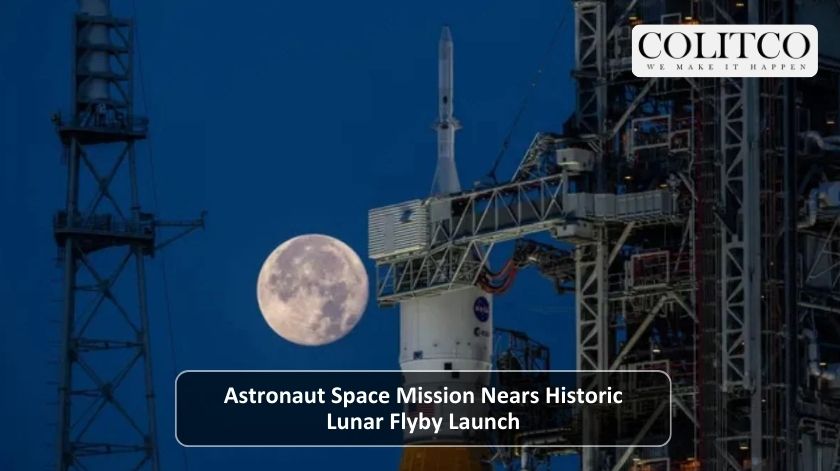
NASA’s Artemis II space mission has successfully achieved a turning point with its astronauts as the huge Space Launch System rocket rolled to the launchpad at Kennedy Space Centre. The 98-meter-tall rocket was pushed at a speed of approximately 1 mph, covering 4 miles from the vehicle assembly building,g which was completed by the end of the day.
A great number of workers and their families came to see the historic rollout, which was the first crewed lunar flight preparation after a gap of more than 50 years. The day started with a bright morning. The mission will place four astronauts on a ten-day trip around the moon without landing, thereby validating the systems necessary for deeper space explorations and future lunar landings.
The rocket and Orion capsule together weigh around 5 metric tons and were moved using a large crawler that has been upgraded from the Apollo and shuttle eras. NASA’s significant focus on safety and system reliability is underlined by this slow movement, as the countdown testing is set to start in the coming weeks.
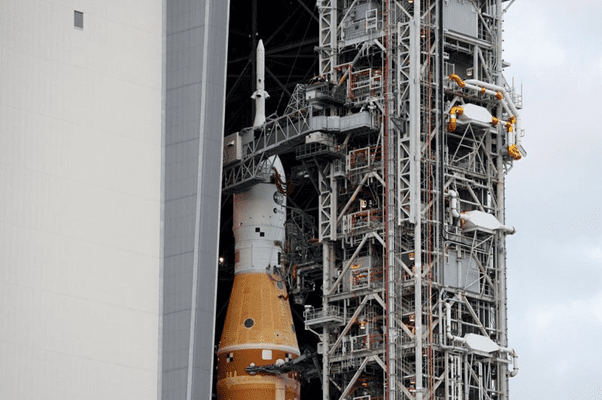
The SLS rocket rolls toward the launchpad as crowds gather at Kennedy Space Centre. [Yahoo]
How Does The NASA Astronaut Mission Reflect Past Achievements?
The NASA astronaut mission represents the Apollo heritage that brought 24 astronauts to the moon between 1969 and 1972. The same ground-breaking infrastructure that was built for Saturn V rockets now serves the modern lunar tasks.
The last humans to set foot on the moon were Apollo 17 astronauts Gene Cernan and Harrison Schmitt in 1972. Out of the four moonwalkers alive today, only one is in his eighties, thus marking the bridge of the generational gap that this mission will create. The Artemis II flight is now following the uncrewed Artemis I launch in November 2022, which successfully tested Orion’s deep-space performance and heat shield.
Damage to the heat shield was detected during that flight, which needed extensive analysis and improvements; thus, the crewed mission was postponed until now. NASA’s experts say that bringing astronauts onto the rocket changes the entire landscape of responsibility and operational scrutiny.
Why Is This NASA Lunar Mission News Gaining Global Attention?
The news about the NASA lunar mission is drawing the attention of the whole world since it indicates the readiness of humankind for the crewed lunar travels after 50 years hiatus. Reid Wiseman as the commander, Victor Glover as the pilot, Christina Koch as the mission specialist, and Jeremy Hansen are the Canadian astronaut that supports the collaboration of this mission among nations.
The crew will show navigation accuracy, life-support endurance and communications reliability during their mission, which would be beyond Earth orbit. Public interest has increased as the program has become a symbol of new ‘dreams’ in space, together with the long-term vision of lunar bases and Mars missions. Besides, international partners’ presence supports the idea of collaboration in future initiatives in deep space.
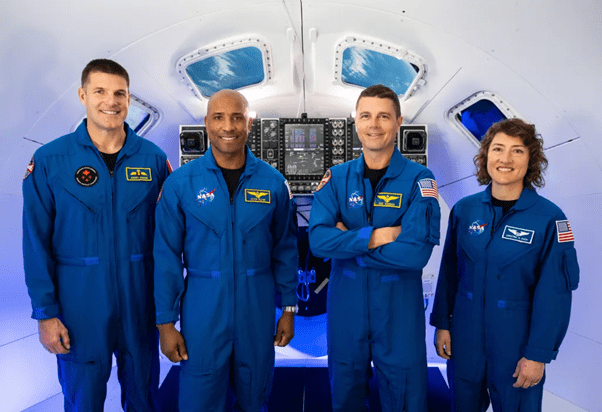
Artemis II astronauts and NASA leadership celebrate the rollout milestone. [NASA]
Rocket Rollout Highlights Operational Readiness
The very rollout gives an insight into a complicated logistical coordination and engineering discipline. The crawler transporter moved slowly but steadily with the rocket to prevent any structural stress while the engineers were keeping track of its vibration and alignment.
After being put on the pad, NASA is going to perform a fuelling test in early February, which includes loading cryogenic propellants and rehearsing countdown procedures. These practices will help the teams to confirm the ground systems, the emergency responses, and the software integration.
Any problems discovered in this phase will be solved before a final launch commitment. NASA has informed that there will be only a small time window available in the first half of February before the schedule changes to March.
What Are The Key Timelines And Technical Milestones?
The completion of the fuelling test and the final safety reviews are the main factors on which the launch readiness is dependent. Also, the space agency has only five launch days available at the beginning of February because of orbital alignment and operational restrictions.
Yes, weather conditions will also play a part in the final decision. The mission will last approximately ten days, during which astronauts will go to the moon and back. This flight will test the heat shield’s performance at the time of the high-speed re-entry, and also, the spacecraft’s endurance in deep space conditions will be confirmed.
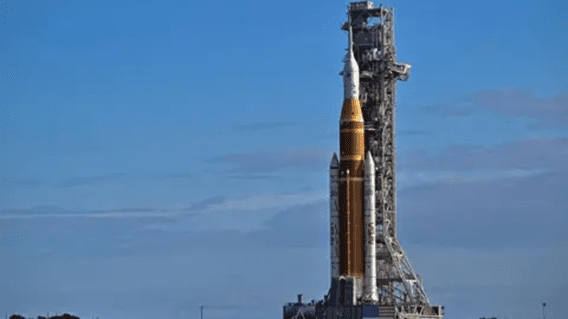
Engineers prepare the launchpad for upcoming fuelling and countdown rehearsals. [BBC]
Future Missions Depend On This Astronaut Space Mission
The success of this manned space mission will be the first step towards the future Artemis flights, which are to send humans once again to the lunar surface. Artemis III is projected to be the first mission of this kind in several years.
The information obtained from Artemis II will help improve safety standards, mission planning, and operational efficiency. The broader goal includes the building of a lunar exploration infrastructure that is sustainable and the development of technologies that can be used for Mars exploration in the 2030s.
Every milestone gives more assurance in the possibility of a human presence beyond Earth orbit in the long run, while keeping safety and performance standards very strict.
Also Read: NASA Perseverance Rover Discovers Possible Giant Meteorite on Mars
FAQs
Q1: When is the NASA astronaut mission expected to launch?
A1: NASA is targeting a launch window in early February, pending fuelling tests and weather clearance.
Q2: Will astronauts land on the moon during this mission?
A2: No, the mission will conduct a lunar flyby without landing.
Q3: How long will the mission last?
A3: The astronauts are expected to spend about ten days in space.
Q4: Why is this mission considered historic?
A4: It will be the first crewed lunar flight in more than 50 years, reviving human deep-space exploration.


