
Every December 23rd, a curious celebration sweeps across social media. There’s no tree. No presents. Just an aluminium pole, some brutal honesty, and a wrestling match.
Welcome to Festivus 2025.
What Exactly Is Festivus?
Festivus is a secular holiday celebrated annually on December 23rd as a rebellious alternative to the commercialised chaos of the Christmas season. Created as a parody of traditional holidays, it champions simplicity over spending, honesty over politeness, and wrestling over wrapping paper.
The holiday exploded into popular culture through the hit sitcom Seinfeld in 1997. In the episode titled “The Strike,” character Frank Costanza explains how he invented Festivus after getting into a physical altercation with another shopper over a doll.
“Many Christmases ago, I went to buy a doll for my son,” Frank declares. “I reached for the last one they had, but so did another man. As I rained blows upon him, I realised there had to be another way!“
Out of that brawl, a new holiday was born: “A Festivus for the rest of us!“
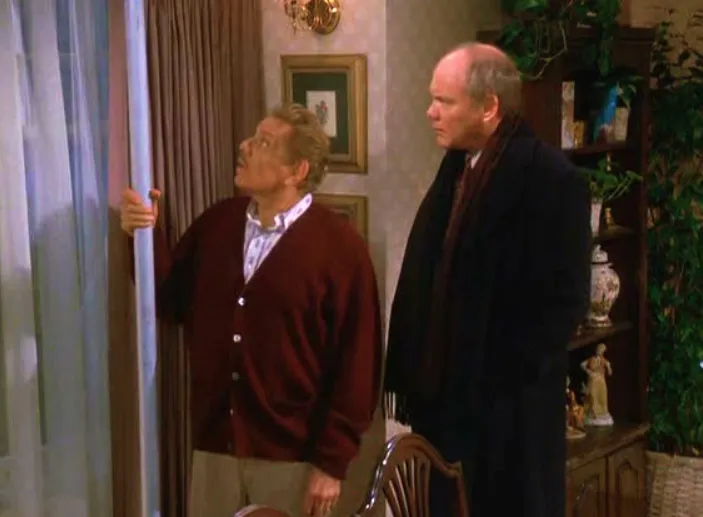
Frank Costanza introduces the Festivus pole in the iconic 1997 Seinfeld episode
The Real Origins Predate Seinfeld
While Seinfeld made Festivus famous, the holiday actually existed long before George Costanza’s dysfunctional family dinners. Writer Dan O’Keefe borrowed the concept from his father, author Daniel O’Keefe, who created a version of Festivus back in 1966.
The elder O’Keefe celebrated it on December 23rd to mark the anniversary of his first date with his wife. The original family tradition was “entirely more peculiar” than the TV version, according to Dan O’Keefe, featuring a clock in a bag nailed to the wall rather than an aluminium pole.
The Three Sacred Traditions of Festivus
1. The Festivus Pole
Forget decorated trees and twinkling lights. The centrepiece of any Festivus celebration is an unadorned aluminium pole.
Frank Costanza chose aluminium for its “very high strength-to-weight ratio” and refused all decoration because tinsel is “distracting.” The pole is displayed prominently, making an anti-commercial statement through its stark simplicity.
2. The Airing of Grievances
After the Festivus dinner (traditionally meatloaf, though spaghetti also works), the real fun begins. Each person takes turns telling others exactly how they’ve disappointed them over the past year.
“I got a lot of problems with you people!” Frank shouts in the Seinfeld episode. “And now you’re gonna hear about it!”
This ritual has become surprisingly popular. The hashtag #AiringOfGrievances trends annually on social media, with everyone from politicians to everyday people sharing their frustrations. US Senator Rand Paul has released an annual “Festivus Report” since 2013, detailing government spending he considers wasteful.
3. The Feats of Strength
Festivus isn’t over until the head of household is pinned in a wrestling match. This tradition symbolises the generational tension between fathers and sons, though modern celebrations adapt it to arm wrestling, board game challenges, or even stein-holding competitions.
Why Happy Festivus Resonates in 2025
Social media is ablaze with Festivus content this year. As economic pressures mount and holiday exhaustion sets in, more people are embracing the anti-commercial message.
Festivus 2025 celebrations are popping up across the globe:
- Breweries in Golden, Colorado and Chicago are hosting Festivus parties with grievance sessions and beer tastings
- New York’s Slattery’s Midtown Pub is running Seinfeld trivia alongside traditional Airing of Grievances
- Adelaide, South Australia even has a Festivus celebration at Cosmo’s Pizza on December 23rd
The holiday has achieved remarkable staying power. In 2018, Wollongong City Council in New South Wales officially named a street “Festivus Lane” in the suburb of Corrimal, recognising the annual community celebration that had been running since 2014.
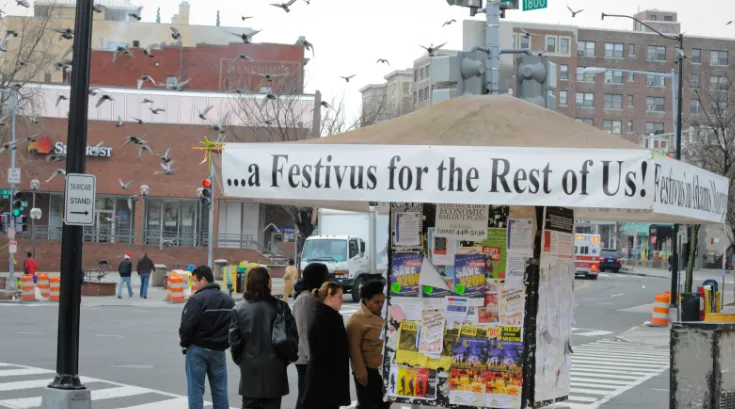
Festivus celebrations feature unadorned aluminium poles as a statement against commercial excess
From Sitcom Joke to Cultural Movement
What started as a throwaway line in a 1990s sitcom has evolved into something much larger. Festivus now serves multiple purposes:
- A secular holiday alternative for those who don’t celebrate traditional religious holidays
- A protest against commercialism in an era of record holiday spending
- A pressure relief valve for family tensions through humour and honest communication
- A shared cultural reference that brings communities together
In 2022, the official Seinfeld social media accounts launched a petition to make Festivus a national holiday, using the hashtag #MakeFestivusOfficial.
Festivus Miracles and Modern Adaptations
Part of the holiday’s charm is its flexibility. There are no rigid rules, no religious requirements, no expensive obligations. Some people strictly follow the Seinfeld template, while others create their own variations.
Everyday coincidences become “Festivus miracles.” Activist Chaz Stevens built rainbow Festivus poles topped with disco balls at multiple US state capitols in 2015, using the holiday to celebrate LGBTQ+ rights victories.
Also Read: Barry Manilow Surgery: Early-Stage Lung Cancer Diagnosis, Treatment Plan, and Farewell Tour Updates
The Bottom Line
Festivus 2025 proves that sometimes the best holidays are the ones we make ourselves. In a season dominated by commercial pressure and picture-perfect expectations, Festivus offers permission to be honest, imperfect, and human.
So grab an aluminium pole, prepare your grievances, and get ready to wrestle. Happy Festivus to the rest of us!
FAQ
Q: When is Festivus 2025 celebrated?
A: Festivus is celebrated annually on December 23rd, right before Christmas Day.
Q: What are the main Festivus traditions?
A: The three key traditions are displaying an aluminium Festivus pole, the Airing of Grievances (telling people how they disappointed you), and Feats of Strength (usually wrestling the head of household).
Q: Is Festivus a real holiday?
A: While created for television, Festivus has become a real secular celebration embraced by thousands worldwide since 1997.
Q: Can anyone celebrate Festivus?
A: Absolutely. Festivus is a non-denominational, secular holiday open to everyone. It’s specifically designed as “a Festivus for the rest of us.”