
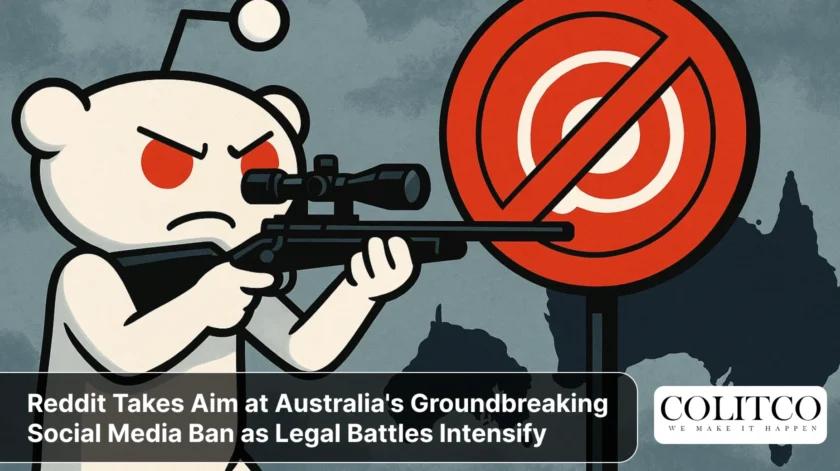
Australia’s world-first social media ban for children under 16 faces mounting legal resistance just hours before enforcement begins. Reddit has engaged top legal counsel to challenge the legislation while two teenagers have launched a constitutional case arguing the law violates their fundamental rights.
The ban, which takes effect on 10 December 2025, requires platforms to prevent Australians under 16 from holding accounts or face penalties reaching $49.5 million.
Reddit Signals Constitutional Challenge
Reddit has retained senior counsel Perry Herzfeld SC and law firm Thomson Geer to mount a High Court challenge, according to reports from the Australian Financial Review.
The San Francisco-based platform confirmed it will comply with the law but condemned the legislation as “legally erroneous.” Reddit argues the ban:
- Misclassifies its text-based, forum-driven structure as traditional social media
- Undermines free expression and erodes privacy
- Goes “far beyond the original intent” of parliament
- Treats Reddit arbitrarily compared to exempt platforms
A Reddit spokesperson told media outlets: “We believe the law’s application to Reddit (a pseudonymous, text-based forum overwhelmingly used by adults) is arbitrary, legally erroneous, and goes far beyond the original intent of the Australian parliament.”
Reddit has begun implementing age verification measures, introducing birthdate requirements for new Australian users and deploying an “age prediction model” for existing accounts.

Reddit joins nine other platforms required to enforce Australia’s under-16 social media ban
Teenagers Mount Constitutional Challenge
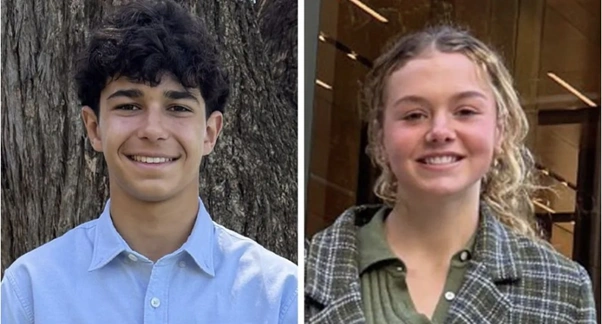
Two 15-year-olds, Noah Jones and Macy Neyland, have filed a constitutional challenge in the High Court through the Digital Freedom Project. The case argues the ban violates the implied freedom of political communication protected under Australia’s Constitution.
“We shouldn’t be silenced. It’s like Orwell’s book 1984, and that scares me,” Macy Neyland stated.
The Digital Freedom Project, led by New South Wales Libertarian Party MP John Ruddick, contends the law:
- Robs young Australians of their right to political communication
- Disproportionately affects vulnerable groups including young people with disabilities, First Nations youth, and LGBTIQ+ teenagers
- Lacks consultation with affected young people
- Represents an overly broad response to online safety concerns
Communications Minister Anika Wells responded defiantly in Parliament: “We will not be intimidated by threats. We will not be intimidated by legal challenges. We will not be intimidated by big tech. On behalf of Australian parents, we stand firm.”
The Ban’s Scope and Enforcement
The Australian social media ban affects 10 major platforms:
- Facebook, Instagram, and Threads (Meta)
- TikTok
- Snapchat
- X (formerly Twitter)
- YouTube
- Kick
- Twitch
Platforms must report monthly on closed accounts and demonstrate “reasonable steps” to exclude under-16s. Failure to comply triggers fines up to $49.5 million.
Gaming platforms like Roblox, Discord, and messaging services including WhatsApp remain exempt. The eSafety Commissioner maintains a “dynamic” list that may expand as technology evolves.
Wave of Academic and Expert Criticism
More than 140 academics and child welfare experts signed an open letter opposing the age limit as a “blunt instrument.”
Critics from leading Australian universities warn the ban:
Enforcement concerns:
- Age verification technology remains unreliable and privacy-invasive
- May push young people to “darker corners” of the internet
- Lacks clear implementation guidance for platforms
Rights and development issues:
- Could damage young people’s political education at a time when civics knowledge is at an all-time low
- Ignores social media’s role in identity formation and social connections
- Fails to address design features driving addictive behaviour
Alternative approaches suggested:
- Digital literacy education programs
- Mandatory age-appropriate platform features
- Parental controls and supervision tools
- Platform design reforms targeting harmful algorithms
Associate Professor Faith Gordon from Australian National University argues social media companies should have an “enforced duty of care” rather than facing outright bans.
Amnesty International condemned the law as an “ineffective quick fix that’s out of step with the realities of a generation that lives both on and offline.”
Government’s Rationale and Public Support
Prime Minister Anthony Albanese framed the legislation as protecting children from “the scourge” of social media, urging young people to spend more time “on the footy field or the netball court.”
The government cites research showing:
- Addictive algorithms encourage excessive screen time
- Reduced physical activity and sleep among young users
- Potential mental health impacts, though evidence remains correlational rather than causal
Polling shows strong public backing despite expert scepticism. Recent surveys indicate 70% of voters endorse the ban, with 53% planning to selectively enforce it for their children.
This is about keeping kids safe online. pic.twitter.com/ABGbVmLFkP
— Anthony Albanese (@AlboMP) December 7, 2025
Platform Responses and Implementation
Meta began deactivating accounts believed to belong to under-16s from 4 December. Instagram alone reports approximately 350,000 Australian users aged 13-15.
Snapchat allows users to deactivate accounts for up to three years. TikTok described the legislation as “rushed” and warned it risks pushing younger users to less regulated spaces.
The platforms face challenges including:
- No mandate to use government-issued ID for verification
- Developing age prediction algorithms balancing accuracy and privacy
- Managing false positives that incorrectly flag adult users
- Handling appeals from users disputing age assessments
Global Implications
Australia’s move is drawing international attention as countries grapple with social media’s impact on youth.
Malaysia announced plans for a similar under-16 ban starting in 2026. European Commission President Ursula von der Leyen said she was “inspired” by Australia’s “common sense” approach.
New Zealand, France, Norway, Ireland, the Netherlands, and several US states are considering comparable restrictions.
Julie Inman Grant, Australia’s eSafety Commissioner, said: “I’ve always referred to this as the first domino.”
What Happens Next
The legal challenges face uncertain timelines. Unless the High Court grants an injunction, the ban takes effect as scheduled on 10 December even if constitutional arguments later succeed.
The eSafety Commissioner will work with academics to evaluate impacts including:
- Changes in sleep patterns and physical activity
- Social interaction quality
- Unintended consequences and circumvention methods
- Effects on marginalised youth populations
Platforms have one year to demonstrate compliance before enforcement begins in earnest, though “reasonable steps” requirements apply immediately.
For millions of Australian teenagers, the December school holidays represent the first extended break without easy access to social media algorithms and digital peer connections.
The outcome of Australia’s experiment will likely shape technology regulation and youth protection policies worldwide for years to come.
Also Read: ASIC Takes Diversa to Court Over $300 Million Superannuation Disaster
FAQs
Q: Which platforms are banned for under-16s in Australia?
A: Facebook, Instagram, Threads, TikTok, Snapchat, X, YouTube, Reddit, Kick, and Twitch must exclude users under 16.
Q: When does the Australian social media ban start?
A: The ban takes effect on 10 December 2025, with enforcement beginning immediately.
Q: Can parents give permission for their children to use social media?
A: No. The law contains no parental consent exceptions.
Q: What are the penalties for platforms that don’t comply?
A: Companies face fines up to $49.5 million for failing to take reasonable steps to exclude under-16s.
Q: Will the legal challenges stop the ban?
A: Not immediately. The law takes effect as scheduled unless a High Court injunction is granted.
Q: How will age verification work?
A: Platforms must develop their own verification methods without using government-issued ID. Options include facial age estimation, birthdate checks, and AI prediction models.
Q: Why is Reddit challenging the ban?
A: Reddit argues it’s a text-based forum primarily used by adults and shouldn’t be classified as traditional social media.
Q: What do experts say about the ban?
A: Over 140 academics oppose it as too blunt, arguing digital literacy education and platform design reforms would be more effective.


