
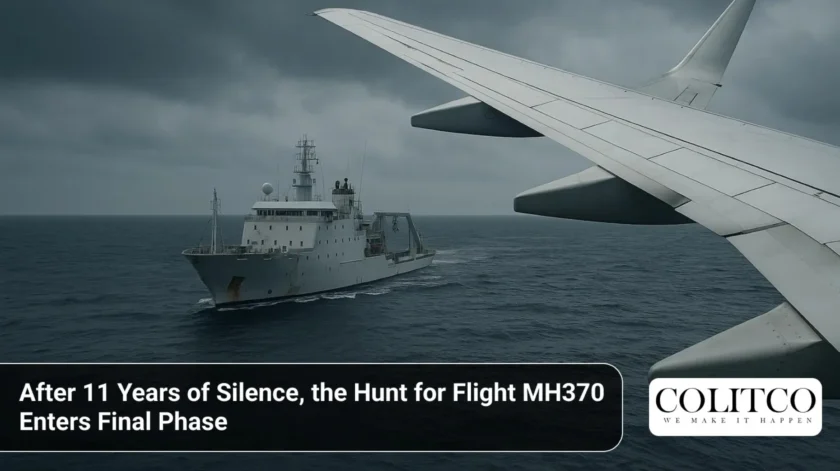
Malaysia’s transport ministry confirmed on 3rd December 2025 that the search for missing Malaysia Airlines Flight MH370 will restart on 30th December. The announcement brings fresh hope to families who have waited more than a decade for answers about one of aviation’s most haunting mysteries.
The Boeing 777 vanished while carrying 227 passengers and 12 crew on a routine journey from Kuala Lumpur to Beijing on 8th March 2014. Among those on board were six Australian citizens and one New Zealand resident of Western Australia.
Maritime exploration firm Ocean Infinity will conduct the renewed search under a “no find, no fee” arrangement. The company stands to earn US$70 million only if substantial wreckage is located.
What Makes This Search Different
Ocean Infinity will conduct intermittent seabed operations spanning 55 days. The firm has deployed enhanced technology and refined its search methodology since its unsuccessful 2018 attempt.
The company now targets a 15,000 square kilometre zone in the southern Indian Ocean. This area represents what Malaysian authorities describe as having “the highest probability of locating the aircraft.”
Key advantages in this search include:
- Advanced autonomous underwater vehicles with improved resolution
- Remotely controlled surface vessels for better coordination
- Refined drift modelling based on debris analysis
- Detailed ocean floor mapping from previous expeditions
The search site sits roughly 2,800 kilometres off Western Australia’s coast. Water depths reach 4,000 metres with temperatures between 1-2 degrees Celsius. These frigid conditions mean the debris field would remain relatively intact after 11 years
Harapan diteruskan.
Operasi pencarian MH370 akan dimulakan semula oleh Ocean Infinity pada 30 Disember 2025.
Kerajaan Malaysia kekal teguh dalam usaha mencari jawapan dan menzahirkan solidariti kepada semua keluarga yang terkesan.Butiran selanjutnya: https://t.co/JQGnx4L8LS pic.twitter.com/CCbt9xg5wH
— Kementerian Pengangkutan Malaysia (@MOTMalaysia) December 3, 2025
A Trail of Clues Across the Indian Ocean
The first confirmed piece of Flight MH370 washed ashore on Réunion Island on 29th July 2015. The aircraft flaperon provided the first physical proof that the plane crashed in the Indian Ocean.
Since then, 18 additional pieces of debris have been recovered across a vast expanse:
- Mauritius
- Tanzania
- Rodrigues Island
- Madagascar
- Mozambique
- South Africa
Oceanographic drift models from the University of Western Australia correctly predicted this distribution pattern months before the first debris appeared. These models confirmed the crash occurred near what experts call the “7th arc” based on satellite data.
The debris tells a story of catastrophic impact. Marine growth patterns, structural damage, and material composition all support the theory of a high-speed ocean entry.
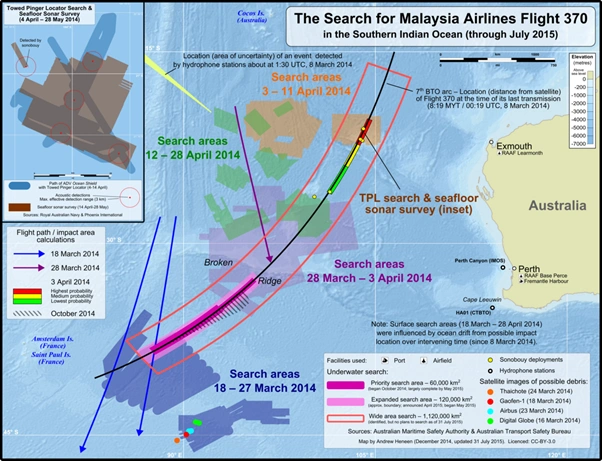
Map of Indian Ocean search area
Previous Search Efforts Cost Hundreds of Millions
The initial multinational search became the most expensive aviation search in history. Australia led an underwater search covering 120,000 square kilometres over three years, costing millions of dollars.
That operation involved ships and aircraft from Malaysia, China, India, Japan, Australia, New Zealand, South Korea, Vietnam, the United Kingdom, and the United States. The Australian Transport Safety Bureau coordinated the effort after analysis showed the aircraft turned south toward Australia’s search and rescue region.
Ocean Infinity’s 2018 search expanded the area by another 112,000 square kilometres using eight autonomous underwater vehicles. The company worked through challenging terrain and technical difficulties but found no wreckage.
A brief search conducted in April 2025 was suspended due to poor weather conditions. The upcoming December operation specifically times the search for better seasonal weather patterns in the southern Indian Ocean.
Why December 30th Matters
The April suspension occurred because it was “not the season” for safe operations in the search zone. December marks the beginning of the southern hemisphere summer, providing more stable sea conditions.
The search will follow the service agreement signed between the Malaysian government and Ocean Infinity on 25th March 2025. That agreement formalised the “no find, no fee” arrangement that protects Malaysian taxpayers from costs if the search proves unsuccessful.
The timing also reflects Ocean Infinity’s preparation schedule. The company needed months to mobilise equipment, analyse historical data, and refine target zones based on the latest scientific modelling.
Australian Connection Runs Deep
Seven Australians were among the 239 souls aboard Flight MH370. Their families have joined other victims’ relatives in pressing for continued search efforts.
Australia’s involvement began when Malaysian authorities requested assistance after determining the aircraft turned south into Australia’s search and rescue region. The Australian Maritime Safety Authority coordinated surface searches while the Australian Defence Force provided support.
The Australian Transport Safety Bureau published extensive reports detailing search methodologies and results. Their final report, “The Operational Search for MH370,” was released on 3rd October 2017.
The Delta plane crash at Toronto Pearson Airport earlier this year demonstrated how aviation incidents continue to impact families and communities. That incident saw all passengers survive despite dramatic circumstances, unlike the MH370 tragedy.
What Investigators Know About the Final Flight
Military radar showed the plane left its planned flight path, turning back over northern Malaysia before heading into the Andaman Sea and then south. All contact ceased after that southward turn.
A 495-page report released in 2018 concluded the aircraft’s controls were likely deliberately manipulated to veer off course. However, investigators could not determine who was responsible.
The report examined:
- Captain and co-pilot backgrounds, financial affairs, training records, and mental health
- No suspicious findings emerged for either pilot
- Aircraft maintenance records showed no critical issues
- Communication systems functioned normally until the transponder was switched off
The plane’s last transmission occurred about 40 minutes after takeoff as it entered Vietnamese airspace over the Gulf of Thailand. The pilots signed off normally before the transponder stopped broadcasting.
Satellite data from Inmarsat provided crucial clues. Automatic connections between the aircraft and satellites created a series of “handshakes” that allowed experts to plot possible flight paths.
Ocean Infinity’s Enhanced Capabilities
The company brings significant experience from other deep-water searches. Ocean Infinity successfully located the wreck of Argentinian submarine ARA San Juan and the bulk carrier Stellar Daisy.
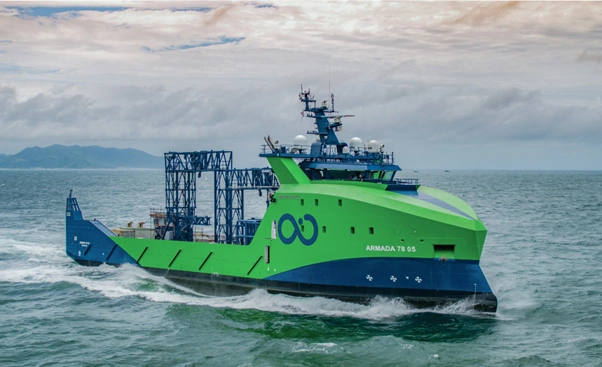
Ocean Infinity autonomous vehicle
Their technology improvements since 2018 include:
- Multiple autonomous underwater vehicles operating simultaneously
- Enhanced sonar systems with better resolution in challenging terrain
- Improved battery life allowing longer missions per deployment
- Advanced data processing algorithms that identify anomalies faster
Ocean Infinity expressed confidence in its enhanced methods and technology, noting how its improved approach coupled with a more precise search area increases the likelihood of success.
The company can now survey steep underwater slopes and ravines that proved difficult in previous searches. This capability matters because some high-priority areas were missed by previous searches due to steep sloping terrain.
Families Never Stopped Fighting
Relatives of victims voiced hope in February 2025 that a new search could finally bring answers. Support groups representing families have maintained pressure on Malaysian and international authorities to continue search efforts.
Malaysian Prime Minister Datuk Seri Anwar Ibrahim assured the government would provide full cooperation if search efforts yielded results. This commitment followed Transport Minister Anthony Loke’s announcement that the Cabinet agreed in principle to Ocean Infinity’s proposal.
The families’ determination mirrors that seen in other aviation tragedies. Public advocacy keeps pressure on authorities to pursue every reasonable avenue for answers.
Malaysia’s Promise of Closure
The transport ministry stated that the latest development underscored the Malaysian government’s commitment to providing closure for families affected by the tragedy.
Minister Loke has repeatedly emphasised the government’s determination to resolve the mystery. On 8th March 2023, the ninth anniversary of the disappearance, Loke vowed not to “close the book” on MH370.
The minister indicated the government would give due consideration to future searches if credible new information emerged about the aircraft’s potential location. That pledge shaped the government’s decision to approve Ocean Infinity’s renewed search proposal.
Malaysia faces international scrutiny over its handling of the investigation. Finding the aircraft would answer lingering questions about the nation’s aviation safety protocols and crisis management procedures.
Industry Implications
The MH370 disappearance drove significant changes in aviation tracking requirements. Airlines worldwide now face stricter mandates for real-time aircraft position monitoring.
The International Civil Aviation Organization implemented new standards requiring airlines to track aircraft at least every 15 minutes. Some carriers have adopted more frequent tracking intervals.
Recent incidents like the Southwest Airlines mass layoffs show how aviation companies continue facing financial and operational pressures. These challenges make safety investments more critical but also more difficult to fund.
What Happens If Wreckage Is Found
Locating the main debris field would trigger a complex recovery operation. Tripartite meetings in August 2014 agreed that Australia, through the Australian Transport Safety Bureau, would lead any recovery operation.
Recovery priorities would include:
- Flight data recorders (black boxes)
- Cockpit voice recorders
- Personal effects for families
- Critical structural components showing failure modes
- Sufficient debris to confirm identity beyond doubt
The flight recorders likely stopped functioning within 30 days of the crash when their batteries expired. However, their memory chips could still contain data if recovered intact from the ocean floor.
Physical evidence might finally answer what happened in the cockpit and why the aircraft deviated from its planned route. Without this evidence, speculation continues about mechanical failure, pilot action, or other scenarios.
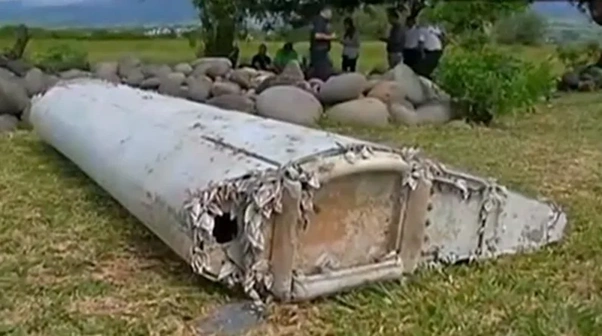
MH370 debris flaperon discovered on Réunion Island in July 2015
Technical Challenges Ahead
The search zone presents formidable obstacles. The Indian Ocean seabed features:
- Underwater mountains and ravines
- Thick sediment layers obscuring debris
- Strong deep-water currents affecting autonomous vehicles
- Complete darkness requiring sonar rather than optical systems
Water temperatures of 1-2 degrees Celsius create equipment challenges but also help preserve the debris field. Electronic components and structural materials degrade more slowly in these frigid conditions.
The 4,000-metre depths require specialised equipment rated for extreme pressure. Ocean Infinity’s autonomous vehicles must operate for extended periods without surface support while transmitting data through miles of water.
Weather windows remain narrow even during summer months. Southern Ocean conditions can deteriorate rapidly, forcing operations to pause and equipment to be recovered for safety.
Global Aviation Community Watches Closely
The mystery has captivated aviation professionals and the public alike. Forums and websites dedicated to MH370 analysis attract thousands of participants sharing theories and examining data.
Professional pilots have proposed numerous scenarios based on the limited evidence available. Some focus on mechanical failures, others on deliberate actions, and still others on novel explanations involving technology or environmental factors.
Independent researchers conducted drift studies confirming the general crash location near the 7th arc. Their work, published in scientific journals, validated official search zone selections.
The case demonstrates both the power and limitations of modern technology. Satellites tracked the aircraft indirectly, but couldn’t pinpoint its location. Vast ocean searches covered unprecedented areas without finding the main wreckage.
Also Read: Australia’s Economy Delivers Mixed Signals as GDP Growth Lags Forecasts
FAQ: Malaysia Airlines Flight MH370 Search
Q: When exactly will the search resume?
The search begins on 30th December 2025 and will span 55 days conducted intermittently.
Q: How much will the search cost Malaysia?
Malaysia will pay Ocean Infinity US$70 million only if substantial wreckage is found, under a “no find, no fee” arrangement.
Q: What area will be searched?
Ocean Infinity will search a 15,000 square kilometre area in the southern Indian Ocean assessed to have the highest probability of locating the aircraft.
Q: How many Australians were on board?
Six Australian citizens and one New Zealand resident of Western Australia were among the 239 people aboard Flight MH370.
Q: Why was the previous search suspended?
A search conducted in April 2025 was suspended due to poor weather conditions, as it was “not the season” for safe operations.
Q: Has any debris been found?
Yes, 18 pieces of debris have been confirmed as coming from MH370, washing up across the Indian Ocean region including Réunion, Mauritius, Tanzania, Madagascar, Mozambique, and South Africa.
Q: What happened to the aircraft?
A 2018 investigation report concluded the aircraft’s controls were likely deliberately manipulated to go off course, but investigators could not determine who was responsible.
Q: How deep is the search area?
The ocean in the search area is around 4,000 metres deep with water temperatures of 1-2 degrees Celsius.


