
NEXTDC Limited (ASX: NXT) has dropped a bombshell update that sent ripples through the Australian technology sector. The country’s premier data centre operator confirmed contracted capacity jumped 29% in just five months.
The announcement landed on 30 November 2025, revealing a substantial 71 megawatt increase. This takes NEXTDC’s total contracted load to 316MW since 30 June 2025.
It’s a watershed moment for Australia’s digital infrastructure. The Company’s forward order book swelled 53% to 205MW over the same period.
Massive Capital Investment to Match Customer Demand
NEXTDC isn’t holding back on expansion plans. The Company lifted its FY26 capital expenditure guidance by a staggering A$400 million.
The new range sits between A$2.2 billion and A$2.4 billion. This represents a substantial increase from the previous A$1.8 billion to A$2 billion forecast.
Management confirmed the additional spending will accelerate planned inventory expansion. The funds will build and deploy capacity specifically for new customer contracts signed in recent months.
Despite the hefty capex increase, NEXTDC maintained its FY26 net revenue and underlying EBITDA guidance. This signals confidence in the Company’s ability to convert contracted capacity into billings without compromising profitability targets.
The forward order book is expected to progressively convert to revenue between FY26 and FY29.\
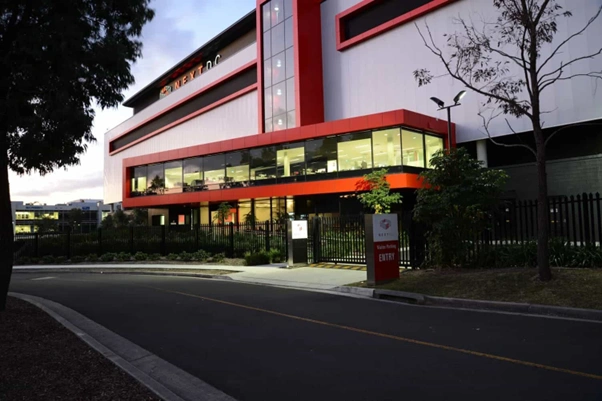
NEXTDC data centre infrastructure supporting AI and cloud workloads
AI Boom Drives Unprecedented Infrastructure Demand
Australia’s data centre market is experiencing explosive growth. Industry forecasts predict capacity will more than double from 1,350MW in 2024 to 3,100MW by 2030.
This represents over A$26 billion in expected investment. NEXTDC is positioning itself at the centre of this infrastructure transformation.
The rapid adoption of artificial intelligence applications is reshaping data centre requirements. Hyperscale customers are deploying AI-native infrastructure at unprecedented levels.
High-performance computing workloads demand significantly more power density per square metre. This trend is forcing operators like NEXTDC to implement advanced cooling technologies including liquid cooling systems.
Recent reports indicate Australia’s AI data centre market alone could reach A$978 million by 2030. The compound annual growth rate sits at an impressive 33.9% from 2025 to 2030.
Key Market Drivers:
- Explosive growth in generative AI applications requiring GPU clusters
- Cloud migration from legacy infrastructure to modern platforms
- Government mandates around cybersecurity and data sovereignty
- Increased submarine cable landings boosting connectivity
- Rising demand for low-latency, high-density computing
Share Price Responds to Growth Update
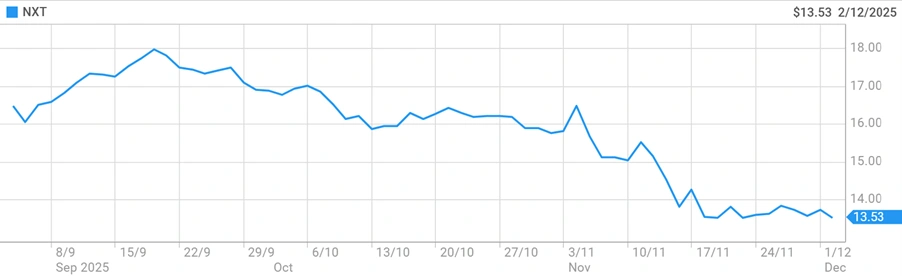
NEXTDC shares moved higher on Monday, 1 December 2025, following the announcement. The stock traded around A$13.79, up from the previous close of A$13.57.
Intraday trading saw prices fluctuate between A$13.79 and A$14.38. Early sessions recorded gains exceeding 5% before settling back.
The Company’s market capitalisation stands at approximately A$8.8 billion to A$8.9 billion depending on intraday pricing. The stock’s 52-week range spans A$9.40 to A$18.22.
Despite strong operational updates throughout 2025, shares remain well below their earlier highs. The stock has faced pressure alongside broader technology sector volatility.
Current Market Position (as of 2 December 2025):
- Share Price: A$13.525
- Market Cap: ~A$8.8 billion
- 52-Week Range: A$9.40 – A$18.22
- Shares on Issue: ~640 million
Analyst sentiment remains broadly positive. Consensus target prices sit around A$20.72, suggesting potential upside of approximately 20% from current levels.
Management Commentary on Strategic Direction
Craig Scroggie, Chief Executive Officer and Managing Director of NEXTDC, has consistently emphasised the structural shifts reshaping the industry. The rise of AI and high-performance computing is creating unprecedented demand.
Scroggie has over 30 years of experience in the ICT sector. He joined NEXTDC in 2012 and has led the Company through significant expansion.
Previous statements from management have highlighted Victoria as a major beneficiary of new contracts. The state’s data centre ecosystem has seen some of the largest AI deployments in the Company’s history.
NEXTDC’s Victorian contracted utilisation reached 114MW by March 2025. This represented 161% of built capacity at the end of December 2024.
The Company operates 13 data centres across Australia, New Zealand, Japan and Malaysia. It serves over 1,800 customers with cloud infrastructure needs.
Supply-Demand Imbalance Creates Urgency
Australia faces a widening gap between data centre supply and demand. For the first time on record, capacity taken up by users in 2023 and 2024 exceeded new supply brought to market.
Analysts project a supply gap of between 700MW and 1.7GW could emerge by 2028. This is despite continued increases in live capacity.
The supply constraints are particularly acute in major metropolitan areas. Sydney and Melbourne host approximately 80% of Australia’s current data centre capacity.
Low vacancy rates are already creating rental pressure. The national vacancy rate sits at just 12% according to recent industry reports.
Rising wholesale energy prices add another challenge. Operators are seeking alternative regional locations or delaying projects due to grid constraints in urban hubs.
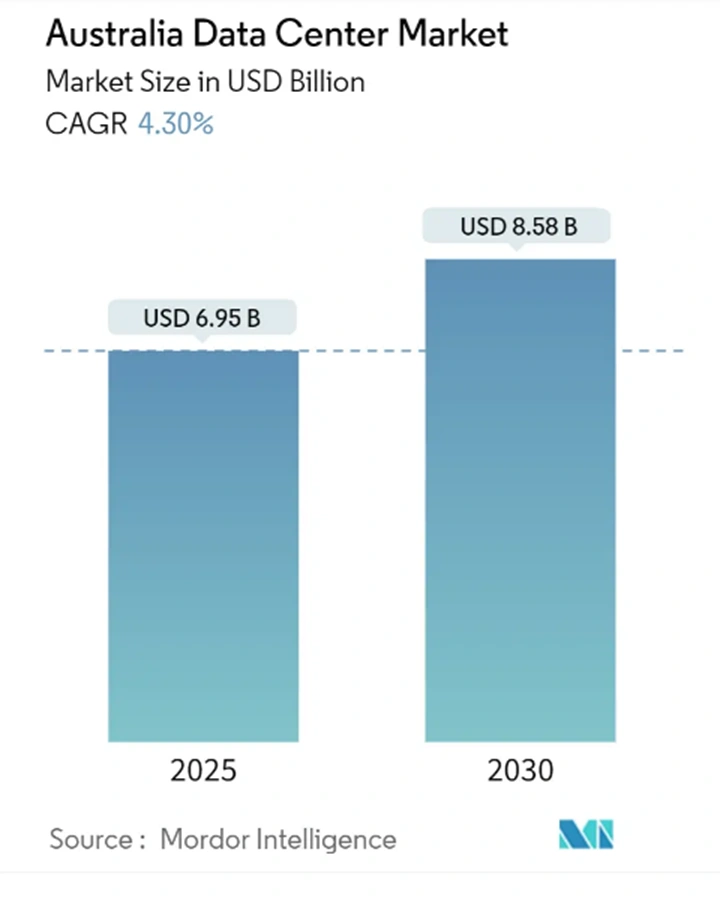
Australia’s data centre capacity growth forecast
Competitive Landscape and Market Position
NEXTDC holds a unique position as Australia’s largest independent data centre operator. The Company competes with global players like Equinix and regional specialists like CDC Data Centres.
Recent market activity underscores investor appetite for Australian data infrastructure. Blackstone and Canada Pension Plan Investment Board acquired AirTrunk for A$24 billion in September 2025.
That transaction valued the hyperscale operator at a substantial premium. It demonstrated the strategic importance of data centre assets in the Asia-Pacific region.
NEXTDC’s facilities are specifically designed for high-performance computing workloads. The Company partners with major cloud service providers including Amazon Web Services, Microsoft Azure and Google Cloud.
The Company operates the only multi-city portfolio of Tier IV certified data halls in Australia. This certification guarantees 99.995% uptime, commanding premium pricing for mission-critical workloads.
Infrastructure and Sustainability Focus
NEXTDC has prioritised renewable energy sourcing and environmental sustainability. Australian data centres are increasingly looking to wind and solar power to reduce long-term electricity costs.
States like Queensland and South Australia provide clean power targets and power purchase agreements. These incentives encourage operators to locate facilities near abundant renewable resources.
The Company aims to match 100% of electricity consumption with renewable energy. This aligns with broader industry commitments to reduce carbon footprints.
Advanced cooling technologies play a crucial role in sustainability efforts. Direct-to-chip cooling and immersion cooling help manage the intense heat generated by dense GPU configurations.
Energy efficiency remains critical as AI workloads demand significantly more power than traditional computing. Industry forecasts suggest power shortages could affect 40% of AI data centres by 2027.
Funding and Balance Sheet Strength
NEXTDC has structured its financing to support aggressive expansion plans. The Company secured A$2.2 billion of new senior debt facilities in June 2025.
These facilities mature in 2030 and are explicitly earmarked for data centre capex. Once at financial close, total available senior debt will reach A$5.1 billion.
Some analysts suggest additional banking lines bring the total funding capacity closer to A$6.4 billion. This underscores how central debt leverage is to the Company’s growth strategy.
As of 30 June 2025, NEXTDC held A$2.5 billion in liquidity. This includes cash reserves and undrawn debt facilities.
The Company’s gearing stood at just 8.8% at the end of December 2024. This conservative capital structure provides ample room for expansion without stretching the balance sheet.
Regional Expansion Beyond Australia
NEXTDC’s growth strategy extends into Asia-Pacific markets. The Company’s KL1 facility in Kuala Lumpur, Malaysia represents a strategic milestone.
The facility is being constructed to achieve Uptime Institute Tier IV Certification. It’s scheduled to go live in early 2026.
NEXTDC secured its first 10MW hyperscale customer for KL1 ahead of launch. This represents 15% of the facility’s planned capacity.
Management views the Malaysian expansion as reinforcing commitment to sovereign, AI-native infrastructure. It validates the Company’s execution capability in high-growth regional markets.
As geopolitical tensions reshape global supply chains, data sovereignty becomes increasingly important. Organisations seek infrastructure providers in stable political environments with robust regulatory frameworks.
Investor Outlook and Future Catalysts
NEXTDC faces several key catalysts in the coming quarters. The conversion of the 205MW forward order book into billing revenue will be closely watched.
Investors will monitor the pace at which new capacity comes online. The Company has multiple data centres in development including the significant M4 Melbourne facility.
The M4 project represents a A$2 billion investment in what NEXTDC calls an “AI Factory”. The liquid-cooled campus is designed specifically for high-density Nvidia chips.
FY26 guidance calls for underlying EBITDA of A$230 million to A$240 million. Net revenue is expected to reach A$390 million to A$400 million.
These targets exclude the impact of the accelerated capex and new customer contracts. Management has kept guidance unchanged despite the substantial capacity additions.
Key Metrics to Watch:
- Billing utilisation conversion rate from forward order book
- Progress on major facility developments (M4, S5, KL1)
- Power and cooling infrastructure deployment timelines
- Customer concentration and contract renewal rates
- Debt facility utilisation and interest coverage ratios
Risks and Considerations
Despite the positive momentum, NEXTDC faces execution risks on multiple fronts. Construction delays or cost overruns could impact returns on the substantial capex program.
The Company’s valuation already reflects high growth expectations. Trading at multiples exceeding 40 times EV/EBITDA for FY26, there’s limited room for disappointment.
Energy costs and grid capacity constraints pose ongoing challenges. Rising wholesale electricity prices in Sydney and Melbourne increase operational expenditure.
Competition is intensifying as hyperscalers increasingly build their own campuses. This shift from wholesale colocation to self-built facilities could pressure pricing and occupancy rates.
Customer concentration remains a consideration. Large hyperscale customers often have significant bargaining power on contract terms and pricing.
Regulatory risks also warrant attention. Australia’s classification of data centres as “Systems of National Significance” brings additional compliance requirements.
Also Read: Technical Glitch Paralyses ASX Announcements Platform, Leaving Investors in Dark
FAQs
Q: What is contracted utilisation in data centres?
A: Contracted utilisation refers to the IT load capacity that customers have signed up for through binding agreements. It represents committed demand regardless of whether the infrastructure is currently operational.
Q: How does NEXTDC’s expansion compare to competitors?
A: NEXTDC is Australia’s largest independent data centre operator with 13 facilities across multiple countries. The recent 29% increase in contracted capacity in five months represents the fastest growth period in Company history.
Q: What is driving AI data centre demand?
A: Generative AI applications require massive GPU clusters for training and inference workloads. These systems demand significantly more power density, cooling capacity and interconnection bandwidth than traditional computing.
Q: When will the new contracts convert to revenue?
A: NEXTDC expects the 205MW forward order book to progressively convert to billings and revenue between FY26 and FY29. Most revenue recognition will commence following completion and commissioning of additional data halls.
Q: What is the significance of Tier IV certification?
A: Tier IV certification from the Uptime Institute represents the highest standard for fault tolerance and operational integrity. It guarantees 99.995% uptime, making it essential for mission-critical banking, government and enterprise workloads.
Q: How does the capex increase affect profitability?
A: Management maintained FY26 net revenue and EBITDA guidance despite the A$400 million capex increase. This indicates the new spending is backed by contracted customer demand rather than speculative capacity builds.


