
All eyes are on the Reserve Bank of Australia today as Governor Michele Bullock prepares to announce the November interest rate decision at 2:30 pm AEDT.
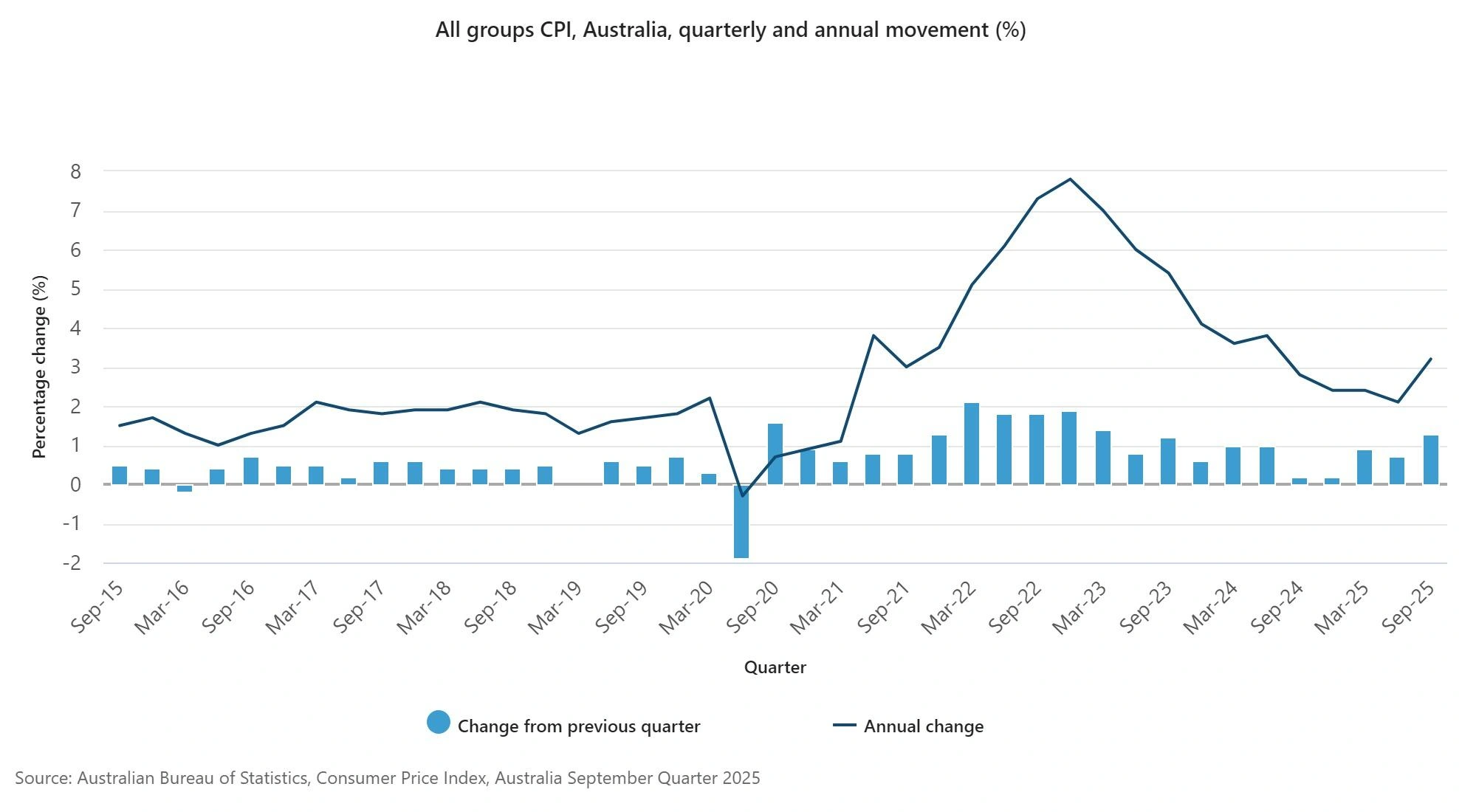
The decision comes at a delicate moment. Inflation has jumped back above the RBA’s 2-3% target band for the first time in over a year, while unemployment has climbed to a four-year high.
Markets are pricing in just an 8% chance of an interest rate cut, down sharply from 40% before the latest inflation data landed. The consensus? The cash rate will remain at 3.6%.
Why a Rate Cut Looks Unlikely
September quarter inflation data delivered an unwelcome surprise. The Consumer Price Index surged to 3.2%, well above the 2.1% recorded in June.
Even more concerning for policymakers, the trimmed mean inflation rate climbed to 3.0%, up from 2.7%. This measure strips out volatile items and provides a clearer picture of underlying price pressures.
The main culprits behind the spike:
- Electricity costs jumped 9.0% in the September quarter
- Annual electricity bills soared 23.6%
- Services inflation remains elevated at 3.5%
- Rents continue climbing at 3.8% annually
Michelle Marquardt, ABS Head of Prices Statistics, noted this was “the highest quarterly rise since March 2023.”
The Statement on Monetary Policy released alongside the August rate cut forecast inflation would ease toward the midpoint of the 2-3% target range. That forecast now looks optimistic.
Labour Market Complicates the Picture
While inflation has re-accelerated, the labour market tells a different story.
The unemployment rate jumped to 4.5% in September, the highest level since 2021. This marks a significant shift from the tight conditions that characterized most of 2024.
Employment still grew by 14,900 in September. But job advertisements have declined for four consecutive months, signalling potential weakness ahead.
Stephen Koukoulas, a noted economist, warned: “The biggest concern is the slide in job ads. Rising unemployment is bad for spending, puts more downward pressure on wages and adds risk to household debt servicing.”
This creates a genuine dilemma for the RBA. Cut rates to support employment and risk entrenching inflation? Or hold rates to control prices and risk higher unemployment?
What the Big Four Banks Are Saying
Australia’s major banks have lined up behind a rate hold:
ANZ revised its forecast in early October, ruling out a November cut in favour of February 2026. The recent CPI data cemented this view.
Commonwealth Bank initially expected a November reduction but has now pushed this back indefinitely, citing the “cyclical upswing in demand” driven by consumption and housing.
NAB believes “a period of modestly restrictive policy” remains necessary to force inflation back to target.
Westpac held out hope for a cut until the inflation data arrived. The bank now sees rates on hold for the rest of 2025, calling the quarterly figure “too hot to handle.”
Graham Cooke, Head of Consumer Research at Finder, summed up the mood: “Hopes of a cut have now largely evaporated. The RBA wants inflation between 2 and 3%, and it just edged above the top threshold.”
Global Context Adds Uncertainty
The RBA doesn’t operate in isolation. Global economic conditions heavily influence domestic policy settings.
The Federal Reserve recently delivered a rate cut but adopted a hawkish tone, tempering expectations for further easing. This puts pressure on the Australian dollar and import prices.
Trade tensions, particularly involving China (Australia’s largest trading partner), continue to simmer. Any escalation could impact growth prospects and inflation dynamics.
The August RBA statement acknowledged “uncertainty in the world economy remains elevated,” though noted “more extreme outcomes are likely to be avoided” regarding US tariffs.
What Happens Next?
If the RBA does hold rates today as expected, attention will shift to:
- The quarterly economic forecasts released with the decision
- Governor Bullock’s 3:30 pm press conference
- Whether any board members dissented in favour of a cut
- Forward guidance on the December meeting
The next inflation data point arrives November 26 with the debut of the complete monthly CPI. This will be crucial for the December 9 decision.
CBA economists now expect the next cut to come in February 2026 at the earliest. Some analysts warn it could be pushed back even further if inflation remains sticky.
The Housing Affordability Squeeze
Regardless of today’s decision, Australians are feeling the pinch.
While the August rate cut to 3.6% provided some relief, mortgage holders have endured 13 rate hikes since May 2022. The cash rate sat at just 0.10% in early 2022.
A typical borrower with a $600,000 mortgage is paying roughly $1,500 more per month compared to three years ago.
Rising electricity costs and persistent services inflation mean household budgets remain under severe pressure, even as wage growth moderates.
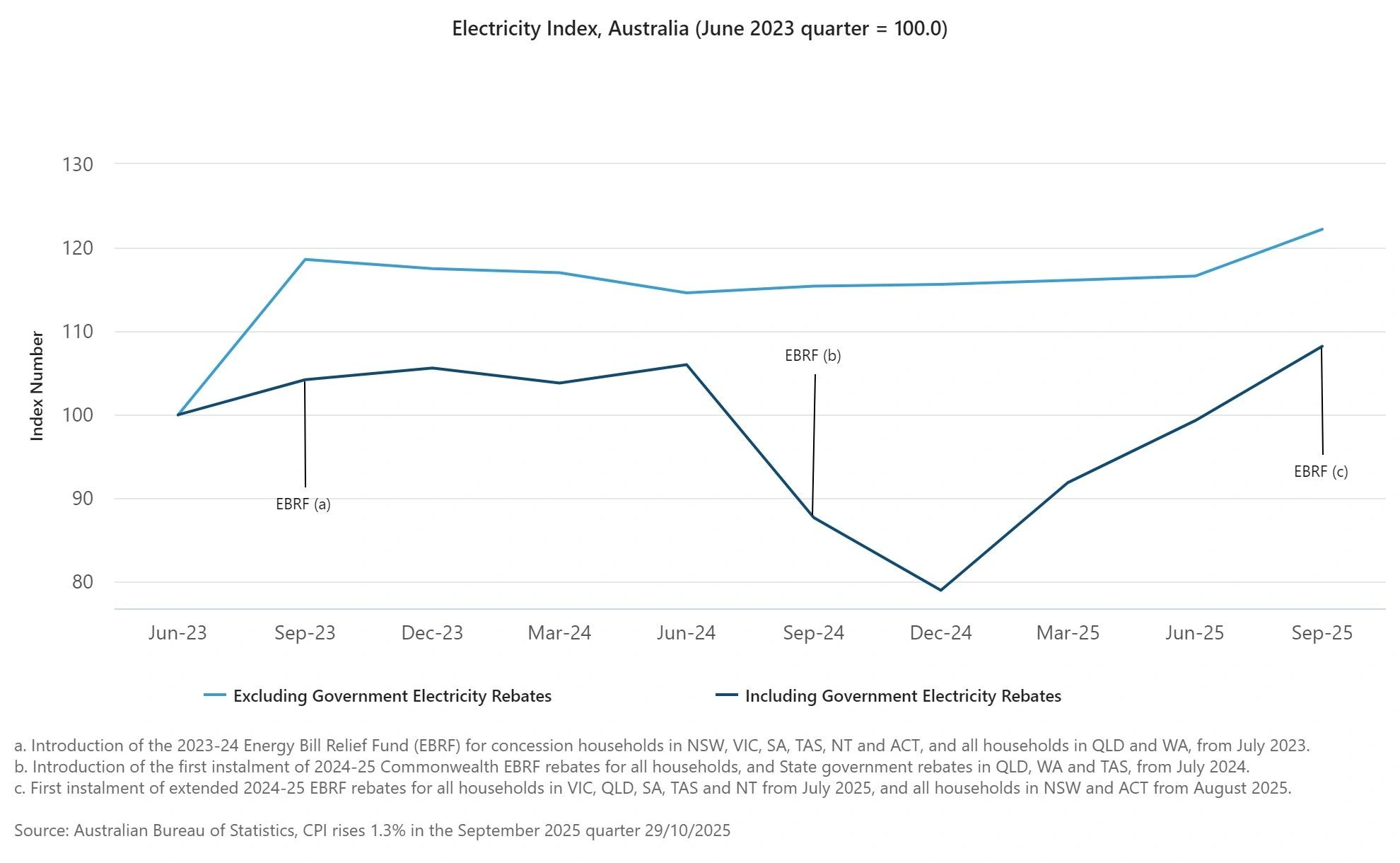
Electricity Index, Australia
The property market has shown surprising resilience. But concerns are mounting about mortgage stress, particularly if unemployment continues rising.
Market Reaction to Watch
The Australian dollar could experience “intense volatility” following the announcement, according to currency analysts.
A more hawkish hold than expected would likely strengthen the AUD. Any hint at a December cut could trigger selling.
The ASX 200 fell 0.76% when the September inflation data was released. Today’s reaction will depend heavily on the economic forecasts and Bullock’s commentary.
The Bottom Line
The inflation rate surge back above 3% has effectively tied the RBA’s hands for November.
With the cash rate at 3.6%, policymakers face competing priorities. Inflation demands restrictive policy. Rising unemployment suggests the economy needs support.
The Statement on Monetary Policy accompanying today’s decision will be crucial. Updated growth and inflation forecasts will signal whether rate cuts return to the table before year-end.
One thing is certain: Australian households and businesses won’t get the relief they were hoping for today. The battle to tame inflation continues, with no easy answers in sight.
The RBA’s decision and Governor Bullock’s press conference will be closely watched not just for what they say, but for what they signal about the challenging months ahead.


