
A massive unsecured database exposing 149 million logins and passwords has raised global alarm about infostealer malware and credential theft. The cache included Gmail, Facebook, financial services, and government-linked accounts, according to researcher Jeremiah Fowler.
A cybersecurity researcher uncovered an unsecured database containing 149 million login credentials.
Database Discovery and Scope
Veteran cybersecurity researcher Jeremiah Fowler uncovered the database during routine internet scanning activities. The collection contained 149,404,754 unique logins and passwords, totaling around 96 gigabytes of raw credential data.
Fowler said the server had no password protection or encryption. Anyone with a web browser could search and download the records. The files included emails, usernames, passwords, and direct login URLs for affected accounts.
The exposed dataset covered users worldwide. It included consumer services, enterprise logins, financial accounts, and cryptocurrency platforms. The database structure suggested automated indexing of stolen credentials for easy retrieval.
Major Platforms Affected
Gmail accounts formed the largest group, with an estimated 48 million credentials. Facebook followed with about 17 million records. Instagram accounted for roughly 6.5 million compromised logins.

Gmail, Facebook, and Instagram accounted for the largest share of compromised credentials.
Other services appeared in large volumes. Yahoo Mail had around four million entries. Netflix had approximately 3.4 million records. Outlook accounts totaled about 1.5 million.
Additional platforms included TikTok, OnlyFans, Binance, and Roblox. The dataset also contained iCloud logins and academic email addresses ending in .edu. The variety showed a wide malware reach.
Government and Financial Credentials
One of the most concerning findings involved credentials linked to .gov domains. These accounts came from multiple countries and varied in access levels. Their presence raised serious security concerns.
Fowler warned that exposed government credentials could support spear-phishing and impersonation attempts. They could also provide entry points into government networks. Even limited-access accounts carry operational risks.
Financial services credentials also appeared in the sample. These included banking logins, crypto wallets, and trading accounts. Such data can enable fraud, unauthorized transactions, and account takeovers.
Infostealer Malware Connection
Technical evidence pointed to infostealer malware as the primary data source. Infostealers silently record keystrokes and capture stored credentials from infected devices. They transmit the data to remote servers.
The database stored keylogging records and additional metadata. Files included reversed host paths for structured indexing. This format organised stolen data by victim and source.
Each entry carried a unique line hash identifier. This design ensured one record per stolen log. Limited checks showed no duplicate entries in the dataset.
Ongoing Data Collection and Takedown
Fowler reported that new records continued appearing during his disclosure efforts. The number of entries grew over nearly a month. This indicated active malware infections during the reporting period.
The database owner could not be identified. The server had no ownership or contact information. Fowler reported the exposure directly to the hosting provider.
The provider initially redirected the report to a subsidiary. After several attempts, the hosting was suspended. The credentials were finally taken offline.
Statements and Public Response
Google acknowledged the presence of Gmail credentials in the dataset. A spokesperson said the data represented aggregated infostealer logs collected over time. The company said it was not a new breach.
Google added that automated systems lock accounts and force password resets when exposed credentials are detected. The company said it monitors external credential leaks continuously.
Fowler shared his findings publicly through a report. He said the exposure showed that cybercriminal operations also suffer data security failures. He added that credential theft has become industrialized.
Risks and Criminal Use
The exposed data can support credential stuffing attacks. Criminals can test the same passwords across multiple platforms. This method increases unauthorized access rates.
The presence of exact login URLs adds efficiency. Attackers can automate login attempts without manual targeting. This raises risks for email, financial, and enterprise accounts.
The dataset can also support phishing campaigns. Messages can reference real services and user habits. Such messages appear more credible and increase victim response rates.
User Protection Measures
Security experts advise assuming possible exposure. Users should change passwords, starting with email and financial services. Password reuse should be avoided across platforms.
Two-factor authentication should be enabled where available. This adds a second verification step during login. It reduces account takeover success rates.
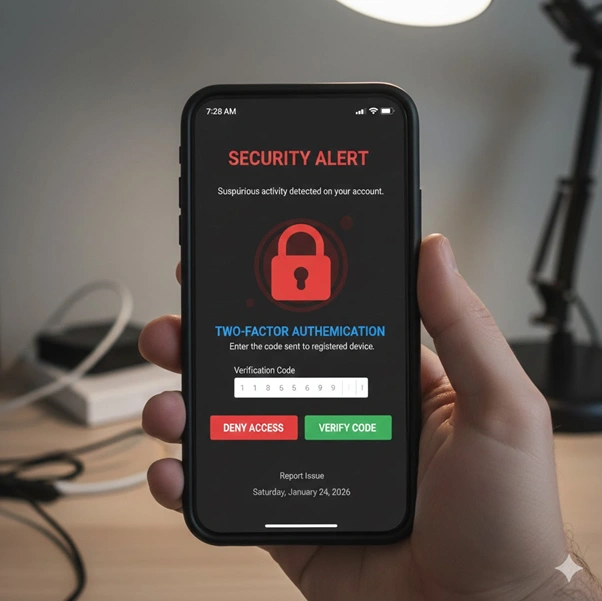
Experts advise enabling two-factor authentication and changing passwords to reduce account risks.
Antivirus software should scan all devices. If malware is present, changing passwords alone will fail. The malware would capture new credentials.
Operating systems and security tools should be updated. Known vulnerabilities are patched through updates. Detection methods also improve with new software versions.
Users should review app permissions and installed extensions. Only official app stores should be used. Suspicious programs should be removed.
Also Read: Microsoft Restores Services After Major 365 Outage – Colitco
Long-Term Security Outlook
The database closure does not erase the exposure. The credentials were likely copied by criminals. They can circulate on underground markets.
Fowler said the incident shows ongoing threats from infostealer malware. He noted that stolen data must be stored somewhere. Misconfigured servers remain common.
He added that cybercriminal infrastructure often favors speed over security. Misconfigurations allow public discovery. Such datasets are frequently redistributed.
The discovery serves as a reminder of persistent credential theft risks. Basic cyber hygiene remains essential. Unique passwords, antivirus tools, and authentication measures reduce exposure.
Hosting providers are urged to improve abuse reporting responses. Delayed action leaves malicious infrastructure active. Faster reviews can limit data exposure windows.
Fowler stated he did not download or retain the data. He said his interaction was limited to minimal documentation. He reported the exposure responsibly to prevent further access.
The incident reinforces the need for proactive safeguards. Credential theft continues at scale. Awareness and security practices remain critical for online protection.