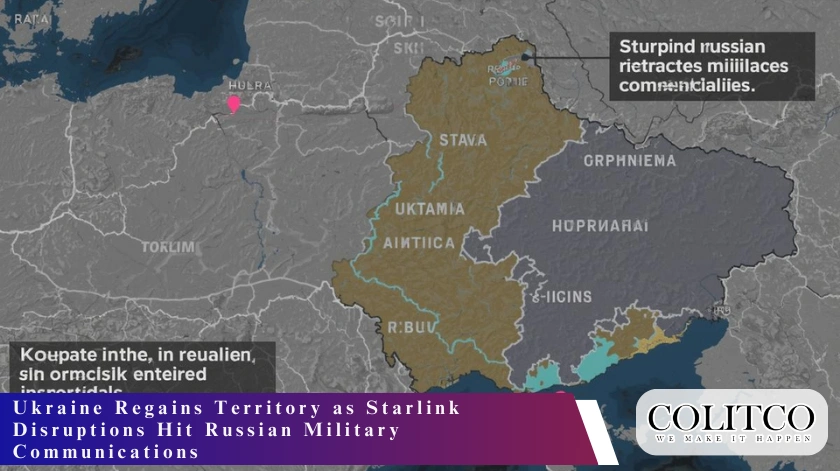
Ukraine has regained territory in recent days after reported disruptions to Russian battlefield communications, according to official Ukrainian statements. The developments follow actions involving Elon Musk and satellite internet services operated by SpaceX. Ukrainian officials state that stable access to the Starlink network improved coordination, while Russian units faced connectivity challenges in contested zones.
 A satellite internet terminal similar to Starlink equipment used in Ukraine to maintain military and civilian communications. [CNN]
Military analysts say communications infrastructure now plays a direct role in frontline outcomes. The latest territorial shifts highlight how satellite systems influence modern warfare.
Ukraine Reports Territorial Gains After Connectivity Shift
Ukraine’s armed forces announced that troops retook several settlements in eastern sectors during coordinated operations this week. Commanders said they used real-time drone footage and encrypted messaging to guide infantry and artillery movements. Officials described the advances as tactical but strategically important.
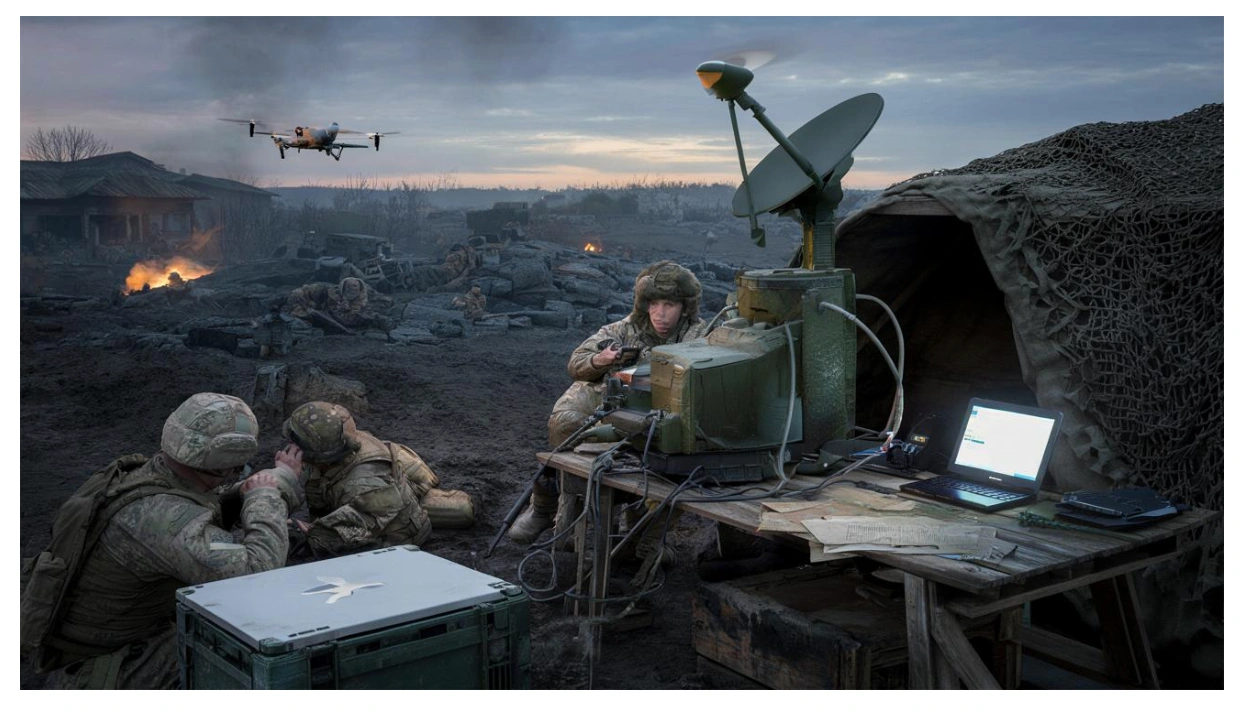 Soldiers operate a portable satellite communications system while coordinating drone surveillance in a frontline position during ongoing military operations. [vetromebel]
A spokesperson for Ukraine’s military stated that secure internet access allowed units to “respond faster and operate with clearer situational awareness.” He added that uninterrupted connectivity reduced delays in decision-making. Ukrainian authorities did not release exact figures on square kilometres regained but confirmed that operations remain active.
Starlink Satellite Internet and Battlefield Coordination
Starlink operates thousands of low-Earth orbit satellites that deliver broadband internet to ground terminals. Ukraine has relied on this system since 2022 to maintain military and civilian communications. Hospitals, energy operators, and local authorities also use the network in damaged regions.
 Low-Earth orbit satellites form the backbone of global satellite broadband networks. [Visionary Cios]
SpaceX has previously stated that it restricts the use of its services for certain offensive military purposes. Company representatives have said they follow U.S. export controls and sanctions frameworks. However, the company does not disclose detailed operational policies in conflict areas.
Defense experts note that satellite broadband enables commanders to share drone imagery within seconds. This speed allows artillery units to adjust targeting in near real time. Reliable connectivity can therefore shape the tempo of operations.
Russia Deploys Alternative Satellite Terminals
Following reports of restricted access to certain satellite services, Russian-linked suppliers began distributing alternative communication terminals to frontline units. Officials familiar with the matter said these systems aim to maintain operational links during engagements.
Russian authorities have not provided detailed public explanations about the reported disruptions. Military analysts suggest that any interruption to data flow can affect coordination. Even short delays can reduce the effectiveness of surveillance drones and artillery support.
Experts also observe that reliance on foreign satellite providers carries strategic risks. As a result, both sides have sought to diversify communication systems since 2022.
Elon Musk and SpaceX Address Policy Questions
Elon Musk has commented in the past on the use of Starlink in conflict zones. He has stated that SpaceX seeks to prevent misuse of its technology while preserving humanitarian access. He has also said the company works within U.S. regulatory boundaries.
 Elon Musk has addressed the role of commercial satellite networks in conflict zones. [Fortune]
SpaceX has confirmed that it can apply geographic restrictions to service coverage. Companies use geofencing tools to manage access in defined areas. Industry specialists explain that such controls allow providers to limit connectivity without shutting down the entire network.
Technology policy researchers say private satellite firms now operate at the intersection of commerce and geopolitics. Their infrastructure carries strategic value during armed conflicts.
Military Communications Shape Operational Momentum
Defense analysts argue that secure communications influence battlefield momentum. Units that exchange information quickly can reposition and respond to threats more effectively. In contrast, unstable connections may disrupt coordination.
A former NATO communications adviser said that “modern warfare depends as much on bandwidth as on ammunition.” He explained that forces now integrate drones, satellite imagery, and digital mapping systems into daily operations. Reliable connectivity strengthens those tools.
However, analysts caution that satellite internet does not replace traditional military networks. Armed forces still use encrypted radios and fixed-line systems where available.
International Oversight and Regulatory Debate
The role of private companies in wartime infrastructure has raised oversight questions. Governments must balance national security interests with commercial autonomy. U.S. officials have previously stated that firms providing critical technology must comply with export and sanctions rules.
Policy experts point out that commercial satellite services did not exist at this scale in earlier conflicts. Today, private networks support both civilian populations and military units. This shift has prompted discussions about accountability and transparency.
Australian and European security analysts have noted similar concerns. They argue that governments may need clearer frameworks to manage commercial technology in war zones.
Also Read: Gold Prices Australia Near AUD 6,950 Per Ounce
Broader Context of the Ukraine War
The war between Ukraine and Russia escalated in 2022 after years of tensions that began in 2014. Since then, both countries have integrated advanced technologies into military planning. Drones, satellite imagery, and digital command systems now support routine operations.
Ukraine has relied heavily on Western technological support to maintain communications and infrastructure. Russia has also invested in domestic and allied technology providers to reduce external dependence.
Recent territorial shifts reflect ongoing changes along the front line. Officials continue to report localized advances and counteroffensives. Independent verification remains limited in some contested regions.
The latest developments underscore the strategic importance of satellite communications in the Ukraine conflict. Military outcomes increasingly depend on digital infrastructure alongside traditional capabilities. As operations continue, analysts expect communications technology to remain central to battlefield strategy.
FAQs
- Did Elon Musk cut off Starlink access to Russia?
Ans. SpaceX has stated that it restricts the use of Starlink services in areas that violate U.S. sanctions or export regulations. The company has previously said it does not support Russian military use of its satellite internet services. However, SpaceX does not publicly disclose detailed operational decisions in specific combat zones.
- How does Starlink work in Ukraine?
Ans. Starlink provides internet through low-Earth orbit satellites that connect to ground terminals. Ukraine has used the system since 2022 to maintain military coordination, emergency services, and civilian communications. The network enables fast transmission of drone footage and battlefield updates.
- Why is satellite internet important in the Ukraine war?
Ans. Satellite internet supports real-time battlefield communications. Military units use it to share drone imagery, map data, and operational instructions. Reliable connectivity improves coordination and reduces response time during engagements.
- Can Starlink be restricted in certain areas?
Ans. Yes. Satellite providers can apply geofencing technology. This allows them to limit service access in specific geographic regions. Companies may use these restrictions to comply with sanctions or security policies.
- Has Russia developed alternatives to Starlink?
Ans. Reports indicate that Russian-linked suppliers have deployed alternative satellite communication systems in contested areas. Analysts say Russia aims to reduce reliance on foreign satellite providers by investing in domestic or allied technology solutions.
- Who controls Starlink during conflicts?
Ans. SpaceX owns and operates the Starlink network. However, the company must comply with U.S. export controls and national security regulations. Government agencies may influence how commercial satellite services operate in sanctioned regions.
- Does Starlink only support military operations in Ukraine?
Ans. No. Starlink also supports hospitals, government services, and civilian infrastructure in Ukraine. The network has helped maintain connectivity in areas where traditional internet systems were damaged.
- How has technology changed modern warfare in Ukraine?
Ans. The Ukraine conflict has shown how drones, satellite imagery, and digital communications shape battlefield strategy. Military analysts say that reliable internet access now plays a central role alongside traditional weapons systems.