Sainsbury’s will cut 300 roles across its technology and data divisions. The retailer announced these changes on 27 February 2026. This move aligns with the third year of its Next Level strategy. The company aims to simplify its structure and reduce duplication.
Sainsbury’s currently employs 140,000 staff members across the United Kingdom. This restructure affects less than one per cent of the total workforce. The technology and data unit will be split into three separate teams. One team will focus on the Argos business. Two teams will manage the core supermarket operations.
Management intends to consolidate routine reporting tasks into a business intelligence hub. This hub will allow staff to focus on commercial insights. The company believes this structure improves decision-making speed. A spokesperson for Sainsbury’s provided a statement on the plan.
“As we gear up for year three of our Next Level plan, we’re strengthening our focus behind Sainsbury’s and Argos,” the spokesperson said. “By maximising the power of our data and technology, we’re freeing up our teams to concentrate on what matters most – great food, brilliant service and fantastic value for our customers.”
The retailer is also overhauling its Argos delivery model. This change involves a separate leadership board for the Argos division. The company will restructure its local warehouse teams. This process aims to cut the amount of overtime worked by drivers. Sainsbury’s confirmed that delivery driver roles are not at risk.
These changes follow a period of investment in automation. The company uses AI forecasting tools and warehouse robotics. This technology helps the business maintain efficiency and lower operating costs. Competition from Aldi and Lidl remains a factor in these decisions.
Retailer Establishes New Leadership Roles For Convenience Stores
Sainsbury’s is creating four regional store director roles for its convenience business. These roles will focus exclusively on the Sainsbury’s Local format. One director will oversee operations in the North of England. One director will manage the Central England region.
Two directors will take responsibility for the South of England. The company stated that customers use supermarkets and convenience stores differently. These leadership changes reflect those different shopping habits. The restructure allows the business to respond faster to feedback.
Argos is also preparing to launch a marketplace for third-party sellers. This platform will host external brands within the next twelve months. The marketplace aims to rival Amazon and eBay. Graham Biggart serves as the Managing Director of Argos.
“Introducing a marketplace within the next year marks an exciting next step in Argos’ multiyear transformation,” Biggart said. “It reflects what we know customers want – more choice, more convenience and more reasons to shop with confidence.”
Argos receives over one billion visits to its website each year. The brand intends to offer products that complement its core ranges. This expansion occurs as online shopping habits continue to evolve. The marketplace will follow strict quality and safety standards.
Also Read: Why Intel’s Stock Dropped Today: Key Factors Explained For Aussie Investors
Sainsbury’s reported a 4.9 per cent increase in sales during the third quarter. This growth occurred over the sixteen weeks to 3 January 2026. Grocery sales rose by 5.4 per cent in the same period. The company gained market share for the sixth consecutive Christmas.
Argos sales fell by 1.0 per cent during the third quarter. General merchandise and clothing sales also saw a 1.1 per cent decline. The group attributes this to weak consumer confidence. However, the business expects a retail operating profit of £1 billion.
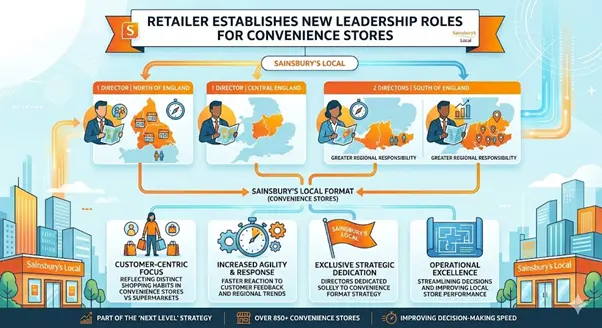
New leadership roles for convenience stores
Strategy Targets One Billion Pounds In Operating Cost Savings
The Next Level plan targets £1 billion in savings by 2027. Sainsbury’s announced 3,000 job cuts in January 2025. Those cuts involved the closure of 61 in-store cafes. The retailer also removed patisserie and pizza counters from its stores.
Management reduced senior roles by 20 per cent during that phase. The company reallocates space to fresh food ranges in its supermarkets. This strategy puts food at the heart of the business. The retailer continues to invest in its Nectar loyalty programme.
Nectar Prices and Aldi Price Match drive customer loyalty. Fresh food sales increased by 8 per cent in the latest quarter. Taste the Difference sales grew by 15 per cent. The premium brand now appears in one out of three shopping baskets.
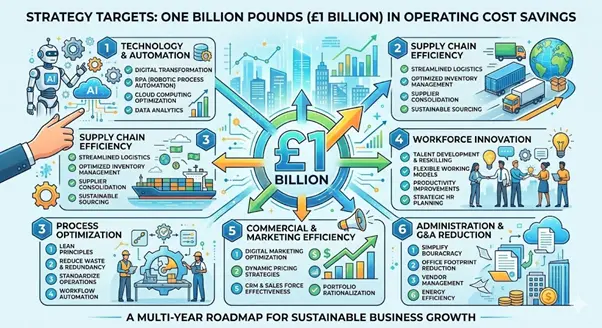
Roadmap to save £1 billion in operating costs
Other retailers are also announcing significant job reductions this week. Ocado Group will cut 1,000 roles in its technology and data teams. This represents five per cent of its global workforce. Ocado aims to save £150 million in technology costs.
Tesco recently announced the removal of 180 office roles. These cuts often coincide with investments in automated systems. Retailers face rising employment and regulatory costs in the current market. Sainsbury’s maintains a focus on retail free cash flow.
The company expects free cash flow to exceed £500 million this year. It will return £800 million to shareholders through dividends and buybacks. Retailers must balance shareholder returns with operational efficiency. The consultation period for affected staff has now commenced.
Sainsbury’s provides a support package for employees facing redundancy. This package exceeds the statutory requirements for the United Kingdom. The company explores redeployment opportunities where possible. It offers guidance for future career options to those impacted.
The retailer operates 1,454 stores across its entire estate. This includes 599 supermarkets and 855 convenience stores. The business continues to open new locations in key areas. These stores bring food ranges to a wider customer base.