The share market in Australia stabilised amid the remaining market correction fears as the buyers reverted to large-cap stocks. S&P/ASX 200 bounced 0.5 per cent to 9,007 points in the afternoon.
The momentum was in financial and healthcare names, and the global markets stood their ground. Wall Street standards crept 0.1 per cent up, and FTSE Europe climbed 0.8 per cent.
Investors seemed to be interested in earnings resilience as opposed to volatility headlines. The domestic currency dropped 0.2 to 70.68 US cents, but it was close to the recent highs.
Gold went up 1.2 to US$4,935 per ounce, and oil went up to $US67.58 per barrel. These trades indicated defensive action despite equities driving higher, with a permissive recovery mood.

ASX embarks on a strong run towards 9,000 points, with traders balancing recovery and correction dangers. [ASX]
Health Insurers And Banks Lead Gains
Insurers of healthcare united in their fray following the sanction on a rise in premiums. Medibank Private and nib holdings limited have gone up as investors factored in revenue support.
The move was welcomed by the hospitals, which claimed that it would counter the increasing costs. Banking shares were also gaining ground on positive performances.
This increased confidence in credit demand as the 30 per cent increase in quarterly profit was reported by National Australia Bank. Excellent performance paid off wider stock market correction anxieties.
Analysts observed that defensive industries tend to do well when volatility increases. The same trend was observed today, which assisted the index in maintaining important technical points around 9,000 points.
What Do Wages And Inflation Signals Mean For Market Correction 2026?
New labour statistics revealed pressure on family disposable income. Wage Price Index increased 3.4 per cent between the year-end December 2025 and 3.8 per cent inflation. Real wages fell, hence restricting discretionary growth.
Economists indicated that the slower income growth would contain the retail and housing sectors. Nevertheless, a slight increase in wages can make the rate hikes less risky. The Reserve Bank is likely to keep an eye on future CPI values.
Currency markets were weakly responsive as the Australian dollar fell slightly. To investors, this could ease policy environments, which tend to favour equities in a market correction in 2026.

Wage and inflation trends: The past trends are shaping the future rates and market movement. [Paytm]
Energy And Resources Deliver Mixed Corporate Updates
The energy and mining names gave a confused picture. Santos Limited announced that it would reduce the number of employees by 10 per cent when the profits declined. The shift was in an effort to cushion margins due to the low energy prices.
In the meantime, iron ore dropped by 0.1 per cent to $US98.30 per tonne because of demand uncertainty. Precious metals performed better with silver improving by 3 per cent to $US75.71 a pound. Sentiment was also boosted in steel through corporate activity.
An enhanced takeover offer of the group was re-packaged to BlueScope Steel Limited at 15 billion dollars or 32.35 per share. The enhanced bid demonstrated the persistence in good industrial assets in spite of volatility.
How Are Global Moves Shaping The Stock Market Correction?
They were still on international cues. The US indices were trading marginally higher, and Europe were continuing to gain. Currency flows changed following the high unemployment rate in the UK over the past five years.
The Australian dollar gained a 19-month high against the British pound and fell back. Foreign central banks maintained a low-key policy. This stability helped to ease the fears of tightening.
Investors hence swung back into equities following weeks of reserved trade. The background of the picture was to insinuate that the world liquidity continues to support risk assets even in a stock market corrective cycle.
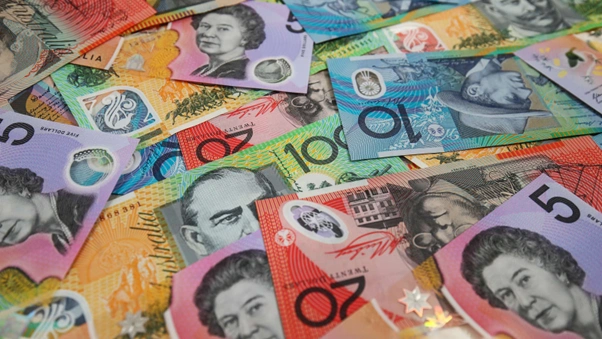
Australian dollar hit a 19-month high; steady policies eased tightening fears. [CNBC]
Outlook Remains Guarded, But Earnings Offer Support
According to market strategists, volatility can continue even into the next months. However, there is a low point in earnings strength and takeover interest. The financials, healthcare and technology are still drawing capital.
Resource stocks are still dependent on the swing of commodity prices. Traders will pay close attention to future CPI and company direction. It can recover gradually, as long as profits are maintained, and the policy is constant.
In the meantime, the action of ASX to go higher than 9,000 points is a sign of strength and not a sign of a recession. The wider market correction story is thus not blowing up but rather contained, and the market isin 2026.
Also Read: Top ASX Growth Stocks for Long-Term Investment
FAQs
Q1: What caused the latest market correction concerns?
A1: Investors reacted to wage weakness, inflation pressure and mixed corporate earnings.
Q2: Which sectors led the ASX higher?
A2: Healthcare insurers, banks and selected technology stocks drove gains.
Q3: Did wages keep pace with inflation?
A3: No. Wages rose 3.4% while inflation was 3.8%, reducing real income.
Q4: What is the short-term outlook?
A4: Analysts expect cautious trading with support from earnings and stable rates.