Gold prices in Australia traded near AUD 6,950 per troy ounce on 18 February 2026, based on live spot data from The Perth Mint. The benchmark reflected firm global bullion demand and stable currency movements during the session.
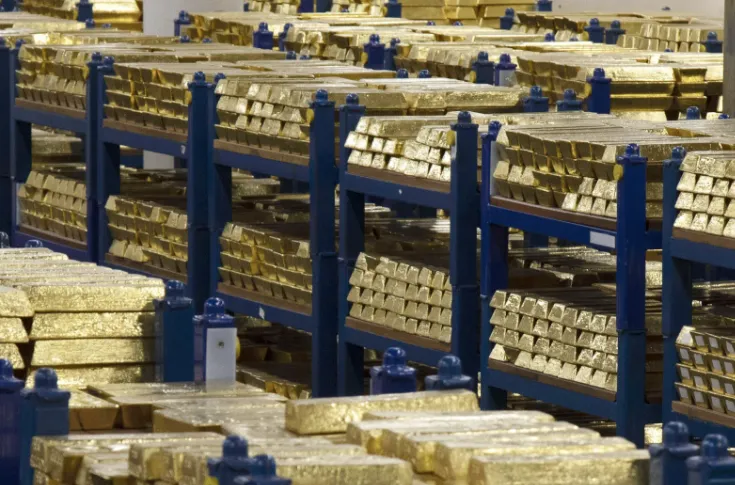
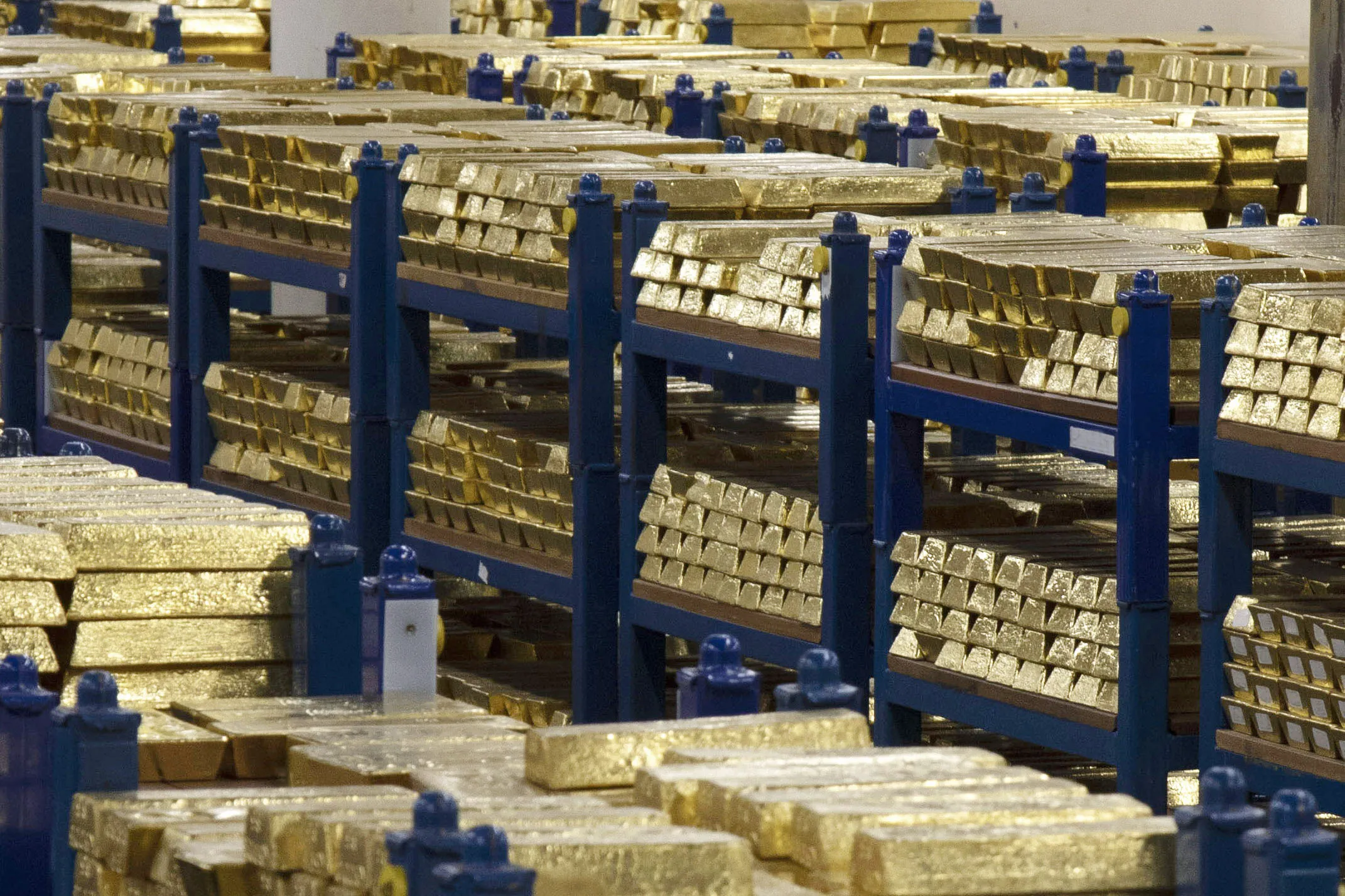
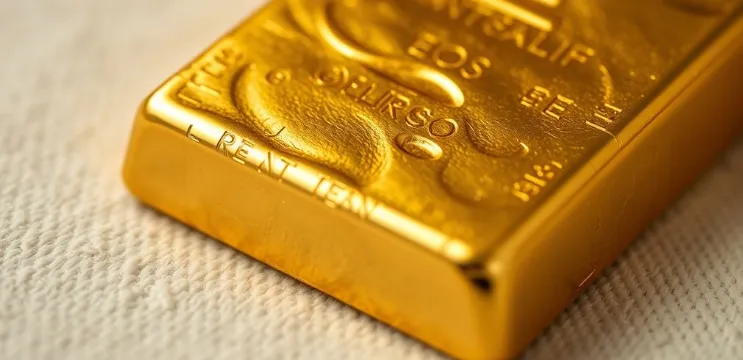
Gold bars displayed with 99.99% purity markings as Australian gold prices trade near AUD 6,950 per ounce on 18 February 2026. [Bloomberg]
At 7:20 PM AWST in Perth, The Perth Mint listed spot gold at AUD 6,927.77 bid and AUD 6,972.87 ask per troy ounce. The mid-price stood at AUD 6,950.32 per ounce. In US dollar terms, the mint quoted USD 4,900.21 bid and USD 4,932.89 ask, with a midpoint of USD 4,916.55 per ounce.
The mint stated that it updates spot prices every five minutes while global precious metals markets remain open. It also noted that transaction prices may vary at the time of purchase due to market movements.
Live Spot Gold Price in AUD and USD
The Perth Mint’s quoted AUD midpoint of AUD 6,950.32 per ounce served as the reference benchmark for retail premium comparisons. Dealers across Australia typically base their pricing on live spot values, then apply fabrication and distribution margins.
In US dollar terms, the midpoint of USD 4,916.55 per ounce aligned closely with international bullion markets. The AUD and USD quotes moved in line with global gold trading hours, reflecting both metal demand and foreign exchange shifts.
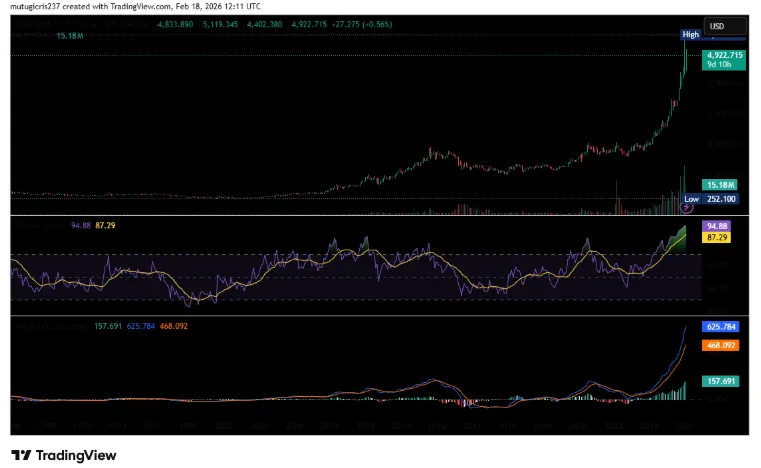
The XAU/AUD gold price trend is showing a recent 7-day decline and 30-day stability in February 2026. [TradingView]
The mint provided explicit timestamps alongside its prices. This transparency allowed market participants to compare retail offers against a clearly defined reference point.
RBA Exchange Rate Supports USD to AUD Conversion
The Reserve Bank of Australia published its official daily exchange rate for 18 February 2026 at 0.7070 USD per AUD. The RBA reports foreign currency units per Australian dollar.
Using this rate, analysts converted the Perth Mint USD midpoint into Australian dollars. Dividing USD 4,916.55 by 0.7070 produced approximately AUD 6,954 per ounce. That figure remained close to the mint’s AUD midpoint of AUD 6,950.32.
Small differences emerged because the RBA daily rate does not update in real time. Spot gold prices also carry bid and ask spreads. As a result, slight variations between converted and quoted figures remain common in active markets.
Retail Gold Prices in Australia: Bars and Coins Compared
Retail bullion dealers published buy and sell prices for standard gold products, including 1oz, 10oz, 100g, and 1kg bars, as well as 1oz coins. The comparison used the Perth Mint midpoint of AUD 6,950.32 per ounce as the benchmark.
Larger gold bars, such as 1kg bullion, often carry lower percentage premiums per ounce. [Goldmarket]
Private dealer quotes from ABC Bullion and Australian Bullion Company showed higher premiums on smaller bars and coins. For example, a 1oz bar at ABC Bullion carried a sell price of AUD 7,369.20. That represented a premium of about 6.03 percent over spot value. The same dealer’s 1kg bar showed a lower premium of roughly 4.80 percent.
Australian Bullion Company listed a 1oz coin at AUD 7,718.10. That price implied a premium of about 11.05 percent. Larger bars, such as 1kg products, reflected lower percentage margins. This pattern confirmed that fabrication and distribution costs influence smaller units more heavily.
The Perth Mint Premiums Remain Tighter Than Private Dealers
The Perth Mint published its own buy and sell schedule for bars and coins. Its premiums appeared materially tighter than those of the private dealers reviewed.

The Perth Mint publishes live spot gold prices and retail buy-sell quotes in Australia. [The West Australian]
For a 1oz bar, the mint listed a sell price of AUD 7,087.87. That equated to a premium of around 1.98 percent above spot. A 1kg bar showed a premium near 1.55 percent. These margins remained significantly lower than many private dealer quotes at the same time.
Coins generally carried higher premiums than bars across all dealers. At the mint, a 1oz coin showed a premium of 3.59 percent. Private dealers priced comparable coins at even higher margins.
Buyback spreads also varied. Dealers applied discounts when purchasing from customers. The Perth Mint’s buyback discounts ranged between roughly 2.3 and 2.6 percent, depending on product size. Private dealer buyback discounts often exceeded 3 percent.
XAU/AUD 7-Day and 30-Day Gold Price Trends
Historical closing data for XAU/AUD showed short-term volatility. On 18 February 2026, the daily close stood at AUD 6,948.52 per ounce. On 11 February 2026, the close reached AUD 7,133.30.
That movement reflected a 7-day decline of about 2.59 percent. Over a longer horizon, the 30-day change remained modest. The close on 19 January 2026 stood at AUD 6,957.14. This produced an approximate 30-day change of minus 0.12 percent.
Within the same period, gold reached a high close of AUD 7,690.52 on 28 January 2026. It later fell to a low close of AUD 6,707.61 on 2 February 2026. These swings highlighted sharp movements in late January, followed by a pullback in early February.
Fees, Insurance, and GST Considerations for Investors
Retail investors in Australia face additional costs beyond the gold spot price. Dealers may charge shipping and insurance fees. For example, some product pages from ABC Bullion note a minimum estimated shipping cost of AUD 50.
Australian Bullion Company states that delivery orders under AUD 20,000 incur a 1 percent insurance fee. Larger orders attract insurance quotes based on value. These costs can increase the effective acquisition price.
Tax treatment also plays a role. Australian law defines “precious metal” for GST purposes based on purity and investment form. Gold with a minimum fineness of 99.5 percent in investment form generally qualifies. Jewellery does not qualify because it does not meet the investment standard.
Investors who store bullion may choose institutional vaulting services. The Perth Mint offers allocated, pool-allocated, and unallocated storage options, each with different fee structures. Banks such as the Commonwealth Bank provide safe custody vaults for valuables, including bullion, although they do not publish live bullion dealing prices.
Also Read: Santos flags 10% workforce cut as profit drops 35% on weaker oil and gas prices
Market Liquidity and Dealer Transparency
Major bullion dealers in Australia publish two-way pricing, which supports liquidity in the local market. The Perth Mint provides clear bid and ask spot quotes. It also lists product buy and sell prices with regular updates.
Private dealers display live buyback prices alongside customer purchase prices. This transparency enables investors to assess spreads and premiums before executing transactions.
The data from 18 February 2026 shows that spot gold in Australia traded close to AUD 6,950 per ounce. Retail premiums varied by dealer and product size. Larger bars generally offered lower percentage premiums than smaller bars and coins. As gold prices continue to respond to global factors and currency shifts, Australian investors monitor both spot benchmarks and dealer spreads to determine total transaction costs.
FAQs
- What is the current gold price in Australia?
Ans. As of 18 February 2026, The Perth Mint quoted spot gold at around AUD 6,950 per troy ounce (mid-price). Prices update every five minutes while global markets remain open.
- How often does the gold price change in Australia?
Ans. Gold prices change continuously during international trading hours. Australian dealers update their spot prices frequently to reflect movements in global markets and currency rates.
- Why is the gold price different in AUD and USD?
Ans. Gold trades globally in US dollars. Australian prices convert the USD rate into AUD using the prevailing exchange rate. Changes in the AUD/USD rate can move local gold prices even if the USD gold price remains stable.
- What is the difference between spot price and retail gold price?
Ans. The spot price reflects the live market value of gold per troy ounce. Retail prices include premiums that cover refining, minting, distribution, and dealer margins. Coins usually carry higher premiums than bars.
- Why do larger gold bars have lower premiums?
Ans. Larger bars spread manufacturing and distribution costs over more ounces. As a result, dealers often charge lower percentage premiums on 1kg or 10oz bars compared to 1oz bars or coins.
- Is gold subject to GST in Australia?
Ans. Investment-grade gold that meets purity requirements (at least 99.5% fineness) and qualifies as precious metal in investment form is generally GST-free. Jewellery and collectible items do not qualify.
- Where can Australians buy gold bullion?
Ans. Australians can buy gold from established dealers such as The Perth Mint, ABC Bullion, and other licensed bullion providers. Many dealers publish live buy and sell prices online.
- What affects gold prices in Australia?
Ans. Gold prices in Australia respond to global bullion demand, interest rate expectations, inflation trends, geopolitical events, and movements in the Australian dollar against the US dollar.