
Gold has delivered extraordinary returns over the past year, but rookie investors need to understand the market before diving in.
Gold has dominated financial headlines for good reason. As of 23 February 2026, the precious metal trades at USD $5,167.74 per troy ounce, a staggering 75.18% rise over the past 12 months. In Australian dollar terms, that same ounce now commands $7,311.46. Year-to-date alone, gold has climbed nearly 20%, adding USD $847.92 per ounce since January. Those figures turn heads, and they draw in a fresh wave of beginner investors every week.
But impressive past performance does not guarantee smooth sailing ahead. Before you put a single dollar into gold or gold-related assets, you need to understand three critical realities that the market rarely advertises upfront.
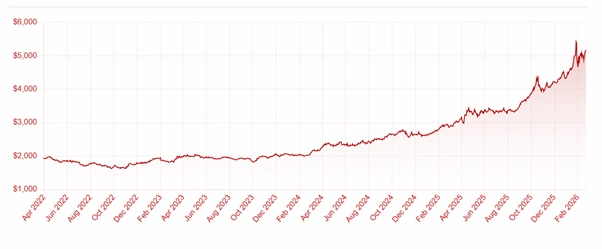
Figure 1: Gold price performance in the last 3 years [Market Index]
1. Not All Gold Investments Work the Same Way — and Some Suit Beginners Far Better Right Now
When most Australians picture gold investing, they imagine shiny bars locked in a vault. Physical gold — bullion coins, bars and the like — does offer genuine tangible ownership, and it can serve as a true store of wealth in an economic crisis. However, physical gold carries real costs that beginners often underestimate.
Dealers charge premiums above the spot price to cover refining, marketing and profit margins. With demand for physical gold surging in recent months, those premiums have spiked considerably. Buyers can end up paying well above market value before they even factor in storage, insurance and transport costs. Selling physical gold also requires locating a reputable dealer and negotiating a fair price, a process that lacks the speed and ease of digital assets.
Gold exchange-traded funds (ETFs) offer beginners a far more accessible entry point. ETFs track the gold price and trade on the Australian Securities Exchange (ASX) just like shares. Popular options include Perth Mint Gold (ASX: PMGOLD), Global X Physical Gold (ASX: GOLD) and VanEck Gold Bullion ETF (ASX: NUGG). These products remove the headaches of storage and provide strong liquidity at relatively low cost. The SPDR Gold Shares ETF, for example, charges an expense ratio of just 0.40%, which works out to roughly $4 per year on every $1,000 invested.
Gold mining stocks sit at the other end of the risk spectrum. Companies such as Newmont Corporation (ASX: NEM), Northern Star Resources (ASX: NST) and Evolution Mining (ASX: EVN) can amplify gains during a gold bull market because rising gold prices widen their profit margins against relatively fixed operating costs. However, mining stocks carry equity risk entirely separate from the gold price itself. Poor management decisions, operational setbacks, bad weather or broader sharemarket volatility can all drag a miner’s share price down even as gold itself climbs. Beginners who lack the experience to assess company fundamentals should approach mining stocks with caution.
For most rookies, gold ETFs represent the clearest, most efficient starting point.
2. Gold Prices Move in Unpredictable Ways — Timing the Market Will Burn You
It feels intuitive to assume that gold will surge whenever economic news turns grim. The reality proves more complicated. Gold’s price responds to a complex mix of forces: central bank buying activity, US dollar strength, real interest rates, geopolitical tensions and investor sentiment. These forces sometimes push in opposite directions at the same time.
Also Read: Gold Sector Takeovers Australia Accelerate Across ASX
Gold’s extraordinary recent run draws partly from central banks purchasing gold at historically high rates, a weaker US dollar and persistent geopolitical conflict around the globe. Analysts remained bullish throughout the fourth quarter of 2025 as these underlying drivers stayed firmly in place. That momentum has continued into 2026.
However, history also shows that gold endures long, painful downturns. After a strong run from 2009 to 2011, gold spent nine years failing to set a new high. Investors who bought at the peak in 2011 waited a very long time to break even.
Beginners who chase recent performance and expect rapid further gains often end up disappointed. A far healthier approach treats gold as a long-term portfolio stabiliser rather than a vehicle for quick profits. Experts generally recommend allocating between 5% and 15% of your net worth to gold, with some going as high as 20% for investors with a higher risk appetite. Holding gold as a hedge against inflation, currency devaluation or sharemarket downturns requires patience and a long investment horizon.
3. Scams and Inflated Premiums Target Beginners — Do Your Due Diligence
Gold’s recent price surge has attracted a surge of predatory sellers alongside legitimate investment opportunities. Unsolicited offers, pressure to buy collectible numismatic coins at exorbitant markups and high-fee gold retirement accounts all pose real financial risks to inexperienced investors.
Neither ASIC nor overseas regulators directly oversee physical gold transactions, which creates space for fraud and counterfeiting. Unscrupulous dealers may charge prices entirely disconnected from market rates or sell products that fail to meet purity standards.
Investors should work exclusively with reputable, transparent dealers who publish clear pricing online. Before committing to any product, compare premiums across multiple providers, check independent ratings and reviews, and avoid any dealer who refuses to quote prices openly. For ETF and fund-based gold investing, stick with established platforms and products with clearly disclosed, low fee structures.
Gold rewards patient, informed investors. Take the time to understand what you are buying before the market takes your money.